Portuguese
  Spanish


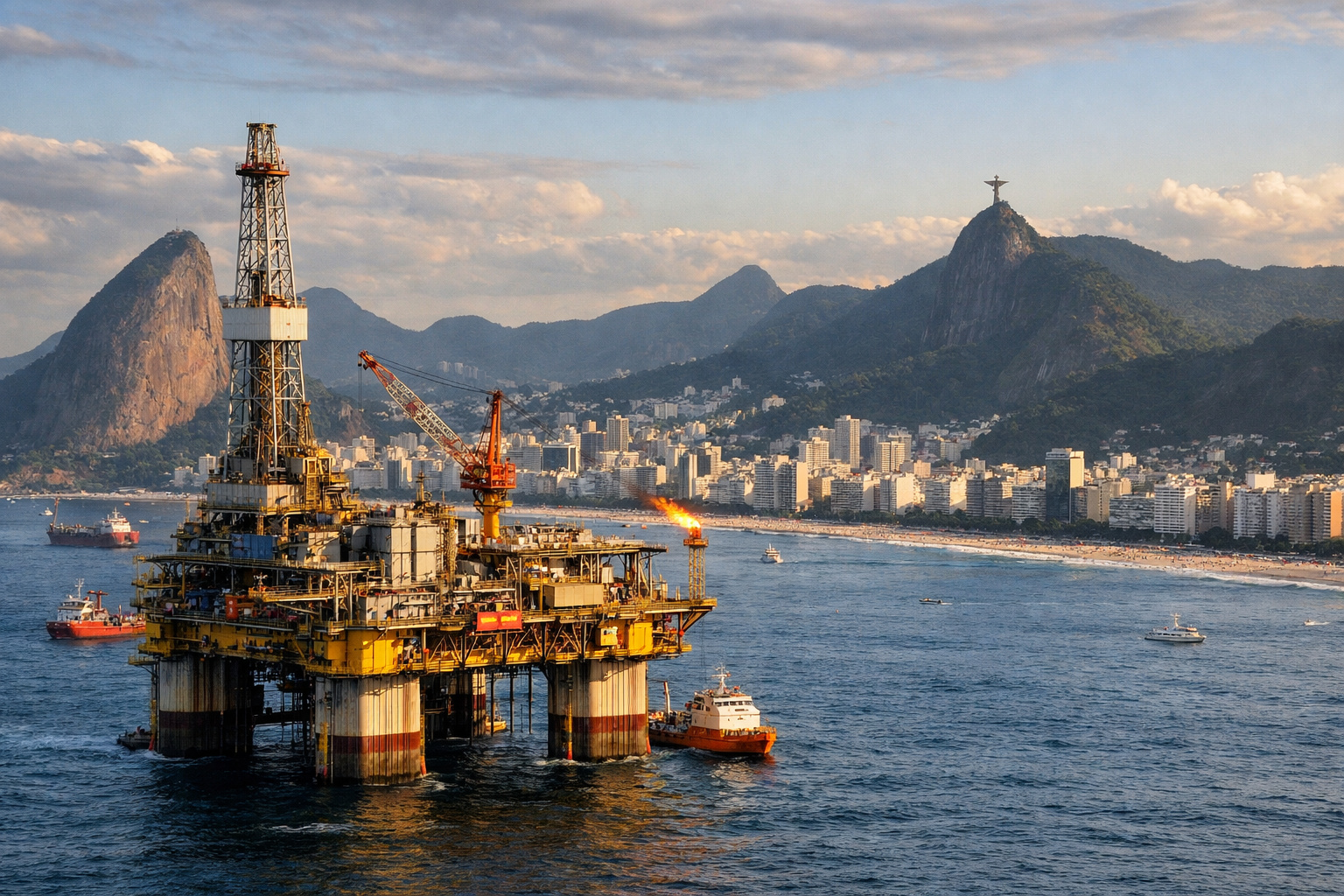

Supreme Court ruling may redefine oil revenue distribution, directly affecting producing states, urban infrastructure, and essential investments in various cities in Rio de Janeiro
The State of Rio de Janeiro may face a billion-dollar financial impact in the coming months. This information was disclosed by specialized media and reinforced by business entities, which warn of a possible critical scenario if the Supreme Federal Court (STF) confirms the redistribution of oil royalties. According to estimates presented in an official manifesto, the loss could reach R$ 8 billion per year for the state and R$ 13 billion for the municipalities, totaling up to R$ 21 billion annually.
Currently, these resources play a fundamental role in the economy of Rio de Janeiro. This is because the transfer of royalties injects billions into the public coffers of cities like Campos dos Goytacazes, Macaé, Maricá, and Niterói, which directly depend on these funds to finance essential areas such as health, education, security, and infrastructure.
Understand what is being judged in the STF
The dispute revolves around the Law 12.734/2012, approved by the National Congress, which provides for a new division of oil royalties, expanding the transfer to non-producing states and municipalities. However, since 2013, this redistribution has been suspended by a preliminary decision from Minister Cármen Lúcia.
-
Oil production grows in Rio, but reserve replacement raises a warning sign

-
Petrobras is expected to complete the drilling of the Morpho well in the Foz do Amazonas in August 2026, the first well in the Equatorial Margin, an oil frontier that the ANP estimates at more than 30 billion barrels and could redraw the map of Brazil.

-
Oil returns to the center of concerns with tension between the US and Iran

-
IEA reduces forecast for global oil demand in 2026 after impacts of the Middle East crisis



Now, the STF has scheduled the final judgment on the constitutionality of this law for May 6. If the decision is favorable to redistribution, the impact will be immediate for producing states, especially Rio de Janeiro, which is the largest oil producer in the country.
Furthermore, the issue involves a historical dispute between producing and non-producing states, which seek a greater share of the resources generated by oil and natural gas exploration. Therefore, the Supreme Court’s decision could completely redefine the financial balance between the federative units.
Direct impacts on the economy and tourism of Rio

The possible cut in royalties goes far beyond public accounts. According to industry experts, the change could directly affect the local economy and even tourism in various cities in Rio de Janeiro.
According to the president of HotéisRIO, Alfredo Lopes, the reduction of these resources could compromise investments in urban infrastructure, such as street paving, bridge construction, improvements in public transportation, and urbanization projects, including the installation of kiosks on the beaches.
Consequently, these factors directly influence tourism attractiveness. Cities like Campos dos Goytacazes, Macaé, Rio das Ostras, and São João da Barra may lose competitiveness, reducing the flow of visitors and discouraging new private investments, such as hotels, inns, and restaurants.
Moreover, the ripple effect could impact commerce, services, and the entire local production chain, which depends on the economic activity generated by these public investments.
Alert from the productive sector and risk to the federative pact
In light of this scenario, entities such as Firjan, Fecomércio RJ, and ACRJ have already expressed strong concern. In a document delivered to the acting governor of Rio, Ricardo Couto, the institutions warn that the change could seriously compromise the finances of the state and municipalities.
The president of Firjan, Luiz Césio Caetano, highlighted that Rio de Janeiro has already accumulated significant losses in recent years. According to him, the state has lost revenue from ICMS, special pre-salt participations, and revenues from onerous assignment, which further aggravates the fiscal situation.
Additionally, the president of Fecomércio RJ, Antonio Queiroz, reinforced that royalties are not a simple additional revenue, but rather a financial compensation for the environmental and social impacts of oil exploration.
Currently, royalties serve as compensation paid by companies to the Union, states, and municipalities. In 2025, these resources totaled R$ 81 billion, highlighting their strategic importance for the national economy.
Therefore, the possible redistribution raises an even greater alert: the risk to the so-called federative pact, which defines the division of resources among the entities of the federation.
Do you think it is fair to redistribute oil royalties, or should Rio keep these resources for being the main producer?