






 Portuguese
  Spanish


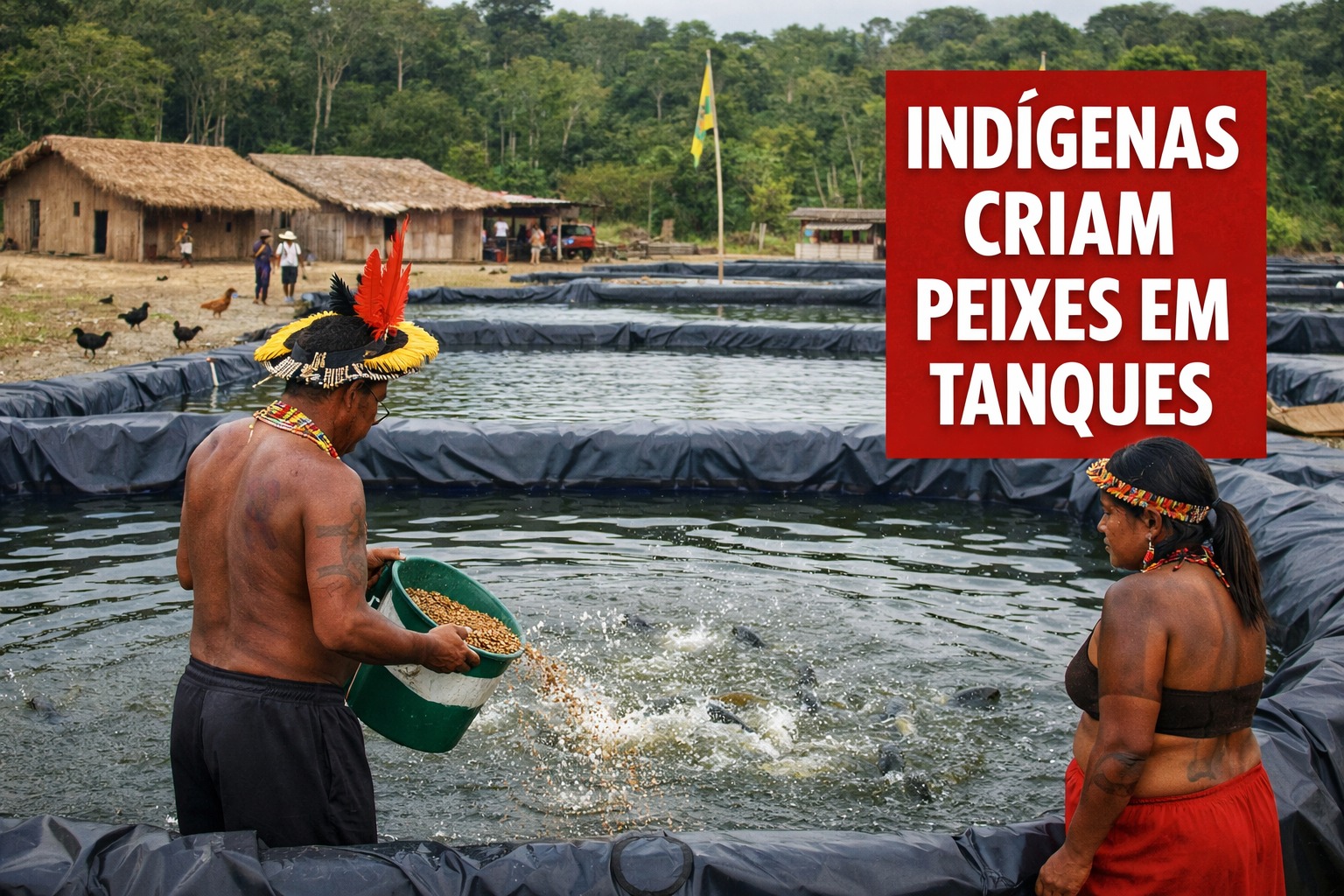


With Tanks, Fertigation and Indigenous Training, Community Creates Alternative to Contaminated Fishing and Strengthens Dignity, Food Autonomy and Permanence in the Yanomami Territory for Future Generations of the Local People
Fish have always been part of Sikamabiu’s identity. The community’s name itself, which means “river of mandis” in the Ninam language, carries the ancestral connection between the people and the waters of the Mucajaí River, in Southern Roraima, within the Yanomami Indigenous Land.
But this connection was interrupted when the advance of illegal gold mining contaminated the river with mercury, drove away the fish, and made fishing a risky practice.
Even after the removal of the invaders, the process of recovering the river is slow. While nature seeks to restore itself, the residents have found a new way to ensure safe food: fish farming in tanks.
-
Producer receives news and had to cull almost the entire herd, bounced back with the help of compensation, and is now producing 450 liters of milk per day in SC.

-
Quail Eggs Reveal a “Secret Code” on Their Shells Explaining Unique Patterns and Colors

-
Rare Tropical Fruit Canistel, with Egg Yolk Color and Caramel Flavor, Gains Interest from Researchers and Small Producers in Brazil
-
Brazilian Farmers Develop Wheeled Metal Lever to Ease Cassava Harvesting Without Heavy Machinery


This initiative represents an unprecedented experience within the Yanomami territory and arises as a direct response to the loss of one of the main protein sources in the region.
Aquaculture as a Survival Alternative
The encouragement for fish farming is part of a federal government project, officially launched on Monday (2), but in operation since November last year.
The action is developed by the indigenous people themselves and integrates a system that combines aquaculture, irrigation of crops, and chicken farming. The expectation of this action is to expand the model to seven more communities by the end of 2026.
The central objective is to reinforce food security in a territory that has been in a state of emergency for three years, a direct consequence of river contamination due to illegal gold mining, reduced fishing, and difficulty accessing food.
In the unit established in Sikamabiu, 10 aquaculture tanks and two ponds were built, excavating 440 m².
Together, they house over 8,000 tambaqui fry, a species widely consumed in the Amazon, although not endemic to the Yanomami Land.
The structure practically replaces fishing in the contaminated river and ensures a source of protein considered safe.
The g1 portal accompanied the project’s launch in the region. According to the technicians involved, consuming fish from the Mucajaí River is still discouraged, as mercury, a highly toxic substance to humans, remains present in the sediments.
Community and Technical Training
Sikamabiu is located in the Lower Mucajaí region and gathers around 400 people, distributed in approximately 30 families, mostly from the Xiriana people, a subgroup of the Yanomami.
A total of 34 indigenous people were trained to work in all stages of aquaculture, from tank construction to daily fish management.
“When we went fishing and cut the fish, we noticed that their flesh was hard, bad, tasted bad, dirty, and we thought: what are we going to do now? Where will we get food? This project helps a lot,” reported female leader Luísa Xirixana.
The project is carried out in partnership with the Brazilian Agricultural Research Corporation (Embrapa), responsible for technical guidelines, and the Federal Institute of Roraima (IFRR), which provides training.
The initiative received an investment of R$ 1.8 million from the Ministry of Development and Social Assistance, Family, and Hunger Combat (MDS).
The launch was attended by Minister Wellington Dias, the President of the National Foundation for Indigenous Peoples (Funai), Joênia Wapichana, the Governor of Roraima, Antonio Denarium (PP), and other authorities.
“These tanks are a direct response to the lack of fish in the river. Mercury flows down with the water, and those downstream suffer more. Today, river fish is not reliable,” explained Embrapa Roraima researcher Rosemary Veilaça, a biologist specialized in agroecology and inclusion.
According to her, the tambaquis are expected to reach ideal size by June, ensuring food for the coming months.
Aquaculture: Producing to Feed, Not to Sell
For local leaders, aquaculture is a survival strategy and a means to stay in the territory.
The tuxaua Carlos Nailson Xirixana explained that, although the community was not directly affected by gold mining, the impacts on the Lower Mucajaí affected all indigenous people in the region.
“The gold mining was not here, but the effect came through the river. The fish almost all died. We saw floating fish. That’s why we asked for these tanks. River fish no longer provided safety,” he stated.
He also made it clear that the production has no commercial purposes. “These fish from the tanks are not for sale. They are to feed our people. There are many people here. We want to produce for the community.”
Fertigation and Food Autonomy
The water used in the tanks is tested and then reused for irrigating the crops where cassava, potatoes, and rice are grown. This system, known as fertigation, integrates irrigation and fertilization, eliminating the need for chemical fertilizers.
“Here we don’t only talk about food security but also about food citizenship. It’s a system in which one production supports another and ensures autonomy for the people,” highlighted Rosemary Veilaça.
The project was an old request from the region, according to Gerson da Silva Xirixana, president of the Texoli association, which represents the indigenous people of the locality.
“Many people didn’t believe it. They said it wouldn’t work. Today we see the fish and plants growing. It’s very good.”
The tanks were built with geomembrane, a synthetic waterproof sheet, chosen for being lighter, more durable, and suitable for access conditions, which mainly occur by rivers, aircraft, or on foot through the forest.
To keep the system running, IFRR trained the 34 indigenous people in techniques such as feeding, water control, and harvesting periods.
“The proposal is for them to have complete autonomy to carry out this project without depending on the constant presence of technicians. The knowledge remains within the community,” explained Rodrigo Luiz Barros, director-general of the IFRR Amajari campus.
Dignity, Territory and Future
During the inauguration of the demonstration unit, federal authorities stated that producing food within one’s own territory reduces the dependence on emergency actions and contributes to addressing the impacts of illegal gold mining.
Funai President Joênia Wapichana emphasized that initiatives like this represent a step in repairing the damages.
“It is not enough to combat illegal mining. It is necessary to ensure territory management, environmental recovery, and access to public policies. These projects show that it is possible to rebuild the dignity of indigenous peoples after so much violence.”
Even with advances, local leaders emphasize that staying in the territory directly depends on access to safe food.
“The river is no longer like before. If we don’t learn to produce here, we won’t be able to continue living here,” pointed out tuxaua Carlos.
The Yanomami Indigenous Land is located in the states of Amazonas and Roraima, covers almost 10 million hectares, and is home to over 31,000 indigenous people, distributed across 370 communities.
The Yanomami people are divided into six linguistic subgroups of the same family: Yanomam, Yanomamɨ, Sanöma, Ninam, Ỹaroamë and Yãnoma.
The territory has been in a health emergency since January 2023, when the federal government began actions such as sending health professionals, distributing food baskets, and reinforcing security forces to contain illegal mining.
With information from G1.





E a água dos tanques, vem de onde, se o rio está contaminado?