Portuguese
  Spanish




Russia Rose to 8th Place Among Brazilian Coffee Destinations in 2025 and Expanded the Search for Specialty Coffees and Conillon. With the 50% Tariff in the U.S. Since August 6, Exporters Strengthen Market Diversification.
The map of Brazilian coffee changed in 2025. Even under sanctions and financial restrictions, Russia increased its coffee purchases from Brazil and is now among the top ten destinations for the product. From January to July, the country totaled 732.29 thousand bags purchased, ranking 8th among Brazilian coffee importers.
This result comes in a year when Brazil exported 22.15 million bags during the period, with a record revenue for the first seven months. According to Cecafé, the improvement in revenue came from a combination of higher prices and a product mix with greater added value.
In 2024, Brazil had closed the year with a historic record: 50.443 million bags shipped to 116 countries, consolidating the country’s leadership in global supply. This level helps explain why, even with volatility in 2025, Brazilian trading companies maintain the capacity to meet new markets without abandoning traditional ones.
-
Brazil to Issue “Panda Bonds” in China, Aiming to Raise Up to 5 Billion Yuan at Lower Interest Rates Than Dollar Debt
-
NATO Faces Internal Tensions as U.S. Pushes for Increased Defense Spending, Targeting 5% of GDP by 2035, with Warnings for Countries Near 2% Level

-
Brazil to Introduce B16 Diesel with Increased Soybean Oil Content for Trucks by 2026
-
Brazil’s July Bolsa Família Payments May Include Extra $150 and $50 for Families with Children, Pregnant Women, and Updated CadÚnico Registration


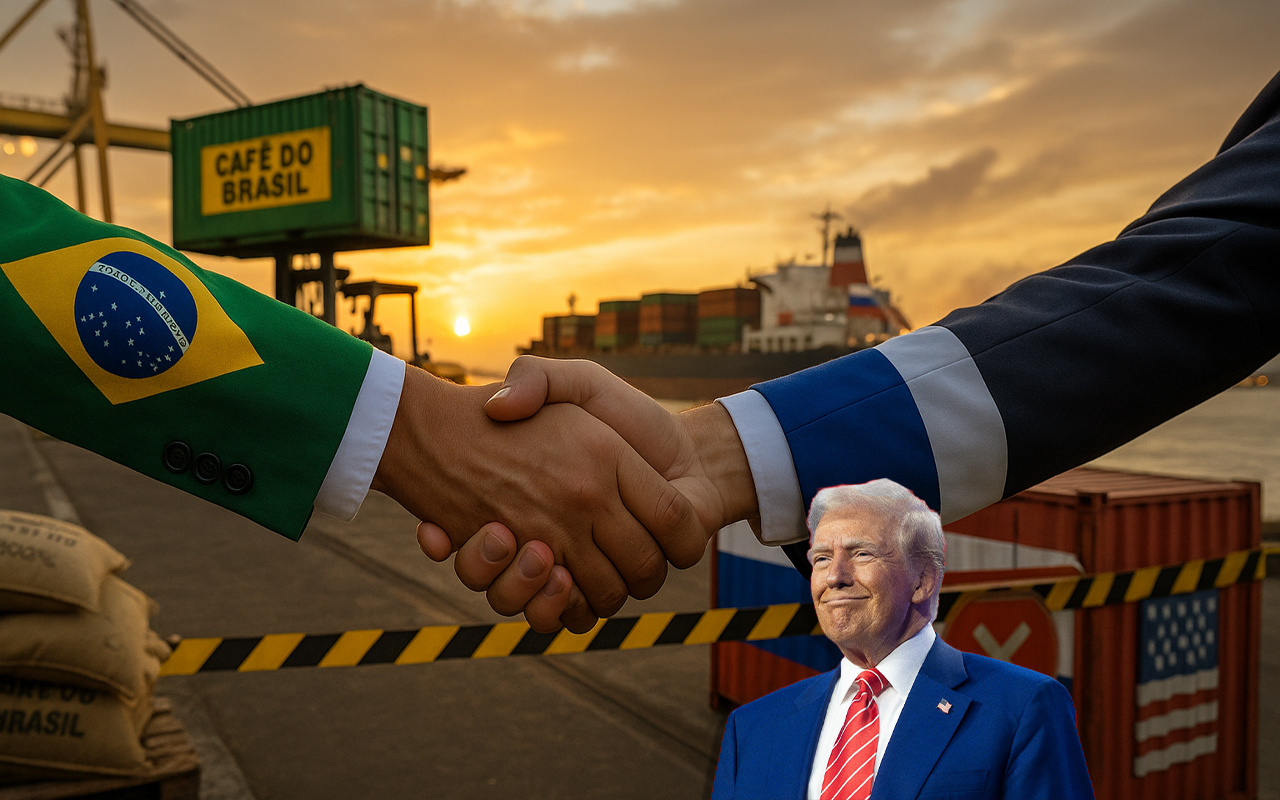
The geopolitical context also weighs in. The tariff of up to 50% imposed by the United States on a basket of Brazilian products took effect on August 6 and includes coffee among the affected items, which pressures exporters to redirect volumes to other destinations, such as Russia, Europe, and Asia. Economic press reports in Brazil show that, where the product was not exempt, companies have already cut shipments to the U.S. and reinforced their diversification strategy.
Russia Expands Purchases of Brazilian Coffee in 2025
From January to July 2025, the total exports of coffee from Brazil amounted to 22.15 million bags, a decrease in volume compared to 2024, but with a 36% jump in revenue to US$ 8.55 billion — a record for the period. In this picture, Russia moves up to 8th place, with 732.29 thousand bags and 3.3% market share. For producers and exporters, the message is clear, there is appetite for Brazilian coffee in Eastern Europe, including medium-term contracts, as long as logistics and payments are well-structured.
The advance occurs while Brazil adjusts shipping windows and financial channels in a scenario of volatile freight rates and more discerning banks. The base set in 2024, logistical scale, and competitive mix between arabica and conilon, support the negotiations for 2025, helping to maintain firm prices even with lower volume.
Specialty Coffees and Conilon on the Rise and Why Russians Are Eyeing Brazil
It’s not just about volume. In 2025, interest in specialty coffees grew among Russian buyers, with a focus on origin, traceability, and sustainability. At the same time, Brazilian conilon (robusta) gained attractiveness for blends, offering consistency and competitive pricing for roasters. The supply environment also contributed: the robusta/conilon harvest in Brazil, with Espirito Santo as the protagonist, advanced at a strong pace and may exceed estimates, according to market experts.
This backdrop was reflected in domestic prices: in August, the CEPEA/ESALQ Indicator for robusta recorded a 43% increase for the month, with the bag price in Espírito Santo reaching R$ 1,469.43 on the 25th. For arabica, the appreciation in the month exceeded 26%. Practical translation: external demand for quality robusta and the perception of tight inventories supported prices for producers.
For exporters, the message is to invest in stable sensory standards, quality certifications, and origin stories. For foreign roasters, Brazil offers scale and diversity: high-altitude arabicas for microlots and standardized conilon for commercial blends.
50% Tariff in the U.S. Changes Route and Accelerates Market Diversification
The decision of the United States to impose a tariff of up to 50% on Brazilian imports, effective from August 6, reconfigured short-term negotiations. Coffee is among the affected items — despite partial exemptions for other products, and companies report contract revisions and redirecting shipments. Strategically, the approach has been to dilute dependence on the U.S. and increase participation from Europe, Russia, and Asia, while maintaining quality and delivery to preserve pricing.
This movement does not mean abandoning the American market, the historical largest buyer of Brazilian coffees, but rather mitigating regulatory risk while the tariff scenario remains uncertain. In the short term, spot contracts and hedging strategies gain importance to preserve margins.