Portuguese
  Spanish


Joab Reis is 33 years old, lost his job as a truck driver, and restarted by selling coffee in the traffic of the Anhanguera highway, west zone of São Paulo. The former driver calls the model the Trust Pix: he delivers the coffee with a Pix card, the driver continues the journey and pays when they can. The routine starts at 2 AM and 28 thermos bottles every day.
Joab Reis is a former truck driver, 33 years old, and every morning he wakes up at 2 AM. Not to drink coffee: to make coffee. There are 28 thermos bottles lined up, pure coffee, coffee with milk, and hot chocolate, all prepared in time to arrive hot at the stretch of the Anhanguera highway, west zone of São Paulo, where drivers are stopped or moving slowly before the day breaks. The former driver offers the coffee through the car window or truck cabin, delivers the product with a card where the Pix is, the client continues the journey and pays when they can. Joab calls this model the Trust Pix, as documented by the channel that recorded his routine.
The former driver lost his job as a truck driver and needed to start over. “When I realized I was unemployed, paying rent, everything, I said: I’m going to chase it, I’m going to go for it, I’m going to make it happen,” Joab said in the report. The inspiration came from a coffee seller in Rio de Janeiro that the former driver saw on the internet using a similar method. Joab adapted the idea for Anhanguera, bet on the trust of the drivers and initially returned home with four full bottles after selling just one. Over time, his friendliness paved the way for loyalty. Today, it is the drivers who pass by looking for the former coffee driver before he arrives.
The former driver who started with difficulty and almost gave up
In the beginning, the model of former driver Joab on Anhanguera did not work as he expected. Few drivers stopped. The effort of waking up at 2 AM, preparing 28 thermos bottles, and going to the highway seemed unjustified when the former driver returned with more coffee than he had sold. “I would come here, sell one bottle and return with four full every day,” Joab reported in the article. It was a cycle of investment without immediate return, a bet that depended on time to work.
-
Brazil’s BNDES Funded Metro and Steel Plant Projects in Venezuela with Brazilian Support

-
Abandoned Building in Brazil to Become Biotechnology Unit with $10 Million Investment, Bridging Science, Industry, and Public Health
-
Company Offering “Stones to Diamonds” Scheme Sells Ruined Italian Homes to Brazilians for 1 Euro, Disappears with Promised Renovations, Leaving Buyers in Debt to Italian Tax Authorities Until 2028 Without Property

-
Plastic Packaging Drives Santa Catarina Industry to 230% Growth, Aiming for R$ 500 Million by 2030 Amid Sector Crisis, with New Gearless Line Expanding in Southern Brazil to Compete in South America



What changed before the sales was the perception that drivers had of the former driver. Joab’s friendliness, the smile on his face in the middle of traffic, the “good morning, warrior” offered along with the coffee caught attention even before the product itself. The “good morning” became the former driver’s trademark on Anhanguera. Drivers who didn’t buy coffee one day stopped to talk the next day. Those who stopped once came back. Loyalty was built not only through the coffee but through the small human pause the former driver provided on a stretch of highway where everyone was stressed. Sometimes a good morning changes everything on a busy day.
The Trust Pix: how the former driver’s model works
The logic of the model created by the former driver Joab on Anhanguera solves a practical problem of moving traffic: there is no time to exchange money when the car is moving. The former driver offers coffee through the window, hands over a card with Pix details, the driver places the product inside the cabin or car and continues. Payment happens along the way, when the driver has time, or later in the day. There is no immediate charge, no requirement to pay before receiving, no insistence.
The former driver calls this system the Trust Pix because that’s exactly what it is: a transaction based entirely on the customer’s word. Joab admits that not everyone pays. “Unfortunately, there are many people who still cheat the system,” said the former driver in the report. But the account balances because the majority pays, and some customers who observe the effort and trust of the former driver even add a tip beyond the coffee’s value, a voluntary tip that compensates for some of the defaults. In the former driver’s balance, the honesty of the majority covers the loss of the minority.
28 thermal bottles and the never-ending dawn
The daily production of the former driver Joab starts at 2 a.m. There are 28 thermal bottles prepared before sunrise, including black coffee, coffee with milk, and hot chocolate. The former driver also brings cake, cheese bread, and other snacks for those who want to accompany the coffee. The entire operation is set up at home before the former driver heads to Anhanguera, and the product needs to arrive hot at the stretch of highway where drivers pass by.
There are days when the former driver runs out of coffee before everyone is served. “The people who pass by a little later, unfortunately, I owe them,” Joab said in the report. The 28 thermal bottles have a limit, and demand is growing. The former driver cannot serve all the customers who seek him out in a single day. It’s the kind of problem any entrepreneur would like to have: more customers than available product, the result of building a clientele that the former driver took months to achieve, leaving at 2 a.m. every day without knowing if it would work.
The viralization the former driver did not expect
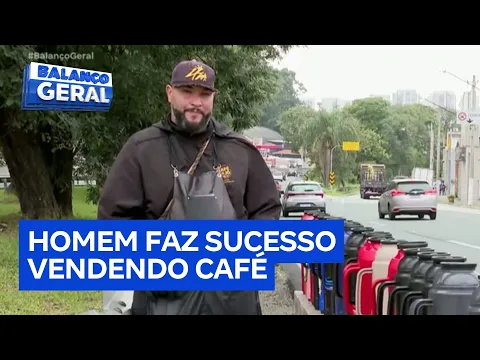

The routine of former driver Joab on Anhanguera was known for years only by the drivers of the route. Until a customer filmed part of the former driver’s daily life and posted it on social media. The video went viral. “I never imagined it would go viral like this, would reach this entire proportion,” Joab said in the report. The story of a former driver who wakes up at 2 a.m., fills 28 thermos bottles, and distributes coffee on trust via Pix struck a chord that the algorithm amplified on a national scale.
But fame did not change the former driver’s routine. Joab continues to wake up at 2 a.m., continues filling the same 28 thermos bottles, continues distributing the card with Pix, and continues saying “go with God” to every driver that passes. “I don’t see myself as famous to walk with my nose in the air. If it was humility that brought me here, it’s through it that I must continue,” said the former driver. The viralization brought visibility to the former driver, but it did not bring change in character or method.
Former truck driver who became a reference on the Anhanguera route
Joab was a former truck driver before becoming the coffee man of Anhanguera. The transition was not planned as a career reinvention: it was a necessity. The former driver lost his job, had rent to pay, a child to support, and needed a quick way out. The internet showed a possible model, the former driver adapted it to the context of São Paulo and went to the highway. No business plan, no consultancy, no significant initial capital.
Today the former driver has customers who come with “small change” because they already know the price of the coffee and want to facilitate the transaction. There are truck drivers who wait for the former driver before entering the highway. There are drivers who send messages via Pix with a thank you along with the payment. The former driver who used to return home with four full bottles at the beginning now owes coffee to those who arrive too late. The difference between the beginning and the present was not luck nor algorithm. It was the 2 a.m. dawn every day.
What the story of the former driver says about trust and new beginnings
The journey of former driver Joab on Anhanguera is a story of new beginnings in a context where starting over is difficult. Unemployment, rent, a child to raise, an idea seen on the internet, and the decision to act without a guarantee of results. The former driver was not sure it would work. He returned home with four full bottles for days before things started to pick up. And he chose a model that depends on the honesty of others, which is a considerable gamble in a city of over 12 million people in fast motion.
The trust-based Pix system of the ex-driver works not because everyone is honest. It works because most people are, and because those who pay add a little extra when they want to compensate for those who don’t pay. It’s an informal balance system that the ex-driver didn’t mathematically plan but operates in practice with enough margin to sustain the operation. The ex-driver bet on Brazilians and they responded. Not all, but enough to make it worth getting up at 2 AM.
An ex-driver who wakes up at 2 AM, fills 28 thermos bottles, and distributes coffee on Anhanguera relying on Pix is an example of resilience and trust that Brazil needs to know more about, or is the model too risky for those who need stable income? Would you pay if you received the coffee without paying at the time? Leave your opinion in the comments.