Portuguese
  Spanish


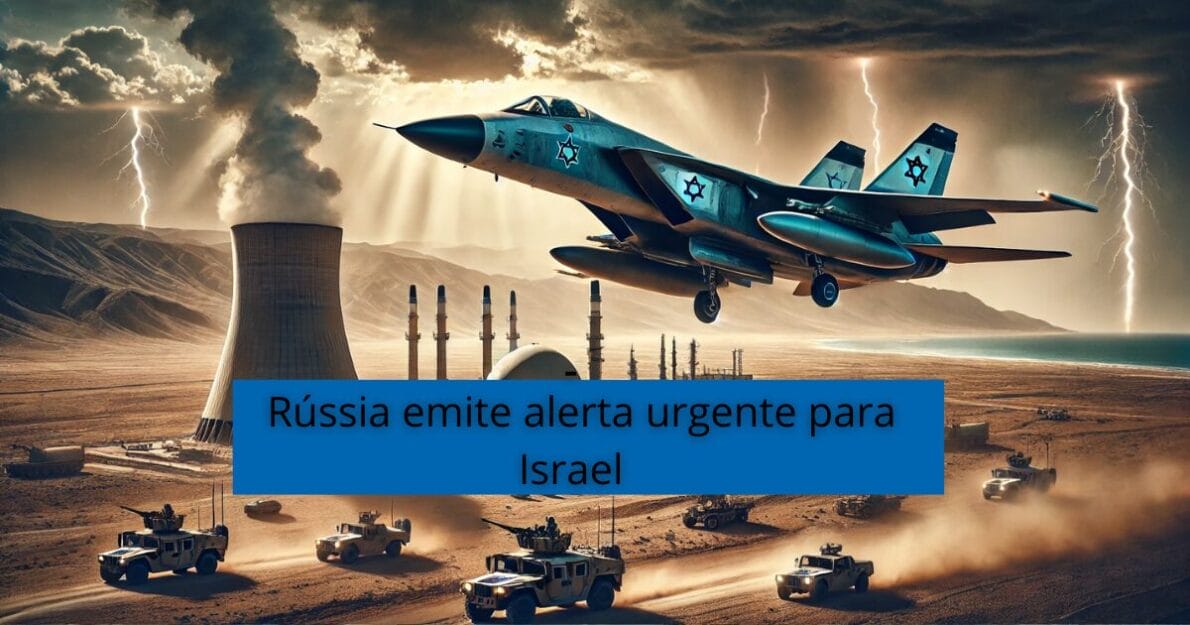

Russia Issued A Serious Warning To Israel, Cautioning Against Attacks On Iran’s Nuclear Facilities After A Recent Iranian Missile Attack. Tension In The Middle East Rises As Speculation About A Possible Israeli Offensive Against Iran Dominates Global Debates. The Middle East May Be On The Brink Of A New Crisis.
In one of the most tense scenarios in today’s world, the shadow of a possible nuclear crisis looms over the Middle East once again.
The already delicate relations between Israel and Iran have intensified even further after a recent attack that has put the two powers on a collision course.
But this time, there is a new ingredient in this explosive equation: Russia has decided to intervene, sending a public and direct warning to Israel.
-
U.S. Navy’s Ticonderoga-class Cruiser Becomes a 9,800-Ton Missile Fortress with Advanced Aegis System Capable of Tracking Hundreds of Targets

-
France’s Charles de Gaulle: The Sole Nuclear-Powered Aircraft Carrier Outside the US, Weighing 42,500 Tons and Equipped with Two Atomic Reactors

-
The military spaceplane that almost took the Cold War into orbit: Boeing X-20 Dyna-Soar was designed to re-enter above Mach 20, fly for up to 40 hours, land like a plane, and transform Titan rockets into a gateway to a new era of orbital warfare.
-
FAB bets on national drones and increases investments to strengthen the Brazilian aerospace industry




The Russian warning, in a serious tone, has reignited fears of an escalation that could involve the world’s major powers.
What is behind this strategic move from Moscow, and why have Iran and its nuclear facilities become the center of attention?
The Russian Response To The Growing Conflict Between Israel And Iran
On October 1st, the Middle East was the scene of yet another episode of violence. An Iranian missile attack targeted at Israel has reignited an old rivalry that, according to analysts, could transform into an unprecedented military escalation.
In light of this, speculations about the possibility of Israel targeting Iran’s nuclear facilities have gained traction. After all, this would not be the first time the Israeli government considers this extreme measure.
The response from Moscow came swiftly. On Thursday, October 17th, the state news agency TASS released a statement from Russia’s Deputy Foreign Minister, Sergei Ryabkov.
The warning was clear: Russia is cautioning Israel against any attack on Iranian nuclear facilities. According to Valor Econômico, the warning was direct, reiterating that Moscow is in constant contact with the Iranian government.
However, the statement left one question in the air: in what way, exactly, did Russia warn Israel? The strategy behind this diplomatic move still remains shrouded in mystery, increasing uncertainty about the future of the crisis.
Netanyahu And Israel’s Role In The Crisis
As Russia takes a firm position, the Israeli government, led by Prime Minister Benjamin Netanyahu, also speaks out.
In a statement published on October 17th, Netanyahu’s office reaffirmed that Israel will make its decisions based on its own national interest.
This stance is well-known, as Israel has been clear in its defense policy and has threatened to attack Iran on various occasions, particularly concerning its nuclear projects.
However, a new piece of the puzzle emerged with a report from The Washington Post. According to the publication, Netanyahu has informed the United States that Israel plans to focus on Iranian military targets, temporarily sidelining the possibility of attacks on nuclear facilities or oil infrastructure.
This decision, if confirmed, could indicate a shift in Israeli strategy, at least for now, avoiding an even more dangerous confrontation with Iran and its allies, such as Russia.
The Role Of Russia And Its Motivations
The Russian warning, although clear, carries important geopolitical nuances. Russia, which has long maintained close relations with Iran, sees stability in the region as fundamental to its own strategic interests.
Any Israeli attack on Iranian nuclear facilities could destabilize an already volatile area, directly affecting Moscow’s interests in the Middle East.
Furthermore, such an attack could pave the way for a broader war, something Russia seems eager to avoid at all costs.
On the other hand, the relations between Russia and Israel, although complex, are pragmatic. Over the years, Israel has maintained dialogue channels with Moscow, especially when it comes to Syria, where both countries have a military presence.
However, Russia’s firm stance in this case suggests that Iranian interests are at the top of Moscow’s priorities at the moment, and a potential direct conflict between Israel and Iran would not benefit its plans in the region.
Speculations About The Future Of The Middle East
The Middle East has been a recurring stage for conflicts over the past few decades, many of them with global repercussions.
The tension between Israel and Iran is not new, but Russia’s direct involvement in the Iranian nuclear issue brings a new level of complexity.
Analysts fear that a more drastic action by Israel, such as attacking Iran’s nuclear facilities, could trigger a chain reaction with unpredictable consequences.
Meanwhile, the world is closely watching every move, every diplomatic statement. The lingering question is: Will Israel proceed with its military plans, even in the face of Russian warnings?
Or will the risk of a new war in the Middle East force regional and global leaders to seek a diplomatic solution to the impasse?
The outcome of this crisis is still far from being defined, but one thing is certain: the Middle East remains one of the most unstable and strategically important regions in the world.
The next decision by Israel could change the course of the region’s recent history and impact global geopolitics in the coming years.
And you, do you think the Russian warning will be enough to prevent Israel from acting against Iranian nuclear facilities?