Portuguese
  Spanish


Joachim Klement ran the statistical model that made him famous again and placed the Netherlands at the top. The choice draws attention because the team doesn’t even appear among the favorites in other projections, which serves as a reminder: statistics indicate a trend, not a guaranteed result on the field.
The German economist Joachim Klement has stirred the football world again by releasing his prediction for the 2026 World Cup. He became known for a feat that few analysts can boast: according to the publication that reported the case, he correctly predicted the champions of the last three editions, Germany in 2014, France in 2018, and Argentina in 2022. It was this track record that made the new prediction go viral worldwide in a matter of days.
This time, the name that emerged from the calculation surprised even those who follow the subject closely. Instead of one of the usual powerhouses, Klement’s model placed the Netherlands at the top of the list for the 2026 World Cup. The projection mixes FIFA ranking, economic indicators, population, and a series of other numbers, and the result became a topic among fans and commentators precisely because it deviates from the obvious. It is worth remembering, from the outset, that this is a simulation, not a certainty.
The Netherlands at the top and a not easy path
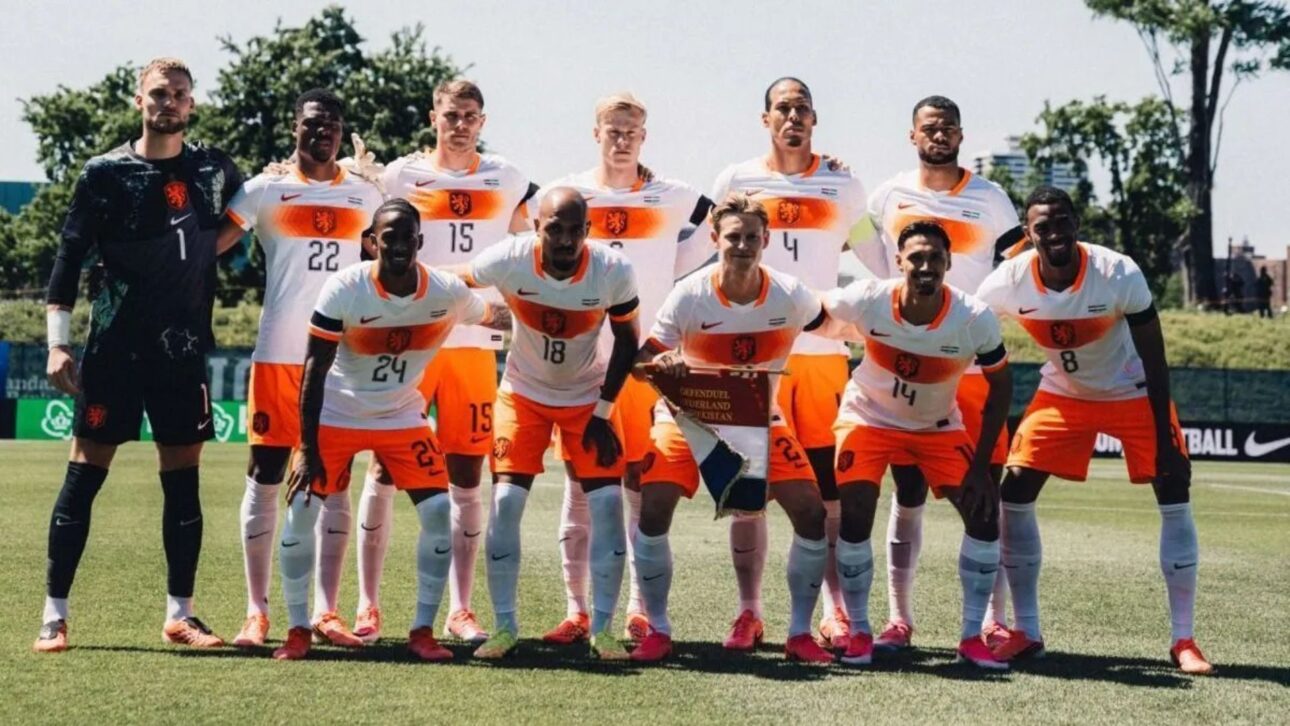
The simulation mapped out a respectful path to the title: in the quarter-finals, the Netherlands would get past France.
-
Brazilian Students Turn Recycled Plastic Bottles into Synthetic Yarn for Scarves to Aid Needy Families

-
Why the Same Citrus Fruit Has Different Names Across Brazil and How Varieties Differ
-
India Paints Road Red and Uses Smart Asphalt to Slow Drivers and Protect Wildlife in Nature Reserve

-
Yellow vs. White Fat: The Little-Known Difference That Can Impact the Quality and Flavor of Your Barbecue



In the semi-finals, they would leave Spain behind. And, in the final, they would beat Portugal to lift the trophy.
It’s not exactly a walk in the park.
The author himself admitted to being surprised by what he saw.
Klement mentioned that few of the scenarios tested showed a journey as tough as the Netherlands’ path to the title.
Even so, when the numbers were added up, it was the orange team that ended up at the top of the probabilities.
The detail further fueled the discussion, because it put the Netherlands in the spotlight in a position that other analyses reserve for different names.
The Opta supercomputer disagrees
And here the story gains a counterpoint worth gold: not everyone sees the same thing.
The Opta supercomputer, a company specialized in sports statistics, created a very different scenario for the 2026 World Cup.
According to their calculations, Spain is in the lead, with a 15.8 percent chance of taking the trophy.
The Netherlands, Klement’s favorite, appears far down this list, with only 3.8 percent.
What Opta shows is a tight group in the race for the title.
Right behind Spain are France, England, Argentina, Portugal, Brazil, Germany, and the Netherlands itself, with percentages that gradually decrease without any overwhelming favoritism.
In other words, two serious models looked at the same tournament and arrived at answers that barely meet, which says a lot about the level of uncertainty.
Title chances according to Opta
- Spain: 15.8%
- France: 12.7%
- England: 10.9%
- Argentina: 10.5%
- Portugal: 6.9%
- Brazil: 6.5%
- Germany: 5.6%
- Netherlands: 3.8%
The track record is impressive, but calls for caution
Getting three consecutive champions right is the kind of resume that makes headlines, and it’s no wonder Klement’s prediction went viral.
The history, as told by the publication, gives the study an aura of near infallibility in the eyes of many fans.
The credibility it gained stems from this, from a track record that seems too good to be just statistics.
However, it’s worth holding back the excitement before treating the Netherlands as the anticipated champion.
Models like this work with probability, and three consecutive hits coexist with a good dose of luck, especially in such an unpredictable sport.
The proof that nothing is decided is the very clash with Opta, which doesn’t even see the Dutch among the main candidates.
When two respected studies disagree so much, the message is simple: no one has the answer in their pocket.
Brazil and the hunt for the sixth title in a different tournament
For the Brazilian fan, the usual question remains: is the sixth title coming?
The 2026 World Cup will be held in the United States, Mexico, and Canada, and it brings quite a change: for the first time, there will be 48 teams on the field, with more games and unprecedented matchups.
The National Team, in this scenario, tries to finally end the drought that has lasted since the 2002 fifth title and place the sixth star on their chest.
However, numbers don’t kick the ball for anyone.
In Opta’s list, Brazil appears with a 6.5 percent chance, in a tight group of candidates, and no spreadsheet replaces what happens on the pitch.
What has always mattered still does: predictions help understand who arrives stronger, but the game decides.
And, with an expanded format and more upsets lurking, 2026 promises to be one of the most unpredictable editions in recent history.
In the end, Klement’s prediction is valuable for the debate it provokes, not for a verdict it cannot give.
The Netherlands at the top of one model and off the podium of another sums up the spirit of the thing well: the 2026 World Cup arrives surrounded by guesses, spreadsheets, and opinions, but without a unanimous favorite.
That’s what football lives on, after all, the doubt that only the rolling ball resolves.
And you, do you believe in the prediction that places the Netherlands as champions or do you bet on another team? Tell us in the comments who you predict as the winner of the 2026 World Cup, if you trust more in Klement’s model or Opta’s supercomputer, and how far you imagine Brazil will go in this World Cup. The discussion is open, with respect for those who support each team.