Portuguese
  Spanish


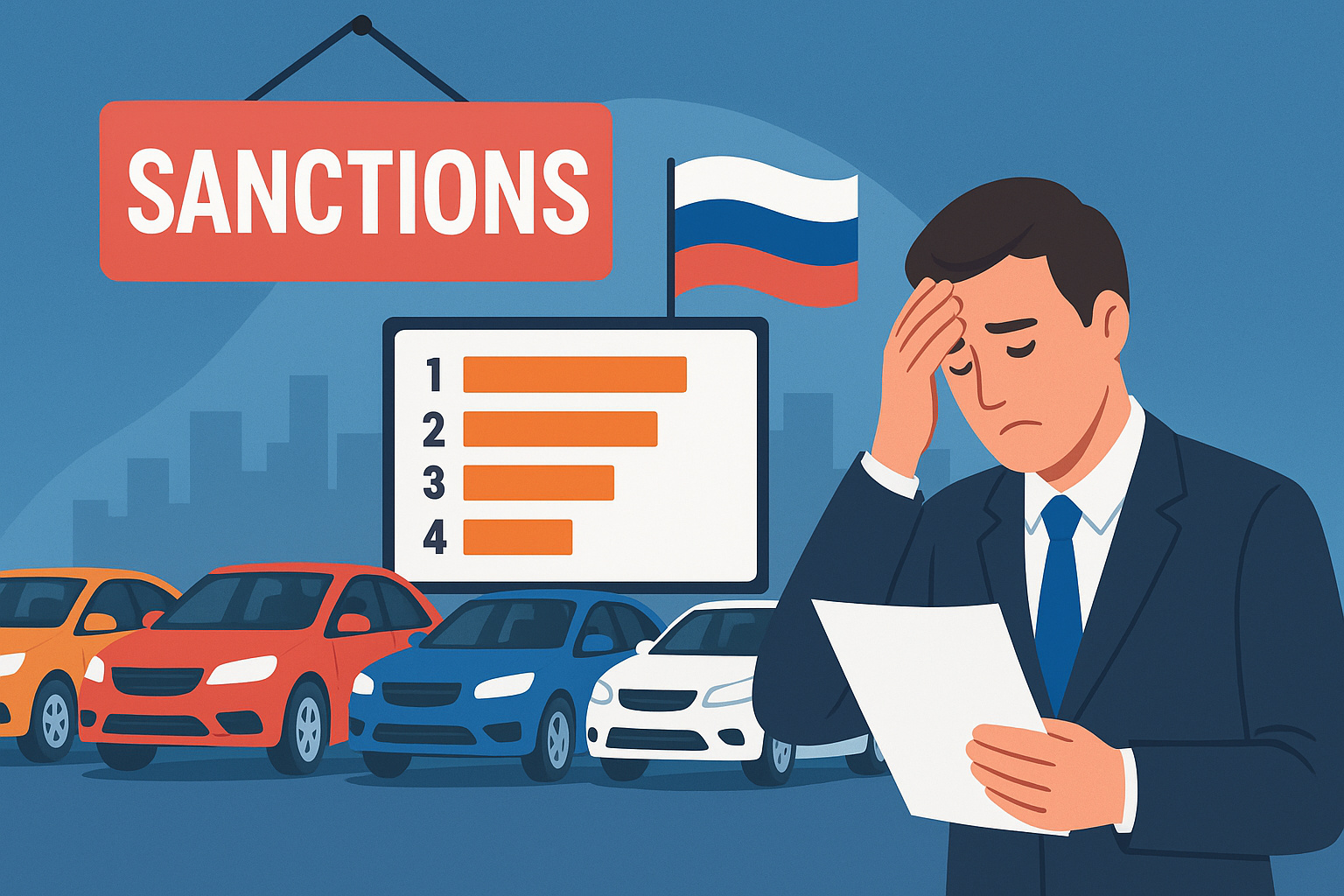

Even With Sanctions, More Than 39 Thousand Western Cars Reached Russia in 2025. Ranking Reveals Chinese Advancement and Loopholes in Restrictions
Russians Continue Buying Western Cars Despite Sanctions
Western powers imposed sanctions to isolate Russia. They aimed to reduce the population’s access to luxury goods. However, the effect proved to be limited.
In 2025, Russians purchased more than 39 thousand western cars. The Russian Traffic Safety Directorate (GIBDD) released the numbers. Thus, the restrictions did not prevent consumption.
Market Dominated by Chinese, but With Loopholes
Western automakers left Russia. Chinese and Russian brands filled the gap. China’s market share increased from 7% in 2021 to 56% in 2025. National manufacturers accounted for 34% of sales.
-
Toyota Shifts from Hybrid Cars to Electric Air Taxis with Joby’s 6-Rotor Aircraft, Capable of 322 km/h, Aiming for Mass Production to Electrify Urban Skies

-
Ferrari Unveils Limited Edition 12Cilindri Manuale: 6.5-Liter V12, 830 HP, 0-100 km/h in 2.9 Seconds, Top Speed Over 340 km/h, Only 1,499 Units Available

-
Discover the 2021 Fiat Cronos 1.3: Affordable Maintenance, Reliable Mechanics, and Fuel Efficiency of Up to 15.6 km/l
-
Cummins Unveils Hydrogen-Powered X15H Engine with Over 800 km Range and 15-Minute Refueling, Challenging Electric Truck Dominance


Even so, western cars maintained around 10% of the market. Parallel imports ensured this result. Therefore, traders and consumers quickly exploited the loopholes.
Car Ranking in 2025
The car sales ranking shows the strength of the Chinese and the resilience of the Western brands. Lada led the ranking, but Haval, Chery, and Geely held prominent positions.
- Lada (Russia) – 162,791 units
- Haval (China) – 63,929
- Chery (China) – 55,250
- Geely (China) – 35,578
- Changan (China) – 30,017
- Solaris (Korea) – 10,480
- Toyota (Japan) – 7,780
- BMW (Germany) – 5,278
- Mercedes (Germany) – 4,022
This way, even without local production, traditional brands remained present.
Solaris and the Repurposed Factories
A peculiar strategy was adopted by Solaris. The former Hyundai factory in Saint Petersburg was acquired by the Russian company. There, Hyundai and Kia vehicles began to be assembled without a license.
The models received new names, such as Solaris HC (Hyundai Creta) and Solaris KR (Kia Rio). Thus, consumption continued even in a sanctions scenario.
Parallel Imports Sustain the Market
The most used mechanism was parallel import. Cars were purchased by individuals and companies in Central Asian countries. Kazakhstan became an important logistics center.
Consequently, luxury vehicles such as BMW, Mercedes, and Toyota continued to arrive. Soon, the restrictions proved to be ineffective.
Sanctions Under Scrutiny
The numbers confirmed the fragility of the measures. As highlighted in the GIBDD report:
“In the first half of 2025, 39,000 cars from western brands were sold in Russia, despite the sanctions. Another proof of how ineffective they have been.”
Therefore, the impact was partial. Chinese brands won in market share. However, the Western brands did not disappear.