Portuguese
  Spanish


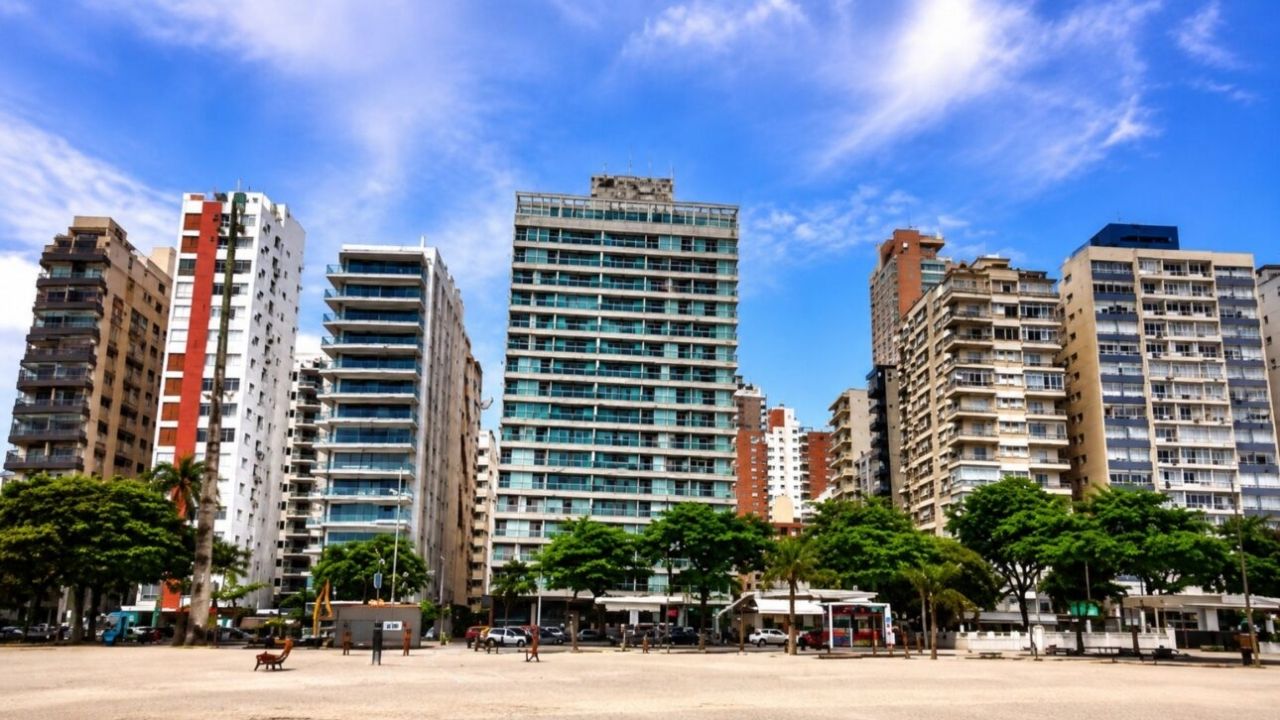
Tilted buildings of Santos appear in parallel debate to the R$ 200 million financing approved by BNDES for drainage, channels, gates, coastal protection, and urban requalification. The climate plan targets more than 200,000 people and addresses flooding, storm surges, and sea level rise in the East Zone of the city.
The tilted buildings of Santos returned to the center of the urban debate as the city advances in a climate adaptation plan supported by BNDES. On April 11, 2026, the BNDES News Agency reported the approval of R$ 200 million for climate resilience works in the municipality.
The operation targets drainage, coastal protection, modernization of channels, and urban requalification, with a direct impact expected on more than 200,000 people. At the same time, the city maintains discussions about a historical problem of the shore: tilted buildings that require engineering solutions, financing, and coordination between residents, City Hall, and public institutions.
Santos wants to tackle extreme climate and old problems
The City Hall of Santos reported on April 25, 2025, that it would develop a strategic plan with the National Bank for Economic and Social Development to address the impacts of climate change. The commitment was made in a meeting between Mayor Rogério Santos and BNDES President Aloizio Mercadante in São Paulo.
-
EPS duplex house is ready in up to 5 days without conventional pillars and beams: fair in Espírito Santo showcases sand made from mining waste, a 250 m² modular house assembled in 15 days, and technologies that can change the time, cost, and waste on construction sites.

-
Dubai will invest US$ 22 billion in sewage tunnels up to 90 meters deep, replacing pumps with gravity and replacing more than 100 old stations, in an attempt to save a city of skyscrapers, artificial islands, and rapid growth from an underground problem that has already overflowed into the streets.

-
The history of the Hercílio Luz Bridge involves controversies, love, and renewal: From its iconic construction to its reopening, it is a symbol of Santa Catarina.
-
On the world’s highest navigable lake, the Uros people have hand-built around 100 floating straw islands, living on them for 3,000 years without concrete or foundations.


At that time, the study aimed to analyze macro-drainage, drainage, stormwater, and complementary interventions. Among the points mentioned by the City Hall was the repositioning of the tilted buildings on the shore, a topic treated as a historically and technically complex urban problem.
R$ 200 million financing targets climate resilience
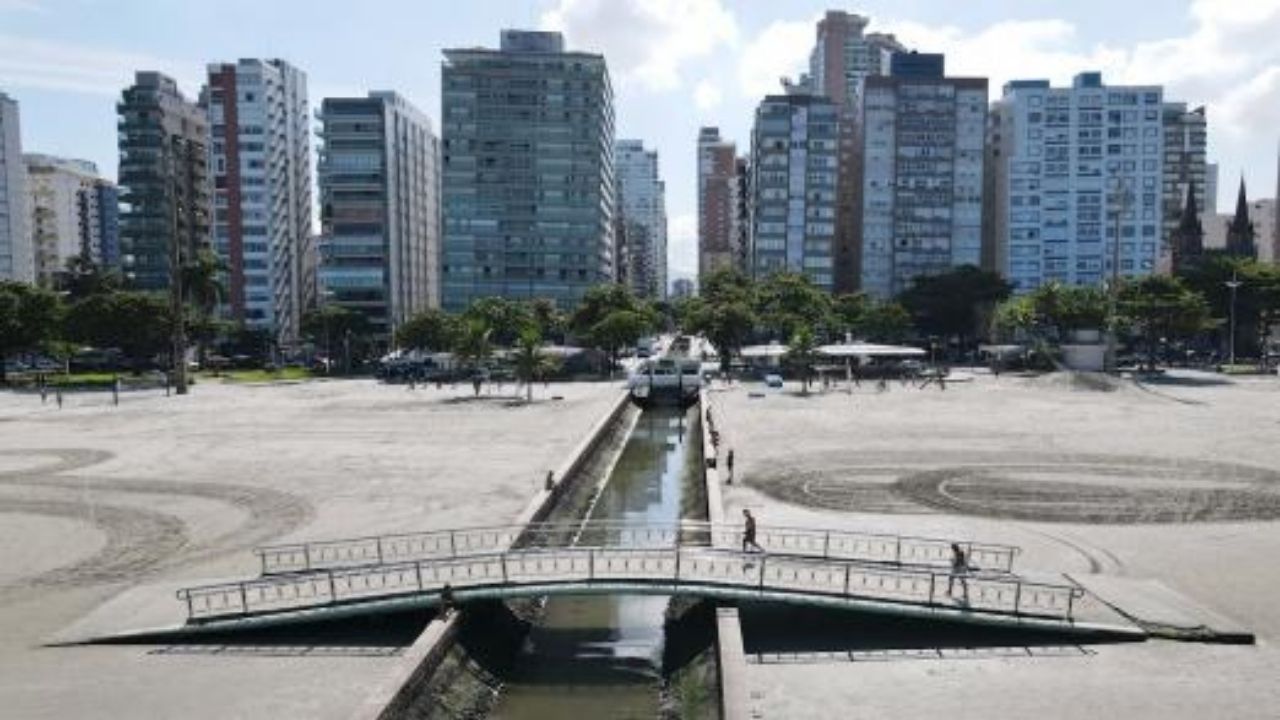
In 2026, BNDES approved R$ 200 million for the municipality of Santos to execute an investment plan in climate adaptation and resilience. The operation is part of the BNDES Resilient Cities Program and will be funded with resources from the Climate Fund.
According to the bank, the interventions are expected to benefit more than 200,000 people, equivalent to about 50% of the inhabitants, not counting the floating population. The central focus of the financing is to reduce risks caused by heavy rains, floods, storm surges, and rising sea levels.
Works include drainage, channels, and coastal protection
The plan supported by BNDES includes macro and micro-drainage works, modernization of the channel and sluice system, coastal protection, and urban space requalification. The East Zone is highlighted as a priority area due to its high concentration of residential, commercial, tourist, and mobility activities.
This region also suffers from direct impacts of extreme weather events. When floods hit roads, channels, and areas near the shore, the effects are felt in population movement, public services, commerce, and tourism.
Nature-based solutions included in the package
In addition to traditional infrastructure, the project includes nature-based solutions. BNDES mentions the expansion of permeable areas and the creation of spaces for rainwater infiltration.
These measures aim to reduce the volume of water quickly flowing through the streets and improve the city’s environmental quality. In practice, the plan seeks to combine urban engineering, drainage, and environmental recovery to prepare Santos for more intense weather events.
Sea level rise concerns the city
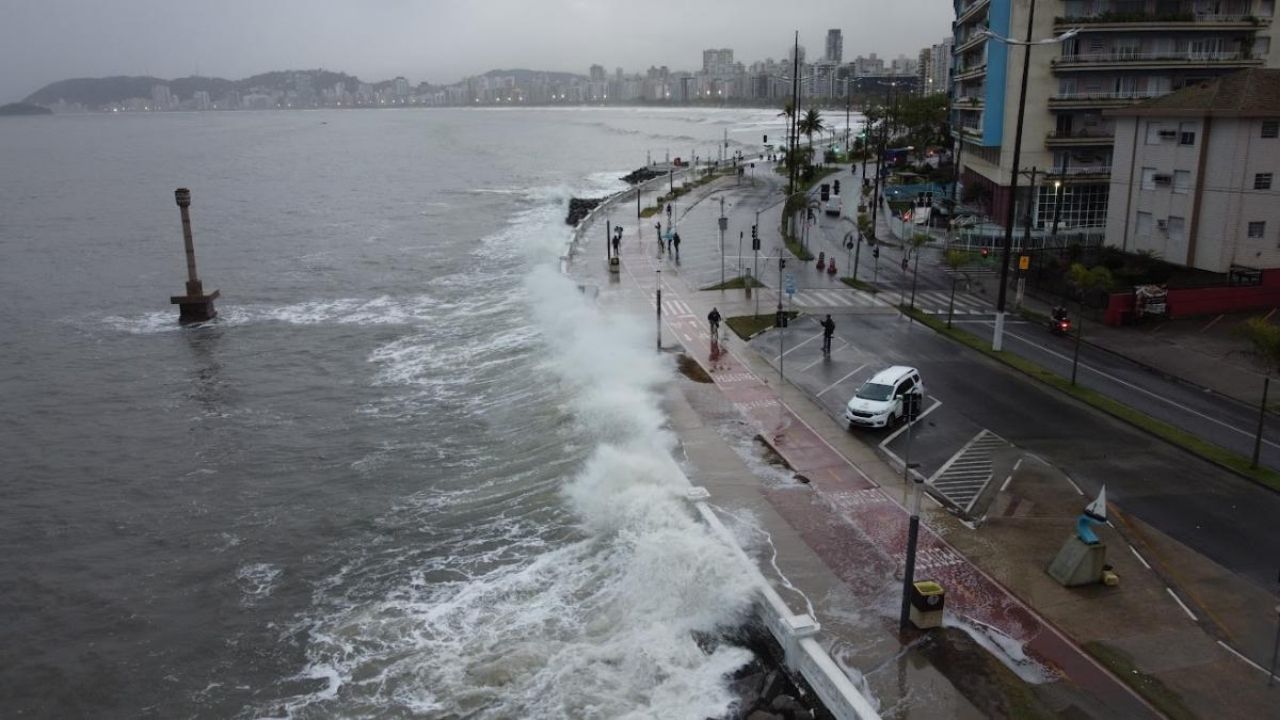
Santos is a coastal city, with a tourist shoreline, strategic port, and dense urban areas near the sea. Therefore, rising sea levels and storm surges are considered significant risks in the planning.
The City Hall had already mentioned, in 2025, alternatives such as jetties or bags to recover the beach’s sand strip. Coastal protection is now treated as part of urban security, not just as a tourist enhancement project.
Crooked buildings are a historical problem of the coastline
The crooked buildings of Santos are linked to an old process of urban occupation. A report published on April 26, 2026, pointed out that 319 buildings show some inclination in the municipality, with 65 cases being more pronounced, with up to 2.2 degrees of deviation.
Most of the more critical cases are located on the coastline. The problem is attributed to the sandy soil and insufficient foundations in constructions carried out during the city’s real estate boom starting in the 1950s.
Alignment cost can reach R$ 22 million per building
According to an estimate by Acopi, the Association of Inclined Building Condominiums, realigning each building could cost between R$ 7 million and R$ 22 million. The entity seeks support to enable long-term financing.
This point shows why the problem is so difficult. Engineering has technical paths, but financial engineering is one of the biggest obstacles, especially when costs need to be divided among condominiums, residents, and potential credit lines.
Properties are monitored by a municipal program
The inclined buildings are monitored by the City Hall through Pisa, the Santos Inclined Buildings Program. According to the attached report, the monitored properties do not pose immediate risks according to periodic structural inspections and measurements.
Even so, daily challenges persist. Residents report higher costs with elevator maintenance, internal hydraulic difficulties, and practical effects of the inclination on the routine of the condominiums. The problem is not just visual: it affects maintenance, real estate valuation, and daily life.
Realignment has already been done in a condominium
The most well-known correction case is the Núncio Malzoni Condominium, on the Boqueirão coastline. The work took place between 2001 and 2011 and was financed by the residents themselves.
One of the techniques used included an external secondary structure with concrete piles on the sides of one of the blocks, with a depth of 56 meters. The example shows that correction is possible, but also highlights the technical and financial complexity of realignment.
BNDES awaits formal projects for inclined buildings
In the specific case of the tilted buildings, the financing discussion requires a formal presentation of projects. BNDES informed that it is awaiting documentation according to the bank’s rules for support to municipalities.
Among the necessary items are engineering project, budget, physical-financial schedule, and legal aspects, such as land regularity and environmental licensing. Without these elements, the topic of the inclined buildings does not automatically become a funded project.
Climate plan and inclined buildings move on different fronts
It is important to separate the fronts. The R$ 200 million financing approved by BNDES is directed towards climate resilience, drainage, coastal protection, and urban requalification. Meanwhile, the realignment of the inclined buildings depends on specific studies, projects, and modeling.
The two discussions intersect because they deal with the urban future of Santos. On one hand, the city needs to adapt to extreme climate; on the other, it needs to deal with structural marks left by decades of real estate growth on sensitive soil.
Climate Fund finances urban adaptation
The resources approved by BNDES will come from the Climate Fund, an instrument aimed at projects related to climate change mitigation and adaptation. In the case of Santos, the operation falls under the axis of resilient cities.
The proposal is to support Brazilian municipalities in facing climate impacts through integrated projects. Drainage, coastal protection, urbanism, and environmental solutions appear as pieces of the same planning.
Quality of life enters the center of the justification
Mayor Rogério Santos stated, in 2025, that the studies would help diagnose macro-drainage, drainage, and stormwater systems, integrating executed and ongoing works. The justification presented by the City Hall is to expand preventive actions against climate effects.
BNDES, on the other hand, points out that the plan should improve the quality of life for more than 200,000 people. The idea is to reduce risks, protect the coast, and make the urban environment more functional in the face of extreme events.
Port, tourism, and housing depend on adaptation
Santos is not just a residential coastal city. The municipality has a strategic port for the Brazilian economy, significant tourist areas, and densely populated neighborhoods.
Therefore, flooding, high tides, and urban problems affect more than just residents of a single region. Climate adaptation impacts the city’s mobility, commerce, tourism, public services, and economic functioning.
The challenge will be to turn plans into action
The approval of financing is an important step, but it does not end the process. Drainage works, canals, floodgates, coastal protection, and urban requalification require executive projects, licenses, schedules, hiring, and supervision.
In the case of the leaning buildings, the complexity is even greater because each building has its own structure, foundation, width, height, and condominium situation. There is no single solution that fits all the inclined buildings along the coast.
Santos tries to prepare the city for the future
The R$ 200 million plan places Santos on an urban adaptation agenda that is expected to become increasingly common in coastal cities. Intense rains, sea advancement, and high tides require preventive works, not just emergency responses.
At the same time, the leaning buildings remind us that old problems also need to be included in the planning. The city discusses how to protect the coast, reduce flooding, and tackle structural marks from decades of urbanization.
Between the sea, the rain, and the inclined coast
Santos faces challenges that seem different but are connected in the same territory: extreme climate, insufficient drainage, sea advancement, real estate appreciation, tourism, and inclined buildings. The response will depend on technique, financing, and continuity.
BNDES financing can accelerate climate works, while the debate over the leaning buildings requires specific projects and consensus among residents, the City Hall, and institutions.
Do you think Santos should prioritize drainage and coastal protection first or seek a simultaneous solution for the inclined buildings along the coast? Leave your opinion in the comments.