Portuguese
  Spanish


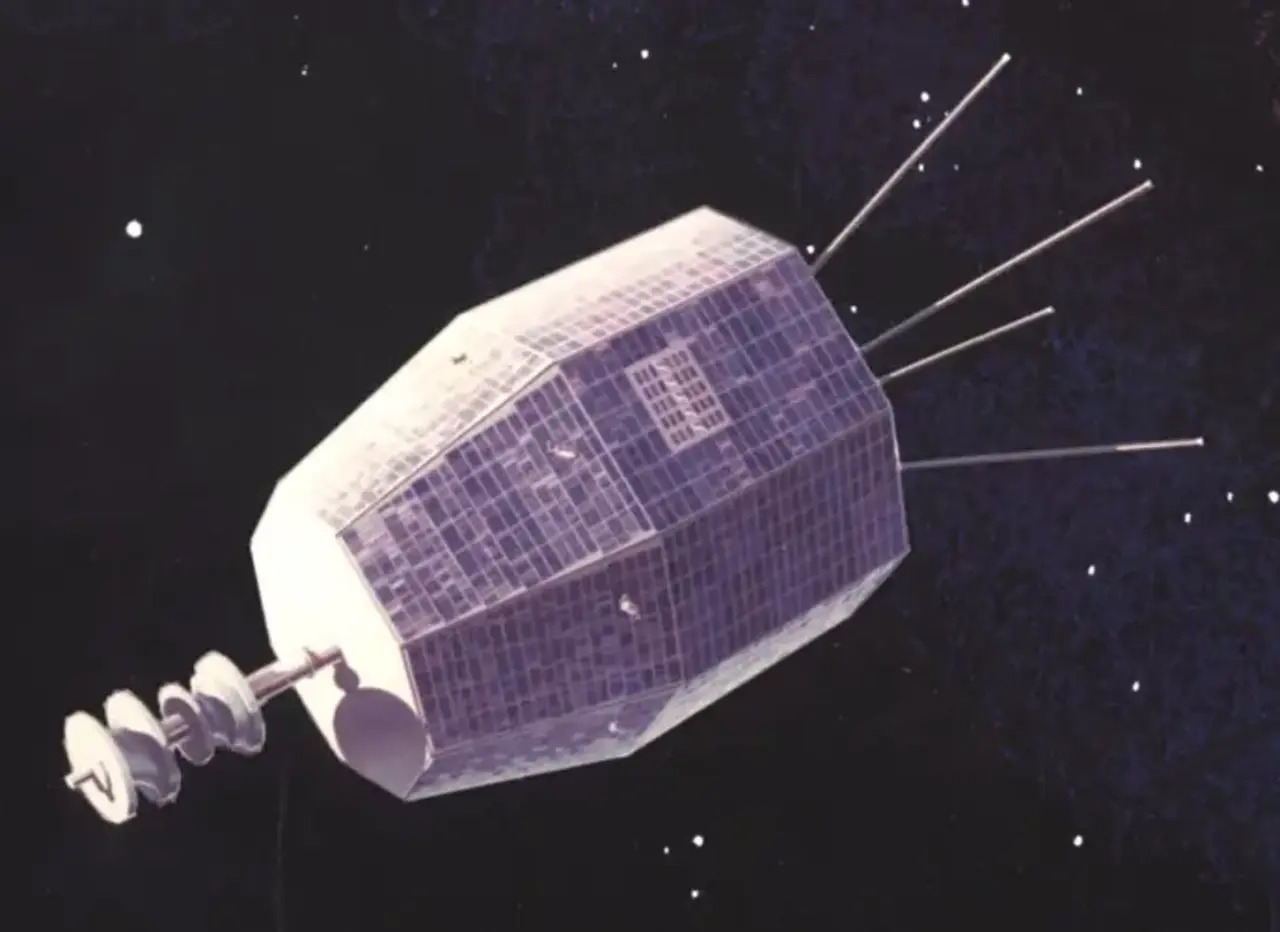


After Almost 60 Years of Silence, the Relay-2 Satellite Emitted an Intense Pulse That Surprised Astronomers and Confused Sensors on Earth
A satellite launched by NASA in 1964, which had been inactive since 1967, has returned to attention. In June 2024, it emitted a mysterious signal, so intense that it overshadowed all others detected at that moment. The case was only revealed now, after analysis by Australian researchers.
The phenomenon was recorded on June 13, 2024, by scientists operating the Australian Square Kilometer Array Pathfinder (ASKAP).
At first, they thought they were facing an unknown cosmic object. The intensity of the radio pulse led astronomers to consider the discovery of a new pulsar or something similar.
-
Brazil Approves Non-Hormonal Drug to Alleviate Menopausal Hot Flashes, Potentially Transforming Treatment

-
Giant Phantom Halo Appears Around Remote Pacific Islands, NASA Reveals It’s Created by Tiny Marine Organisms

-
Scientists Develop Method to Store Wind and Solar Energy by Liquefying Air for On-Demand Power Generation

-
Brazilian Engineer Who Grew Up Without Electricity Develops Software, Expands AltoQi to 67,000 Clients, Aiming for $21 Million by Digitizing Brazil’s Construction Industry




However, when tracing the origin of the signal, the team realized it came from something much closer to Earth. It was the Relay-2 satellite, a deactivated piece of NASA equipment, which was still orbiting the planet after more than half a century.
The History of Relay-2
The Relay-2 was launched in January 1964 as an experimental communications satellite. It also served to assist in mapping the Van Allen radiation belt. Its predecessor, the Relay-1, performed similar functions.
During the time it was active, the Relay-2 was operated from the Mojave Desert Ground Station in the United States.
Subsequently, this operation was transferred to another program. The satellite was part of the project that enabled the first international television broadcasts between the U.S., Europe, and Japan.
One of the first events transmitted via Relay-2 was, in fact, the coverage of the death of President John F. Kennedy, who was assassinated in November 1963 in Dallas.
The Pulse That Surprised Scientists
The rapid radio burst (RFB) detected in 2024 lasted just 30 nanoseconds. Even so, it had enough power to temporarily overshadow other space signals. This type of pulse can release energy comparable to that of an entire galaxy, according to NASA itself.
Interestingly, Relay-2 had not emitted any type of communication for almost 60 years. It officially ceased operations in June 1967. Since then, it had been orbiting silently.
What Could Have Caused the Signal
The primary hypothesis of researchers is that the pulse may have been the result of an electrostatic discharge accumulated over decades in space.
This type of phenomenon has been observed before, including by the Arecibo telescope, which collapsed in 2020.
Another possibility raised is the impact of a micrometeoroid or some other object with the satellite, releasing a small cloud of plasma that, upon contacting the detection instruments on Earth, generated the captured pulse.
The case intrigued astronomers and showed that even satellites deemed dead can, unexpectedly, manifest again.
With information from Tec Mundo.