Portuguese
  Spanish


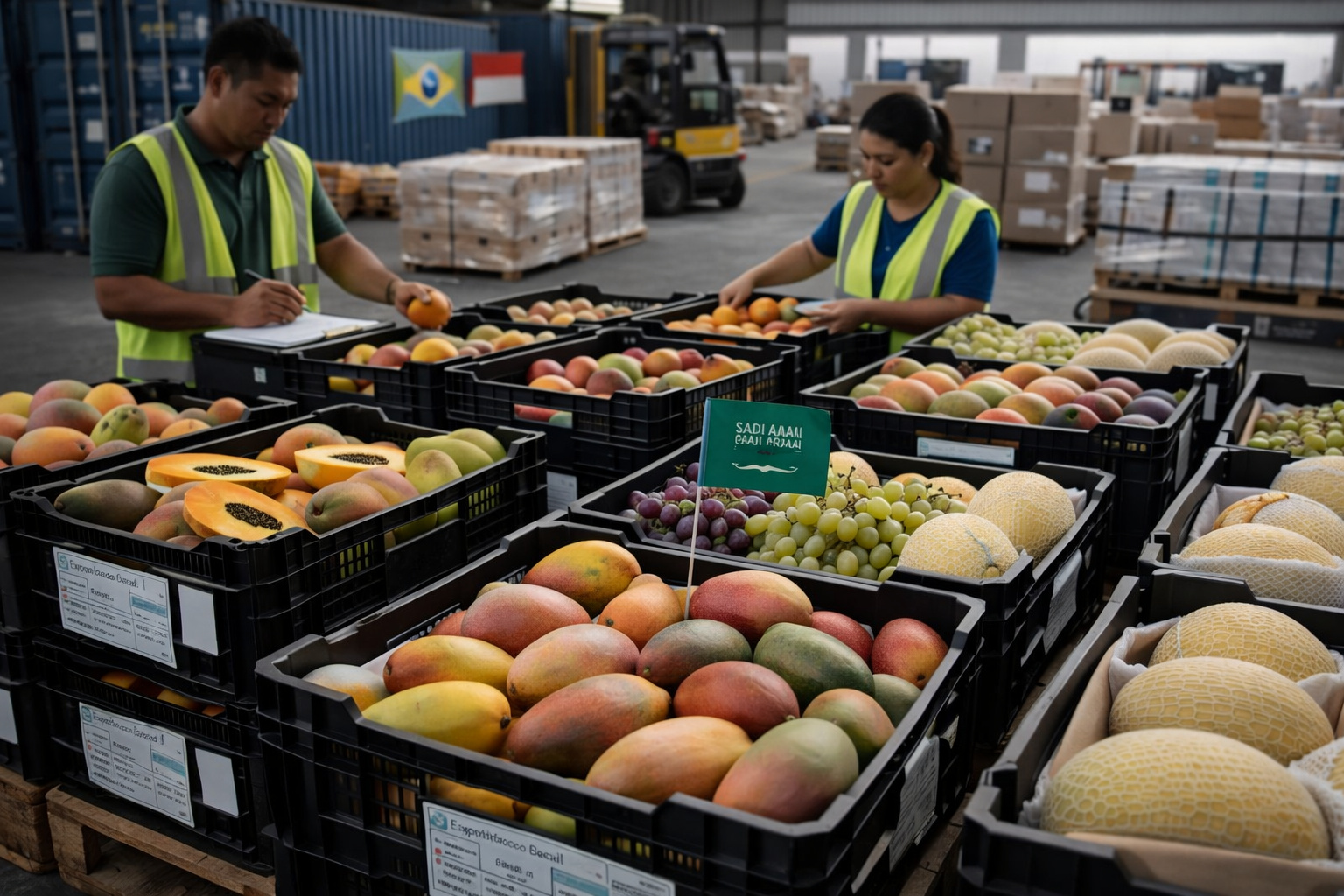

Saudi Arabia authorizes 9 Brazilian fruits and opens a billion-dollar market that can boost exports, production, and jobs in agribusiness. With this new market, Brazilian agribusiness reaches 591 market openings since the beginning of 2023.
On April 15, 2026, a joint statement from the Ministry of Agriculture and Livestock (Mapa) and the Ministry of Foreign Affairs (MRE) announced the opening of the Saudi Arabian market for the import of nine products from Brazilian fruit farming, consolidating another advance in the international expansion of agribusiness. The authorization includes avocado, atemoya, guava, starfruit, citrus, ginger, papaya, passion fruit, and watermelon, expanding Brazil’s export portfolio in one of the most strategic markets in the Middle East.
The release not only represents the entry of new Brazilian products into the Saudi market. It reinforces an already significant trade relationship: according to the federal government itself, Saudi Arabia imported over US$ 2.8 billion in Brazilian agricultural products in 2025, highlighting the economic weight of the bilateral partnership. With these announcements, Brazilian agribusiness reached 591 market openings since the beginning of 2023, a result of coordination between Brazil’s technical and diplomatic areas.
The entry of these fruits into the Saudi market opens a new commercial front that can directly impact agricultural production, logistics, and job creation in Brazil.
-
Producer receives news and had to cull almost the entire herd, bounced back with the help of compensation, and is now producing 450 liters of milk per day in SC.

-
Quail Eggs Reveal a “Secret Code” on Their Shells Explaining Unique Patterns and Colors

-
Rare Tropical Fruit Canistel, with Egg Yolk Color and Caramel Flavor, Gains Interest from Researchers and Small Producers in Brazil
-
Brazilian Farmers Develop Wheeled Metal Lever to Ease Cassava Harvesting Without Heavy Machinery


Simultaneous opening of nine products expands the scale of impact in the field
Unlike isolated releases, the simultaneous authorization of nine fruits creates a broader effect on the production chain. This occurs because different regions of Brazil are responsible for specific crops, which distributes the economic benefits more widely.
The Northeast, for example, has a strong presence in the production of watermelon, papaya, and passion fruit, while regions in the Southeast and South stand out in fruits like citrus and avocado. Products like ginger and atemoya involve more specialized production chains.
This diversity allows the market opening to impact multiple agricultural hubs simultaneously, increasing the potential for income and job generation. Additionally, it favors small and medium producers who participate in these chains.
The Saudi market is strategic due to high purchasing power and external dependency
Saudi Arabia is considered a strategic market for two main factors: high purchasing power and low internal agricultural production capacity.
Due to the country’s climatic conditions, a large portion of the food consumed needs to be imported. This creates a structural dependency on international suppliers, especially for fresh products like fruits.


This scenario places Brazil in a privileged position, as it has productive capacity, climatic diversity, and established export logistics.
Moreover, the Arab country has increased its food imports in recent years, driven by population growth and changes in consumption habits.
Fruit export requires sophisticated logistics and generates indirect jobs
Fruit export involves not only agricultural production. It is a complex chain that includes stages such as:
- harvesting at the ideal time
- specialized packaging
- refrigerated transport
- strict sanitary control
- international logistics
Each of these stages generates direct and indirect jobs, expanding the economic impact of market opening.
Transport, for example, requires refrigeration infrastructure to preserve product quality during journeys that can last days or weeks. This boosts sectors such as transport, storage, and foreign trade.
Sanitary certification was decisive for product release
The authorization from Saudi Arabia does not occur automatically. It depends on a rigorous technical process, conducted by health authorities from both countries.
Brazil needed to prove:
- phytosanitary control of crops
- absence of specific pests
- traceability of production
- quality standards required by the importer
This process is essential to ensure food safety and commercial trust. The final approval indicates that Brazil meets the standards required by a market considered demanding.
Market diversification reduces dependence on large buyers
The opening of the Saudi market also contributes to the strategy of diversifying Brazilian exports.
Historically, Brazil heavily depends on large buyers like China and the European Union. Although these markets remain relevant, expanding to new destinations reduces economic risks.
By expanding to the Middle East, Brazil creates trade alternatives that increase the stability of the sector. This diversification is considered essential to face demand fluctuations, economic crises, and trade barriers.
Brazilian fruit cultivation gains new opportunity for international expansion
Fruit cultivation is one of the most dynamic segments of the Brazilian agribusiness, with a strong presence of small and medium producers.
The opening to Saudi Arabia represents an opportunity for expansion for this sector, which already has an exporting tradition in markets like Europe and the United States.
Access to new markets allows for an increase in production scale and enhances international competitiveness.
In addition, it stimulates investments in technology, irrigation, and agricultural management.
Middle East establishes itself as a growing destination for Brazilian foods
In recent years, Middle Eastern countries have increased their share of imports of Brazilian products. This movement is linked to the need to ensure food security in regions with natural production limitations.
Saudi Arabia, in particular, has invested in trade agreements to ensure internal supply.
This context favors Brazil, which positions itself as a reliable supplier of large-scale food. The trend is that new negotiations will occur in the coming years, further expanding this relationship.
Impact can extend from rural production to international export
The opening of the market benefits not only rural producers. It has an effect throughout the entire economic chain, including:
- agricultural cooperatives
- logistics companies
- exporters
- ports and infrastructure
This multiplier effect is what transforms a market opening into a vector for economic development. The increase in exports can stimulate investments and strengthen strategic sectors.
Brazil reinforces its position as a global power in food production
With the new authorization, Brazil further consolidates its position as one of the largest producers and exporters of food in the world. The ability to meet demanding and diverse markets demonstrates the strength of the national agribusiness.
The opening of new markets is an indication of competitiveness and international recognition of the quality of Brazilian products. This movement reinforces the country’s role in global food security.
Do you believe that Brazil can further expand its presence in the Middle East?
The approval of nine Brazilian fruits by Saudi Arabia shows that there is room for the expansion of national exports.
With growing demand, high production capacity, and new agreements in progress, the scenario points to future opportunities. In light of this, a reflection arises:
Is Brazil just beginning to explore the potential of the Middle East, or can this market become one of the main destinations for Brazilian agribusiness in the coming years?