Portuguese
  Spanish


Project in Hong Kong enhances urban water security by transforming seawater into public supply, using reverse osmosis, large-scale daily production, and integration into an essential network for one of the world’s most densely populated cities.
Hong Kong put the first phase of the Tseung Kwan O desalination plant into operation on December 22, 2023, with the capacity to transform seawater into drinking water through reverse osmosis technology.
At the pace planned for the initial stage, the plant can capture about 340 million liters of saltwater per day and deliver 135 million liters of fresh water in the same interval.
Located in Tseung Kwan O Area 137, the structure became part of the public supply system as an additional source, created to reduce dependency on reservoirs, rainfall, and other conventional forms of water supply.
-
At 35, Janaína paused her law studies to return to truck driving, later hauling up to 28 tons across Brazil

-
Twin Earthquakes of Magnitude 7.2 and 7.5 Strike Venezuela, Leaving Over 1,400 Dead and Affecting Millions, Potential Losses Estimated at $6.7 Billion

-
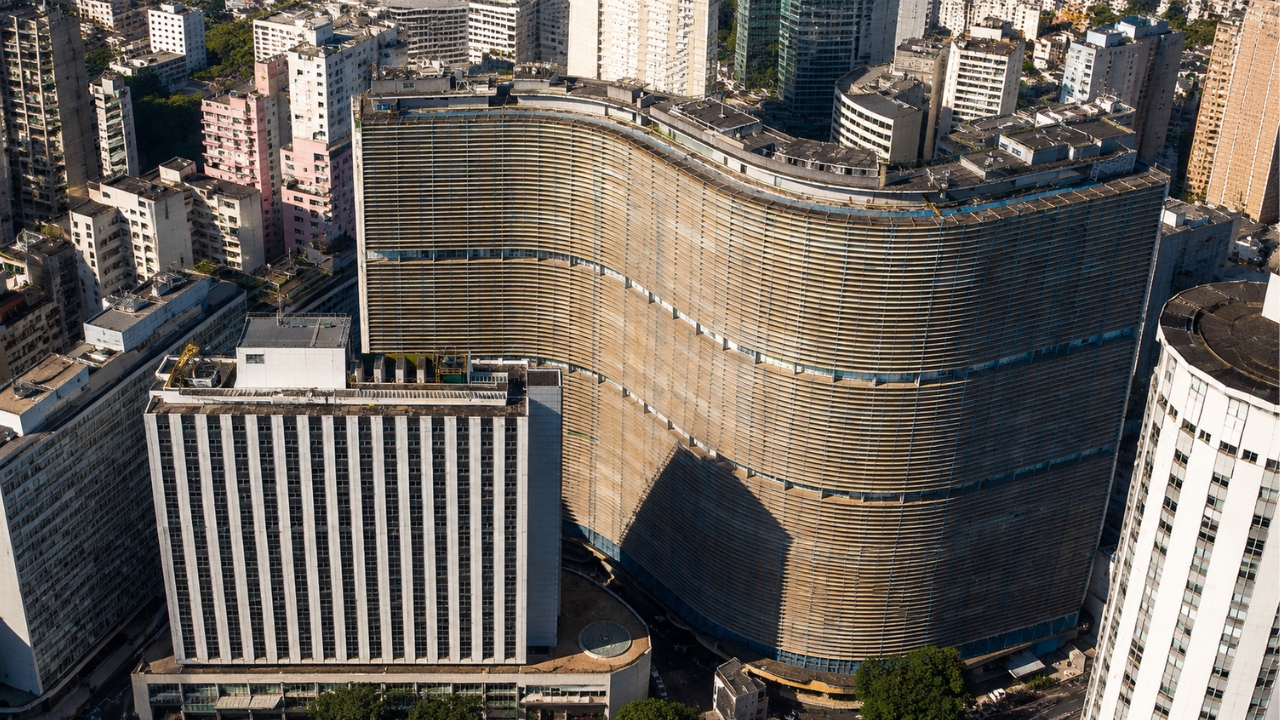
Latin America’s Largest Residential Complex Located in São Paulo Boasts 1,160 Apartments, 72 Shops, 22 Elevators, and 104 Staff Members

-
Rare 1747 Lutheran Bible from Germany, Preserved in Southern Brazil, Showcases Unique Engravings and Handcrafted Techniques



According to the Water Supplies Department, the government body responsible for water supply in Hong Kong, the first stage has a capacity of 135,000 cubic meters per day and could reach 270,000 cubic meters daily in a later phase.
This initial volume represents about 5% of the city’s daily fresh water demand, according to the RSK Group, controller of Binnies, the company involved in the studies, design, and supervision of the work.
According to the estimate released by the group, the production of the first phase is sufficient to serve approximately 137,000 households and an estimated population of 370,000 people within Hong Kong’s urban network.
Desalination by reverse osmosis in Hong Kong
In the plant’s operation, reverse osmosis forces the passage of saltwater through semi-permeable membranes, separating salts and other impurities so that the treated liquid can proceed to the public distribution system.
While the potable water advances for supply, the brine and saline concentrates remain separated from the final product, in a process that requires technical control, high-pressure equipment, and continuous monitoring.
At full capacity, the treatment takes about two hours from the water’s entry at the intake point to the final production of fresh water, according to information attributed to the general manager of Binnies Hong Kong, Andy Kwok.
To allow for future expansion, the intake and discharge structures were sized above the initial demand, with facilities compatible with the final planned capacity of 270,000 cubic meters per day.
Tseung Kwan O Plant Joins the Supply Network
In a coastal area of 8 hectares reserved in Tseung Kwan O Area 137, the plant brings together land formation works, treatment facilities, auxiliary structures, and systems connected to the delivery of the produced water.
The project also includes conducting the treated volume to the existing primary freshwater reservoir in Tseung Kwan O, a necessary step to integrate desalination into the city’s consumption routine.
With this configuration, the plant does not function as an isolated solution but as part of a larger network that relies on pipelines, storage, quality control, and coordinated operation with public supply.
The adoption of a maritime source addresses a common challenge in high-density coastal cities, where the demand for water grows while rainfall and reservoirs may vary.
According to the RSK Group, the plant is part of Hong Kong’s water management strategy to diversify supply and reduce the city’s exposure to periods of climatic irregularity.
Energy Efficiency and Water Reuse in Operation
Besides membrane technology, the unit’s operation depends on energy, pumps, high-pressure systems, and permanent industrial routines, making operational efficiency a relevant point of the project.
Among the measures adopted, solar panels were incorporated to reduce electricity use from the grid by 16.2% in building services, according to technical information released by the RSK Group.
The material also states that recycling and reuse processes reduce freshwater consumption in operation by 36.6%, while saving devices cut water use in internal installations by 53%.
In irrigation, rainwater harvesting systems were installed to decrease water consumption by 67%, expanding the set of measures aimed at reducing losses and using resources more efficiently.
Even with these solutions, desalination remains a complex operation, as it requires investment, energy, management of saline waste, and environmental control to transform seawater into potable water.
Expansion Could Double Potable Water Production
The first phase of the plant began construction in December 2019 and started supplying four years later, following a prior phase of studies, technical investigation, design, and construction supervision.
Before the construction, the Water Supplies Department contracted Binnies in December 2012 to prepare the feasibility study, which served as the basis for the subsequent stages of the project.
In the scope of the implementation, the contract identified as 13/WSD/17 covered the design, construction, and operation model of the desalination plant in Tseung Kwan O.
Another contract, 13/WSD/16, dealt with the works of laying the pipelines responsible for transporting the produced water to the existing supply infrastructure.
The environmental authorization also came before construction, with the approval of the environmental impact assessment report on November 4, 2015, and the issuance of the environmental license on December 4 of the same year.
Should the city advance to the planned final capacity, the expansion could double the production to 270 million liters per day, enhancing the role of desalination within the public potable water system.
Until then, the first phase already functions as a regular source of supply on an urban scale, connected to the public network and supported by technology capable of converting saltwater into treated water for daily use.