Portuguese
  Spanish


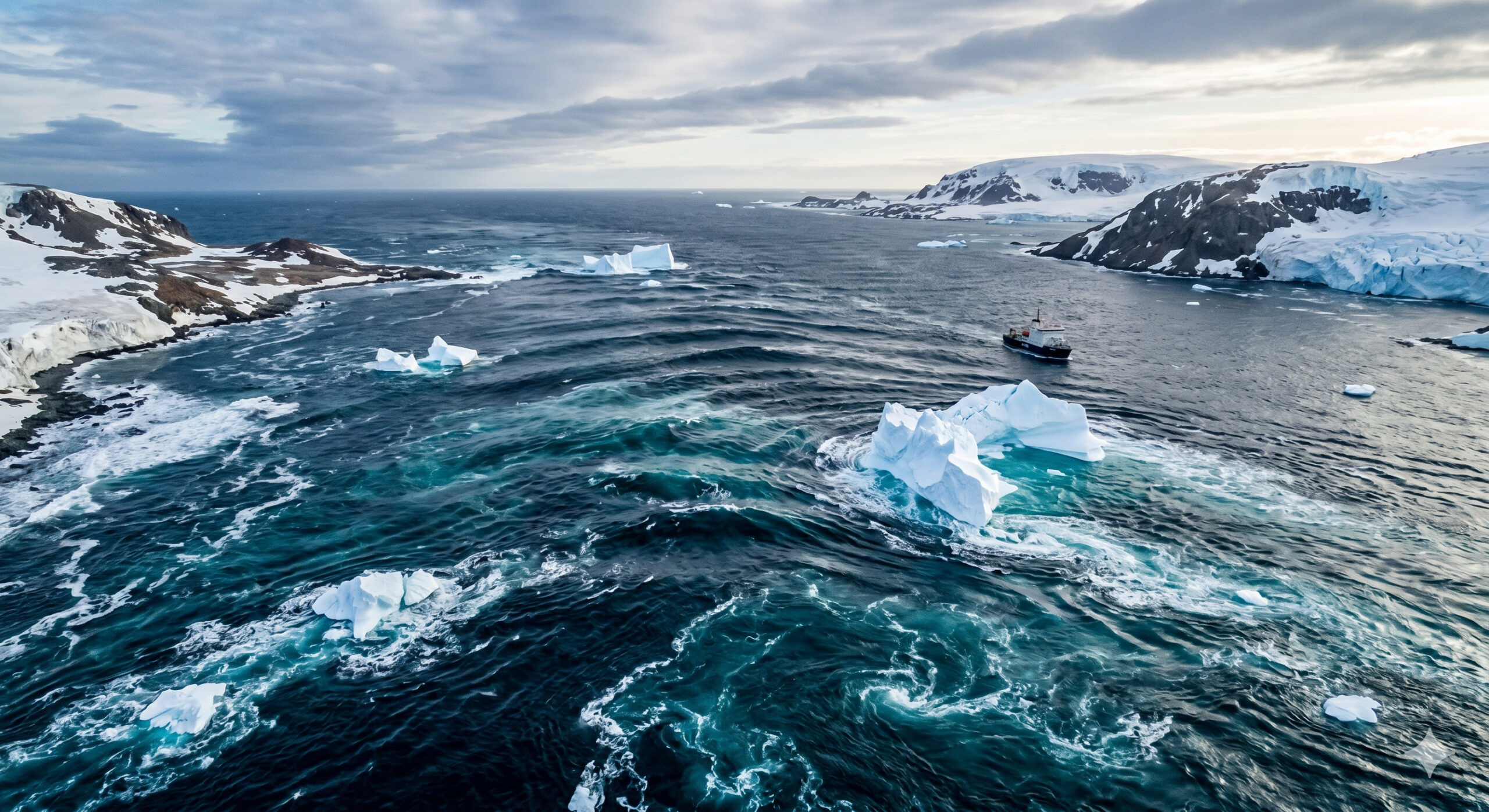

The strongest current on the planet may slow down 20% by 2050 and compromise Antarctic ice, carbon absorption, and global climate balance.
In March 2025, researchers from Australian universities and international oceanography centers released analyses indicating a possible structural change in one of the strongest currents on the planet: the Antarctic Circumpolar Current. According to the study, this current could experience a reduction of up to 20% in its intensity by 2050, if the scenario of high greenhouse gas emissions continues. The research was reported by outlets such as The Guardian and is based on advanced climate modeling that considers the direct impact of accelerated melting in Antarctica. The most critical data is that the slowdown is not just a local phenomenon but an event with the potential to reorganize the global climate.
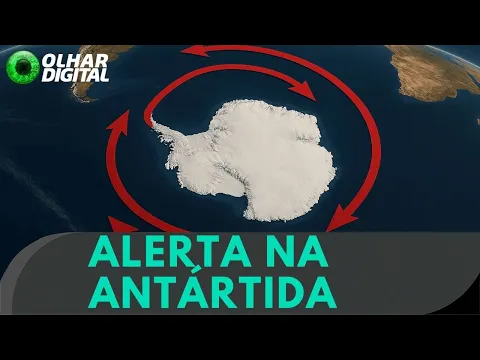
This occurs because the current acts as a kind of “oceanic belt” that continuously circulates around Antarctica, connecting the Atlantic, Pacific, and Indian Oceans.
The Antarctic Circumpolar Current functions as a natural barrier that protects the ice of the continent
The Antarctic Circumpolar Current is considered the most powerful on the planet, with a flow estimated at around 173 million cubic meters of water per second, a value far exceeding that of any river in the world.
-
Brazilian Innovator Converts Old Car into Electric Vehicle Using Laptop Batteries and Forklift Motor, Achieves Nearly 90 km/h in Urban Settings

-
Samsung Unveils Smart Oven with Built-In Camera, AI Food Recognition, and Real-Time Monitoring via Smartphone.
-
Ocean Transformed into Sci-Fi Lab: 87-Meter Structure with Submarines, Deep-Sea Robots, Helicopter, Genetic Labs, and 8K Cameras Unveils Rare Creatures
-
11-Year-Old Develops Solar Water Purifier to Aid Communities in Kenya and Gambia





Its main function is to create a dynamic barrier that limits the advance of warmer waters toward the Antarctic continent. This barrier helps keep the ice isolated from warmer ocean currents, reducing the melting rate of the ice shelves. When this current weakens, this isolation also diminishes.

Warmer waters can more easily penetrate beneath the ice shelves, accelerating melting from below, one of the most critical processes for the stability of Antarctica.
Ice melting releases freshwater and alters ocean density
The main factor behind the projected slowdown is linked to the increase of freshwater in the ocean. As Antarctic ice melts, large volumes of freshwater enter the ocean around the continent. This water has a lower density compared to saltwater.
This difference in density directly interferes with ocean circulation. The excess of freshwater reduces the formation of deep waters and weakens the natural engines that drive the current, affecting its speed and stability.
This process creates a concerning cycle:
- More melting releases more freshwater
- The freshwater weakens the current
- The weakened current allows more heat to enter
- The heat further accelerates melting
This feedback cycle increases the risk of rapid and difficult-to-reverse changes.
Direct impact on the ocean’s capacity to absorb heat and carbon
The oceans play a fundamental role in regulating the global climate, absorbing a large part of the heat and carbon dioxide generated by human activities. The Antarctic Circumpolar Current is a central piece in this system.
It helps transport nutrient-rich deep waters and redistributes heat and carbon around the planet, functioning as an essential component of global circulation. With the slowdown of the current, this capacity may be compromised. This means that:
- Less heat will be absorbed by the oceans
- More heat will remain in the atmosphere
- The concentration of CO₂ may increase more rapidly
In practice, this amplifies global warming, creating a cascading effect that impacts multiple climate systems.
Consequences for sea level may be amplified
Antarctica contains enough ice to raise sea levels by several meters over centuries. Although this process is gradual, the slowdown of the current can accelerate critical parts of this system.
The weakening of the ocean barrier increases the risk of collapse of ice shelves, which act as natural containment for continental glaciers.
When these shelves break apart, the ice from the interior of the continent can flow more rapidly into the ocean. This directly contributes to rising sea levels.
Marine ecosystems may also be affected by changes in circulation
In addition to physical impacts, changes in the current can profoundly affect marine ecosystems. The Antarctic Circumpolar Current is linked to the distribution of nutrients and biological productivity in the oceans.

Changes in this system can impact entire food chains, including fundamental organisms like krill, which serve as a base for various marine species. Changes in circulation can also affect:
- Species distribution
- Water temperature
- Food availability
These effects can spread across different regions of the planet, affecting fishing and biodiversity.
Changes in Antarctica have a global impact and are not restricted to the South Pole
Although the phenomenon is concentrated around Antarctica, its effects are not limited to the polar region. Global ocean circulation is interconnected, and changes at one point can reverberate in others.
Changes in the Antarctic Circumpolar Current can influence climate patterns on different continents, including:
- Rainfall regimes
- Frequency of extreme events
- Average temperatures
This occurs because the ocean and atmosphere function as an integrated system.
Future scenarios depend on global emissions and the rate of warming
Studies indicate that the magnitude of the slowdown directly depends on future greenhouse gas emissions. High emission scenarios significantly increase the risk of more intense changes.
On the other hand, mitigation scenarios can reduce the speed of these transformations. However, even in more controlled scenarios, part of the process is already underway due to accumulated warming.
The possible weakening of the Antarctic Circumpolar Current raises a central question about the stability of the global climate system. When fundamental structures begin to change, the effects are not isolated — they propagate throughout the planet.
The current is not just a flow of water, but an essential gear that connects oceans, climate, and ecosystems.
In light of scientific evidence, the challenge shifts from merely understanding the phenomenon to including the need to adapt to a transforming climate system.
The question remains open: to what extent can changes in oceanic systems trigger global changes that go beyond the current capacity for prediction and control.