






 Portuguese
  Spanish
  2 min of reading
  0 comments


Scientists Identify Inverted Channels on Mars Indicating the Presence of Ancient Rivers and Rainy Climate Billions of Years Ago on the Red Planet
A study presented in early July revealed that Mars was once a wetter and rainier planet than previously thought. The discovery was announced during the National Astronomy Meeting of the Royal Astronomical Society in the United Kingdom.
The research analyzed the Noachis Terra region in the southern part of the planet. The scientists identified inverted channels in the Martian landscape.
These structures suggest the presence of an ancient river network. The data was obtained with the help of images recorded by the Mars Reconnaissance Orbiter and the MOLA laser altimeter, both from NASA.
-
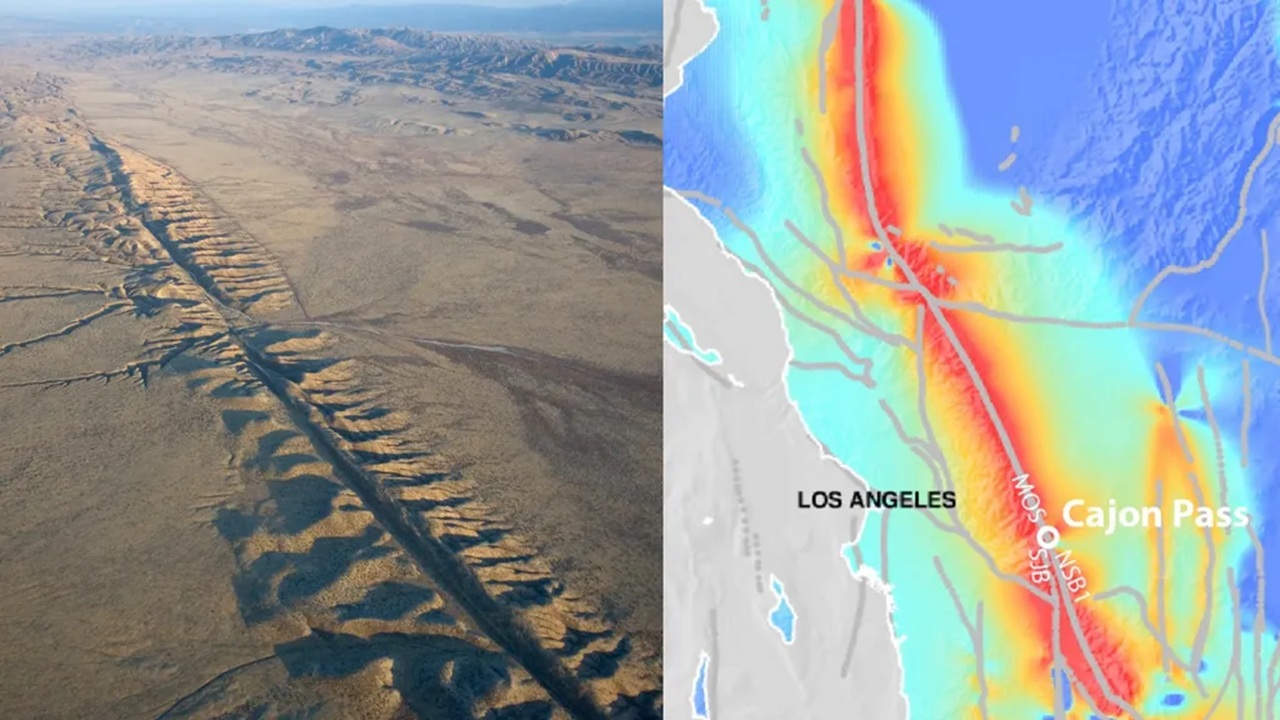
Giant earthquake returns to haunt California after study points out San Andreas and San Jacinto faults at highest stress level in 1,000 years, with risk involving Los Angeles and other populated areas.

-
Scientists have mapped for the first time the largest biological network on the planet, formed by underground fungi with an extension of 110 quadrillion km that transport 4 billion tons of CO₂ to the soil per year.

-
Where does the light go when you turn off the lamp? The answer involves invisible particles called photons, which disappear in fractions of a second inside the room but can travel billions of years through space to reach our eyes.

-
Light particle that shouldn’t be split surprises physicists


The work was led by researcher Adam Losekoot from the Open University. According to him, the new evidence indicates that Mars was much more active and complex in the past. “It’s something very exciting to investigate,” he stated in an official note.
These inverted channels are geological formations that stand out on the Martian surface. Unlike dry riverbeds, which have been known since the Mariner 9 mission in the 1970s, inverted channels form when ancient sediments solidify and resist erosion better than the surrounding terrain. The result is sinuous and distinct elevations in the soil.
The team also estimated the age of these formations. They would have formed about 3.7 billion years ago, during the transition between two geological periods of the planet: the Noachian and the Hesperian.
The analyses also indicate that the channels were not formed by sudden flooding, but by frequent precipitation.
Among them, the researchers mention rain, hail, and snow. This characteristic reinforces the hypothesis of a more stable and wetter Martian climate in the past.
Losekoot highlighted the importance of studying areas like Noachis Terra. For him, the region is a time capsule.
In his words, the location holds records of fundamental geological processes, preserved in a way that can no longer be observed on Earth.
The scientists continue to investigate other sections of the Martian surface in search of more clues about the planet’s past.
With information from Canal Tech.






-

-

-

3 people reacted to this.