Portuguese
  Spanish


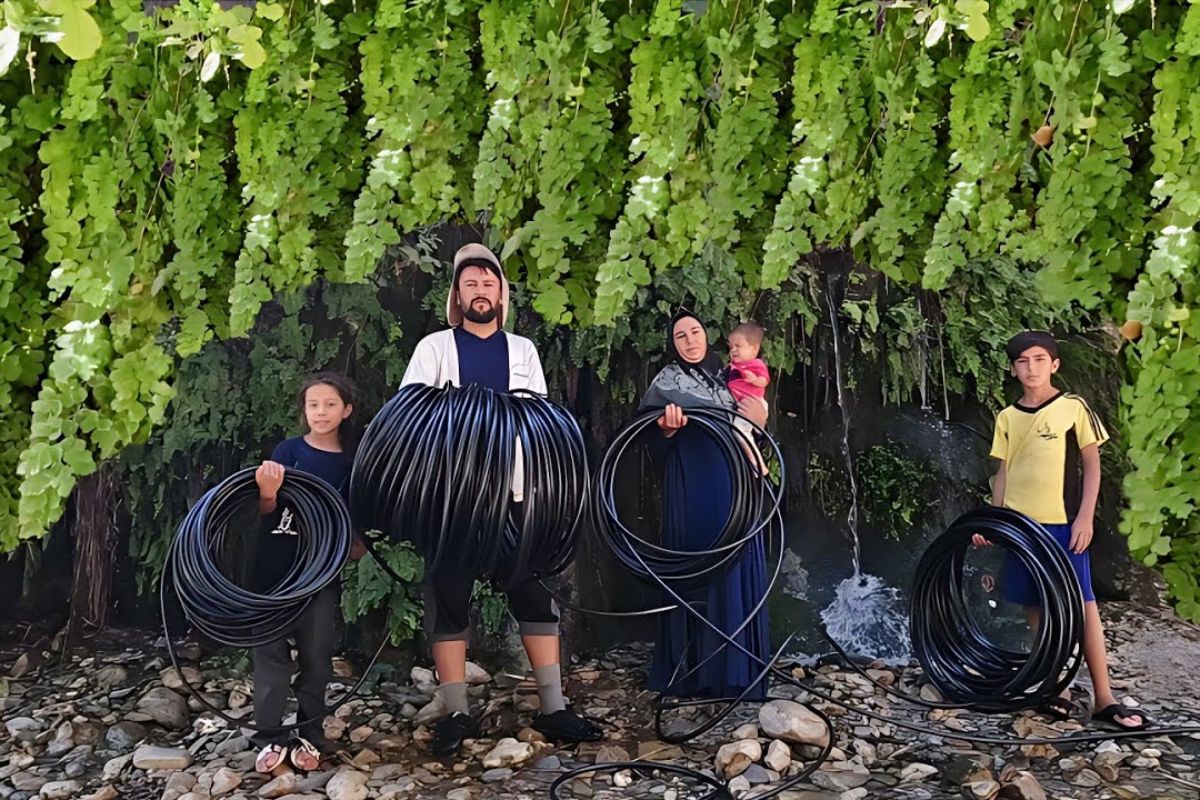

On A Small Island Among Strong Currents, Iranian Nomads Organize A Manual Operation To Fetch Water From The Mountain, Cut Pipe, Cross River In Boat And Fix The Route With Stones And Ropes. The System Is Not Comfort: It Is Continuity, Minimal Agriculture, Hygiene, Tea And Safety In The Face Of Daily Failures Right There
The mountain water does not come from a tap or a maintenance schedule: it depends on a physical journey that begins before dawn, with the family gathered to cross the river and reach a spring hidden among rocks. Every step becomes a safety decision, because the bank changes, the current rises, and the return time is limited.
On the other side, the work continues as a public utility done without machinery. What seems like just effort is also method, with route choices, anchoring points, and leak checks, so the pipe carries the mountain water to the house and sustains all day long.
Crossing That Defines The Day

The logistics begin at the river.
-
Brazilian State Sets Example by Investing Over $11 Billion in 2,000 Miles of Highways, Transforming Roads into Corridors Linked to Ports Handling 28.87 Million Tons of Cargo

-
The Fragrant Plant That Thrives in Partial Shade and Enhances Your Home’s Entrance with a Daily Garden Scent

-
Latin America’s Deepest Subway Station Opens in Brazil, Featuring London-Inspired Trains and a Tunnel Under the Tietê River
-
4,000-Year-Old Stone Towers Discovered Across Sardinia, Puzzling Archaeologists About This Mysterious Civilization


The handmade boat becomes the only safe way to transport people and pipe at the same time, and the crossing requires coordination: who pulls, who stabilizes, who protects the children, and who watches for submerged rocks.
Even when the mountain water is still far away, the operation already consumes energy.
For Iranian nomads, this predictability is worth more than any comfort.
A poorly positioned boat hits the bank, loses alignment, and can delay the entire cycle, increasing the risk of returning with the river stronger by late afternoon.
Simple Engineering, High Precision

The pipe is the axis of the system.
It needs to be cut, joined, and carried along steep trails, then secured with stones at critical points to prevent slipping on slopes or being swept away when the river rises.
The spring is not just a pretty spot on the map.
It is a source that boils inside the mountain and changes the behavior of the surrounding terrain; therefore, collecting mountain water depends on observing temperature, smell, and signs of instability, avoiding sections where steam and moisture suggest the risk of landslides.
Invisible Risk And Collective Discipline
The danger does not appear only on the edge of the abyss.
It arises in the repetition: carrying pipe over long stretches, crossing the river multiple times, and keeping the boat in working order.
The risk is cumulative, and small failures become accidents when the routine stretches over weeks.
There is also a component of transmitted knowledge.
Iranian nomads learn from an early age where to place their foot, how to tension ropes, and how to distribute weight in the boat.
The technique is not romantic improvisation: it is an oral manual that reduces errors and increases the chance of mountain water arriving intact.
What Water Changes On The Island

When the pipe finally delivers the mountain water, the change is immediate and practical.
It enters the kitchen, helps prepare tea, irrigate small plantations, and maintain hygiene, and it also allows washing utensils without relying on constant trips to the river.
The supply also becomes food planning.
Fishing in the river appears as a supplement, but mountain water is the element that sustains crop, preparation, and basic conservation, defining schedules, tasks, and what can be produced without waste.
Mountain water, in this scenario, is neither abundance nor a generic “natural resource”.
It is infrastructure built by hand, supported by boat, pipe, and daily reading of the river, in a chain that reveals how survival and dignity are measured in conquered liters.
If you lived in a place where mountain water only arrives with a boat crossing and risk in the river, which part of this routine do you consider the most difficult: carrying the pipe, crossing the river, or maintaining the family’s daily discipline?