Portuguese
  Spanish


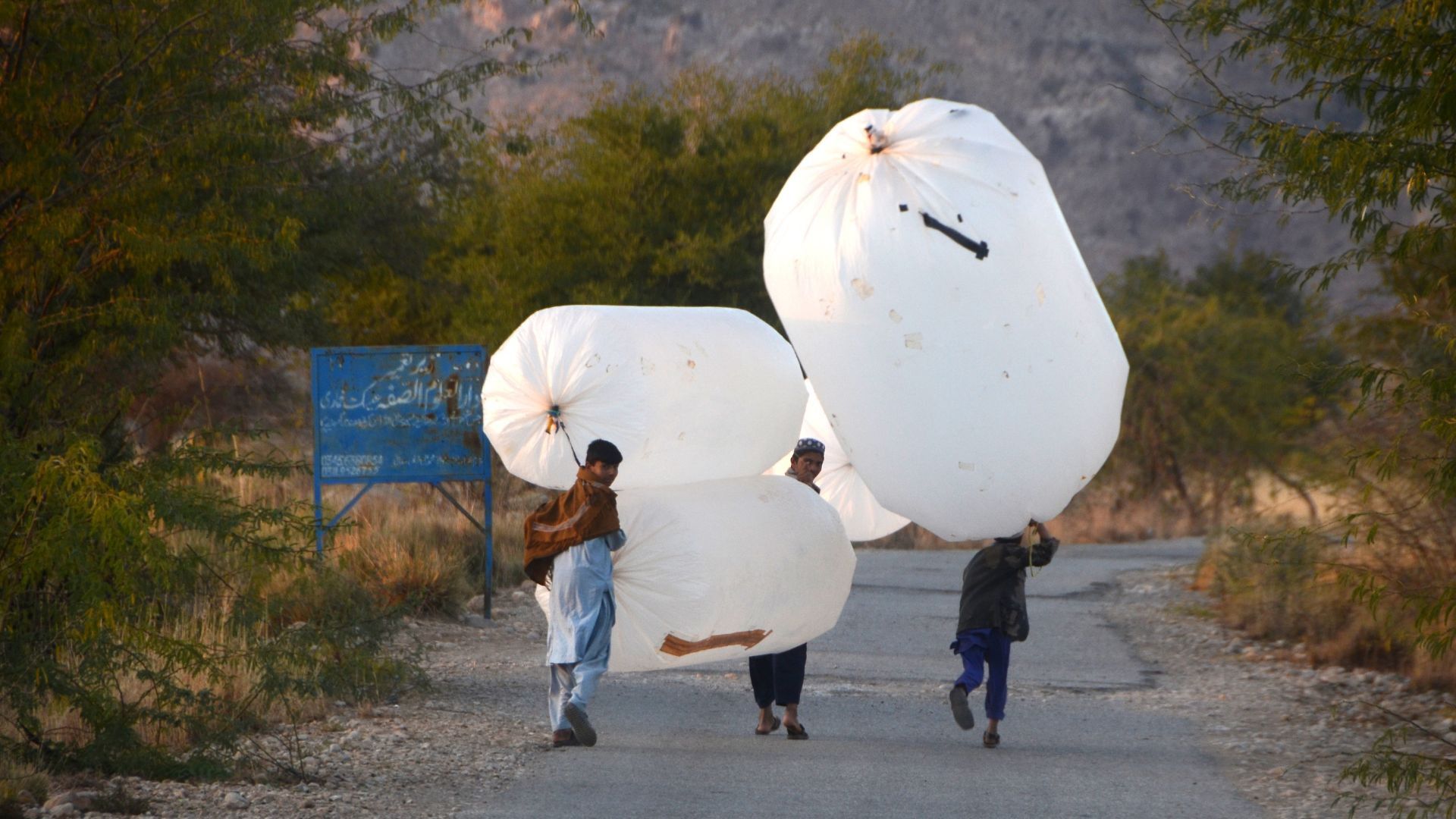


Without Regular Access to Piped Gas, Residents of Karachi Found a Risky and Creative Way to Transport Cooking Gas: Inflating Huge Plastic Balloons at Points in the City
In various regions of Pakistan, especially in the poorer areas of Karachi, the lack of basic infrastructure forces the population to seek alternative solutions for everyday needs — including food preparation. One of these solutions, simultaneously genius and frightening, went viral on the internet: residents are using improvised plastic balloons to transport cooking gas to their homes.
The method consists of capturing gas directly from street pipes, filling large plastic bags that are then manually carried or transported by bicycles to homes. The practice has drawn attention for its simplicity and efficiency in the face of crisis, but it has also raised serious safety concerns.
A Makeshift Solution That Became Routine in Entire Neighborhoods
The scene looks like something out of an unusual experiment: large transparent balloons floating through the streets, carried by residents who carefully push them toward their homes. The content? Methane gas, the same used in conventional cylinders, collected clandestinely from points of the public distribution network.
-
Orphaned Youth Turns Dismissed Idea into Global Prestige with Innovative Wristwatch

-
English Skills Boost Career Opportunities in the Oil and Gas Industry

-
Brazil Secures Second Place at WorldSkills 2024 in Lyon, with 64 Young Professionals and 8 Medals, Including Gold from a Rio de Janeiro Hairdresser

-
3,000 Military Personnel from 10 Countries, Including US and Chinese Marines, Train Together in Brazil’s Savanna: Operation Formosa Becomes Largest Naval Ground Exercise Before First Cancellation Since 1988



These “balloons” are actually large industrial plastic bags. According to the residents, each load can power a household stove for several hours, making them a viable temporary alternative for those unable to acquire regular cylinders.
The practice is so common that some collection points have become informal “refueling” centers, with lines of residents waiting their turn to fill the bags. Despite the obvious risks, this alternative persists as it is the only option available for many families.
Irregular Piped Gas, Expensive Cylinders, and Structural Poverty
The reason for this extreme solution lies in the lack of regular access to piped gas. Although Pakistan has a national distribution network, the infrastructure is fragile and does not reach a large part of marginalized urban communities. To make matters worse, conventional gas cylinders have become too expensive for low-income families.
With inflation high and unemployment reaching record levels, the creative use of balloons represents a form of silent resistance to the state’s neglect. However, the ingenuity of the Pakistani people exposes a harsh reality: the normalization of improvisation in situations that should be guaranteed by basic public policies.
Local authorities are aware of the practice but avoid intervening directly, possibly out of fear of popular unrest or sheer neglect in the face of established social precariousness.
Explosion Risks, Toxicity, and Daily Accidents
Experts warn that this technique is extremely dangerous. Methane gas is flammable and can easily explode upon contact with sparks or heat. Additionally, transporting it without any kind of valve or regulation increases the risk of leaks, which could cause poisoning or fatal accidents in households.
Instances of small fires have already been reported, and although there are no official statistics, fear looms over the neighborhoods where the practice has spread. The lack of safe alternatives, however, forces residents to continue using the system even while aware of the dangers.
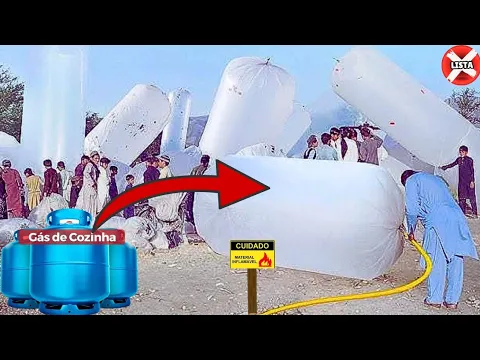

The channel Tekniq, which recorded the practice on video, shows that the residents themselves admit the risk but see no other way out.
Simple Solutions, Complex Problems
This case in Pakistan exposes a global problem: how developing countries often force their populations to improvise solutions for survival in the absence of essential services. The scene of floating balloons with cooking gas may seem curious or even comical, but it carries a silent tragedy behind it.
Instead of criminalizing or ridiculing these residents, the situation demands reflection and international action. Access to domestic energy is a basic right that, when denied, can lead to dangerous alternatives like this — with real risks to life and public safety.
What may seem like a clever solution reveals, in fact, a hidden face of urban poverty in countries like Pakistan. The transportation of gas by plastic balloons is simultaneously a symbol of resilience and abandonment.