Portuguese
  Spanish


Searching For Alternatives To Traditional Speed Bumps, A City Adopted A Creative Visual Solution: Wavy Lines On The Asphalt. The Technique Induces Drivers To Slow Down By Creating An Illusion Of Instability On The Road.
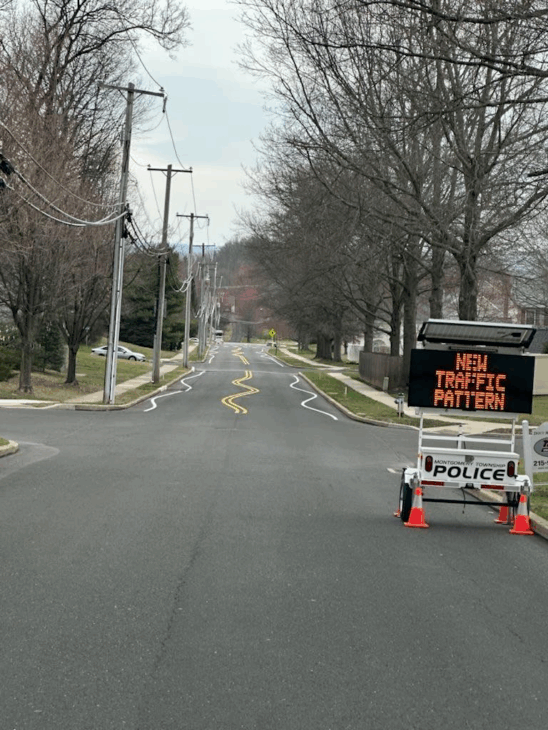
Drivers passing through Grays Lane, in Montgomery Township, in the U.S. state of Pennsylvania, are encountering a curious surprise: wavy stripes painted directly on the asphalt.
The initiative, which many thought was a joke, is actually an official measure from the city to reduce car speeds in a residential area with a limit of 25 mph.
Wavy Stripes In Place Of Speed Bumps
The road connects two important routes in the region — PA Route 309 and US Route 202 — and has been used by drivers trying to escape the traffic on the main roads. Because of this, traffic has increased, and with it, the speed of vehicles in a stretch where many families live.
-
Toyota Shifts from Hybrid Cars to Electric Air Taxis with Joby’s 6-Rotor Aircraft, Capable of 322 km/h, Aiming for Mass Production to Electrify Urban Skies

-
Ferrari Unveils Limited Edition 12Cilindri Manuale: 6.5-Liter V12, 830 HP, 0-100 km/h in 2.9 Seconds, Top Speed Over 340 km/h, Only 1,499 Units Available

-
Discover the 2021 Fiat Cronos 1.3: Affordable Maintenance, Reliable Mechanics, and Fuel Efficiency of Up to 15.6 km/l
-
Cummins Unveils Hydrogen-Powered X15H Engine with Over 800 km Range and 15-Minute Refueling, Challenging Electric Truck Dominance


For two years, the situation only worsened, according to local authorities. The city hall tried to come up with traditional solutions, such as installing speed bumps or electronic speed signs, but ran into technical limitations. The road has a slight incline, which made it impossible to install speed bumps, for example.
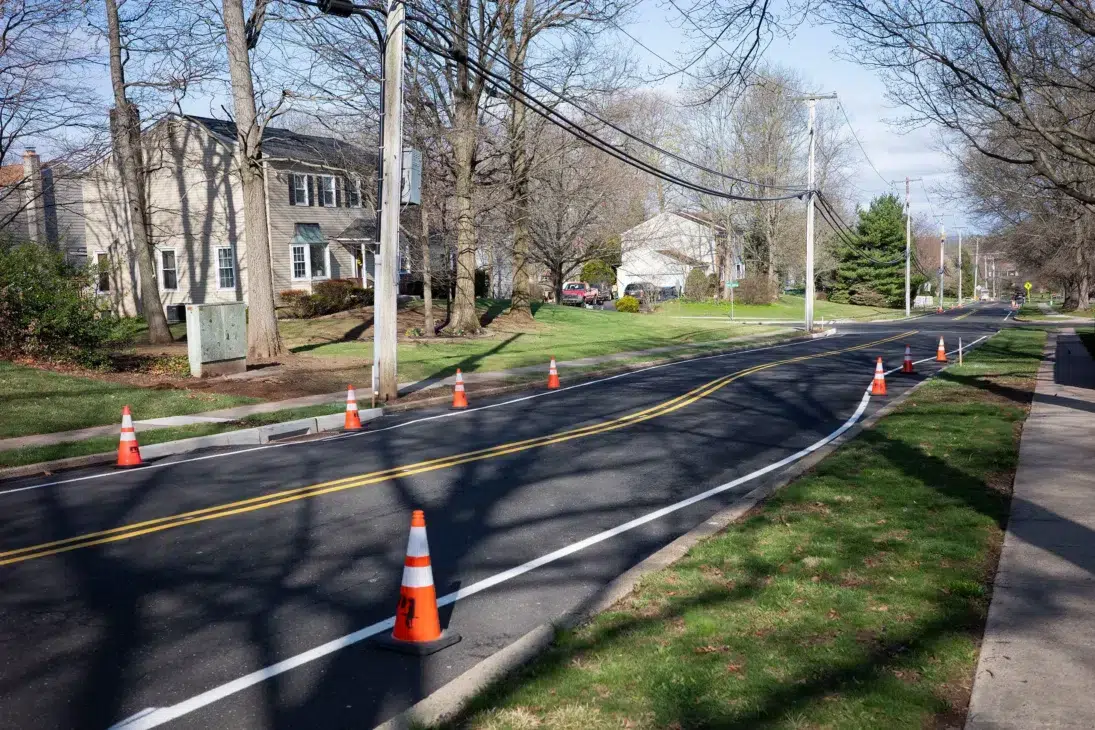
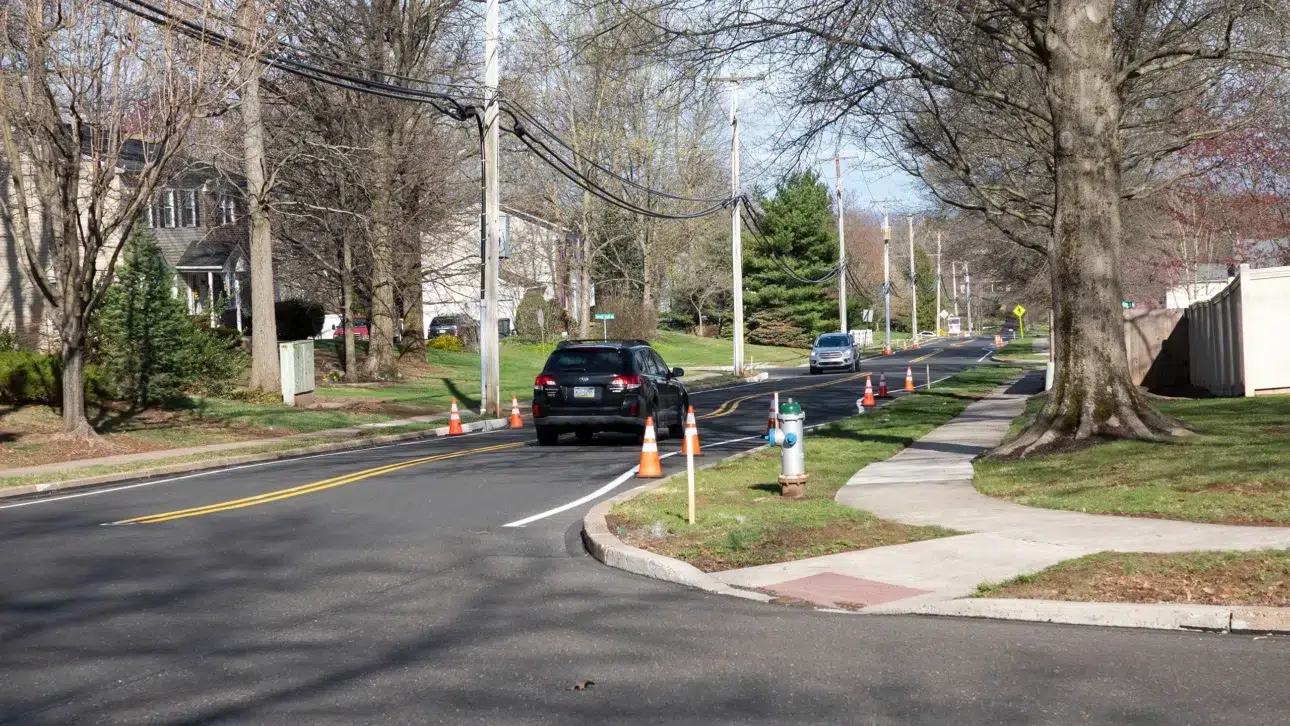
The solution found was rather uncommon: painting wavy stripes along two blocks of the street. The idea is simple.
Since the lines are outside the standard straight and continuous, the driver needs to constantly adjust the steering wheel to follow them. This would naturally force a reduction in speed, at least in theory.
Reaction Of Residents And Drivers
The measure was approved in February by the city board. Since then, cones and electronic signs have been placed at the site to warn about the “new traffic pattern.”
Some drivers thought it was a prank, perhaps an April Fool’s joke. But the city needed to clarify on its social media: “Yes, this is a legitimate precaution.”
During a recent visit to the road, a resident reported seeing about 20 cars passing through the area. Half of the drivers seemed to try to follow the painted curves. Some, however, “cut corners” as if they were in a Formula 1 race. One driver, in particular, went straight through, without even slowing down, despite oncoming traffic.
Others showed total confusion. One of them nearly stopped the car completely to try to understand what had happened to the road, following the curves slowly, almost at a walking pace.
It Is Still Early To Know The Effects
Even without tools to measure the speed of vehicles, the initial impression is that most cars passed more slowly through the two altered blocks.
It may have been the effect of the new visual pattern, or simply curiosity about something unusual. In any case, the experience seems to have at least caused some immediate impact on driver behavior.
The city also announced that soon new obstacles will be added in the middle of the road. There will be posts and barriers designed to prevent drivers from continuing to drive straight, ignoring the wavy pattern of the stripes.
Unusual Measure Could Become Standard?
It is still unknown if this strategy will be expanded to other streets or if it will be maintained permanently.
The immediate goal is clear: to prevent speeding in a residential area, where residents have been complaining for years. The city hall is closely monitoring the results.
In the meantime, the stripes remain there. For those passing through Grays Lane, it is impossible not to notice. Even if some ignore the drawn curves, the experiment has already changed the landscape of the small street — and perhaps the behavior of some drivers as well.
For now, the city emphasizes that the intervention is real, official, and not a joke. The experiment continues in a testing phase, but it already sparks curiosity — and perhaps attention — from those who pass by.