Portuguese
  Spanish


Farmers in Asia Adopt a Natural Method of Control with Chickens and Ducks in the Paddy Field to Combat Agricultural Pests Without Pesticides in Agriculture. Meanwhile, in Brazil, Agricultural Losses Increase Due to Excessive Use of Poisons
In southern and southeastern Asia, an ancient technique has gained prominence for its efficiency and sustainability: the use of chickens and ducks in the paddy fields to combat agricultural pests, eliminating the need for pesticides in agriculture. Countries such as China, Vietnam, and Japan have already widely implemented this natural control method, reaping good economic and environmental results. Meanwhile, in Brazil, the dependence on agrochemicals persists, worsening agricultural losses in Brazil and impacting human health and nature.
What Is Chicken and Duck Agriculture
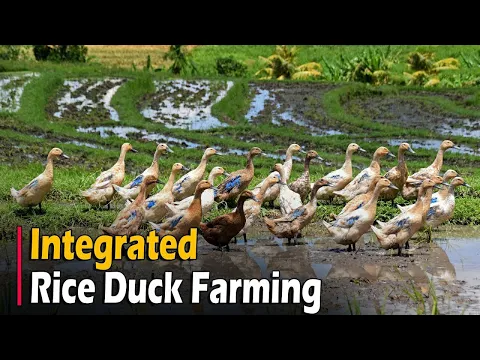
The system, internationally known as “Integrated Rice-Duck Farming“, consists of the joint cultivation of birds and rice. During the growing season, ducks and chickens are released into the flooded paddy fields. They feed on insects, snails, larvae, and weeds — the same targets as chemical pesticides.
As a result, there is a natural biological control of pests. Additionally, the droppings from the birds enrich the soil, acting as organic fertilizer and reducing the need for synthetic fertilizers.
-
10-Year-Old Boy Persists After Being Told He’s Too Young, Now Helps Manage Brazilian Farm and Launches New Project

-
Chinese Farmers Develop “Blanket Greenhouses” to Grow Vegetables in Extreme Winter Without Heaters

-
Centuries Before Modern Greenhouses, English Gardeners Used Horse Manure to Grow Pineapples in Cold Climates

-
Sugarcane Cultivation in India: A Symbol of Water Stress and Environmental Strain Amidst Global Demand for Sugar and Green Fuel



According to the FAO and the International Rice Research Institute (IRRI), the integrated rice-duck farming system can significantly reduce the use of pesticides, control various pests naturally, and even increase productivity by up to 20%, while decreasing input costs.
Benefits of the Natural Control Method in the Field
The use of chickens and ducks brings several benefits:
- Reduction in the Use of Pesticides in Agriculture: the method eliminates toxic chemicals, preventing contamination of water, soil, and food.
- Cost Savings for the Producer: lower spending on inputs and pesticides means higher profit margins.
- Supplementary Income: the birds, at the end of the agricultural cycle, can be sold as an additional source of income.
- Sustainability: ecological balance is maintained and biodiversity is favored.
According to data from the International Rice Research Institute (IRRI), farms in Asia that use this model achieve up to 30% reduction in total production costs.
Chickens and Ducks in the Paddy Field: Success Examples in Asia
In China, over 100,000 hectares already use this integrated system. In provinces such as Yunnan and Sichuan, the local government encourages farmers with subsidies and technical programs.
In Vietnam, the integrated rice-duck system, established since the 1990s in provinces of the Mekong Delta such as Đồng Tháp and Ben Tre, has been adopted by dozens to hundreds of small producers — with promising results in pest control and increased agricultural income.
According to a life cycle analysis published in the journal Ecosystem Health and Sustainability, integrated rice-duck systems reduced the carbon footprint per hectare by about 9%, mainly due to lower fertilizer use and reduced methane emissions.
Pesticides in Agriculture and Agricultural Losses in Brazil
While Asian countries advance with natural solutions, Brazil remains one of the world’s largest consumers of pesticides. In 2023, according to a report from IBAMA, about 755,000 tons of active ingredients of agricultural pesticides were sold in the country — indicative of one of the highest levels ever recorded in Brazil.
This practice has serious implications. The continuous use promotes the emergence of resistant pests, requiring higher doses and more potent products. Among the most harmful pests are the brown marmorated sting bug, the fall armyworm, and the cotton boll weevil, which no longer respond well to various chemical products used for decades.
Obstacles to the Natural Control Method in Brazil
Despite being proven effective, the use of chickens and ducks in the paddy field is still uncommon in Brazil. Some of the main obstacles include:
- Predominant Productivist Model: Brazilian agriculture is still largely based on large monocultures, mechanized and dependent on chemical inputs.
- Lack of Government Incentive: unlike in Asian countries, Brazil does not offer effective public policies that encourage agroecological methods.
- Disinformation and Technical Resistance: many producers are unaware of the system or believe it to be unviable on a large scale.
- Lack of Research Adapted to the Brazilian Climate: studies on the application of the method in cerrado, semi-arid, or other areas with distinct characteristics from Southeast Asia are still rare.
Initiatives in Brazil Against Agricultural Pests with Natural Methods
Despite the challenges, there are already positive experiences in Brazil. In rural communities in Bahia, Pernambuco, and Maranhão, small farmers have been adopting biological control with free-range chickens. The results have been encouraging, with reduced use of poisons and better use of natural resources.
Some universities and research centers, such as UFV (Federal University of Viçosa) and UFRGS (Federal University of Rio Grande do Sul), are conducting studies on the integration of poultry raising with agricultural crops, including irrigated rice.
These studies help identify practices adapted to Brazil, evaluate the positive environmental impact, and demonstrate the economic viability of the system.
A Sustainable Alternative to Pesticides in Agriculture
In light of the growing inefficiency of pesticides in agriculture, the high cost of inputs, and environmental damage, it is increasingly necessary to rethink production models. The use of chickens and ducks as a natural pest control method is a low-cost, efficient, and sustainable alternative.
In addition to preserving the environment, adopting this model can improve food quality and generate new sources of income for small and medium producers. The transition to more ecological systems requires planning, technical training, and public policies committed to agroecology.
Natural Solutions for Agricultural Losses in Brazil
The Asian example shows that it is possible to produce more, with less impact and greater ecological balance. Brazil has the potential to follow this path, reducing agricultural losses, promoting soil health, and protecting people and the environment.
Encouraging practices such as the integration of animals and crops can be a decisive step toward more resilient, intelligent, and responsible agriculture. Investing in knowledge, appropriate technology, and public policies is essential for this transformation to happen.
With this, it will be possible to build an agricultural model capable of safely feeding the population with quality and respect for the planet.