






 Portuguese
  Spanish


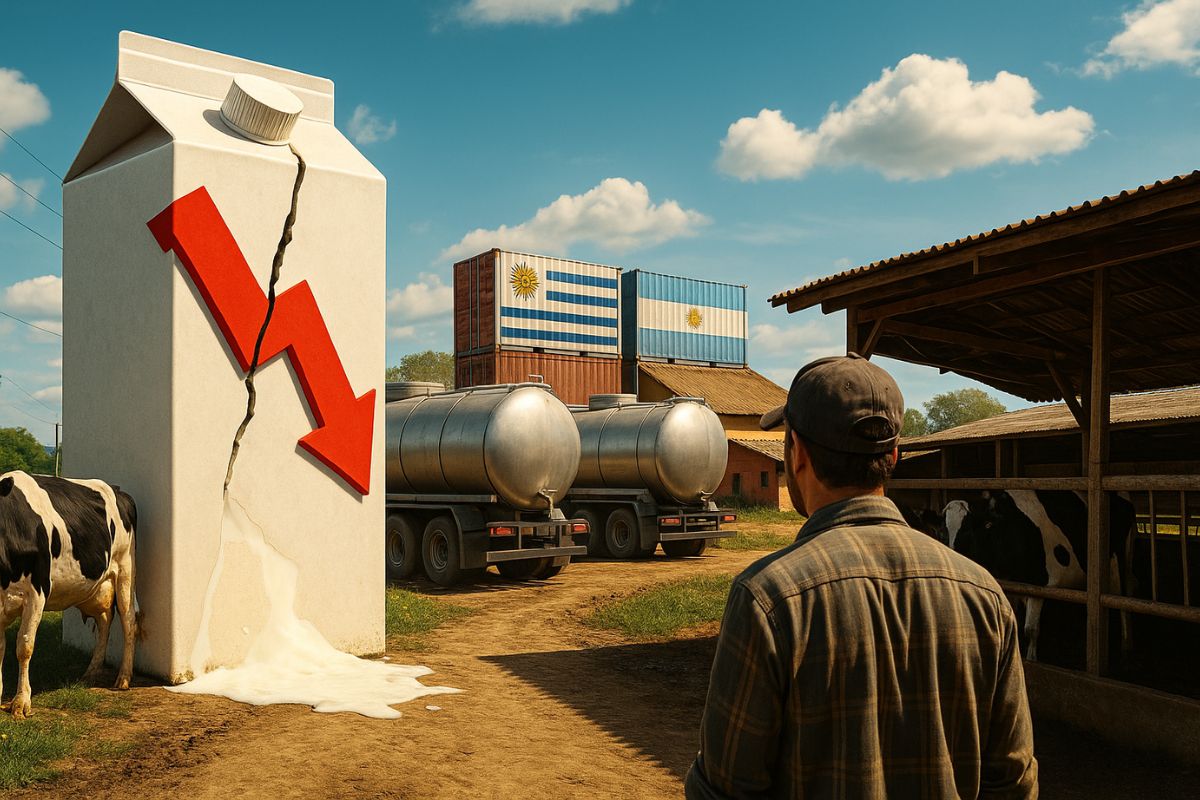

Dairy Sector in Collapse in Brazil with Milk Prices Plummeting, Dairy Farmers in the Red and Milk Imports Without Anti-Dumping Measures
The dairy sector is experiencing a competitive shock that drives costs above revenues and squeezes the producer’s margin. At the heart of the problem are milk prices in rapid deceleration, milk imports sold at a cost advantage, and the lack of effective anti-dumping measures to equalize the dispute. In this scenario, family dairy farmers and cooperatives become the weakest link and see working capital and investment disappear.
By 2025, the continuation of this combination threatens the dairy sector with production contraction, farm closures, and replacement by imported derivatives. Without regulatory predictability and without anti-dumping measures, milk imports are increasing and exacerbating the regional income imbalance, with dairy farmers selling below costs in various markets. Milk prices at the gate do not cover inputs, freight, and herd maintenance.
Why the Dairy Sector Entered Crisis
The deterioration of the dairy sector results from a combination of internal and external factors.
-
Chilean Giant Acquires St. Marche, Expanding from Discount to Premium Supermarkets in São Paulo’s High-End Retail Market

-
After 60 Years of Selling Cheap Milk, Brazilian Family Invests in $4,000 Equipment to Transform Farm’s Milk into Premium Sweets, Producing 2 Tons Daily and Aiming for $6.4 Million

-
Northern Brazilian ports surpass the South as the country’s largest grain corridor amid record harvest
-
Amazon launches its own brand in Brazil a week before Prime Day, following a $3.7 billion investment and the establishment of over 300 distribution centers nationwide by 2025.


Milk prices have dropped sharply while feed and logistics costs remain high.
At the same time, milk imports and powdered milk have arrived at lower prices, taking up market space.
Without anti-dumping measures, competition occurs with asymmetries in cost and taxation.
The result is margin compression and reduced investment capacity for dairy farmers.
Milk Imports and the Effect on Price Formation
Milk imports act as a reference for dairies and retail, shifting demand away from national products.
At various times, imported milk prices fall below the domestic producer’s breakeven point.
When anti-dumping measures are not triggered, the external supply shock drives down milk prices and accelerates the de-capitalization of dairy farmers.
This process weakens the dairy sector, reduces self-sufficiency, and increases external dependence.
Who Loses First: Dairy Farmers and Small Properties
In dairy-producing municipalities, dairy farmers families are the majority and have less bargaining power.
The milk prices received at the farm do not absorb volatility, and cash flow dries up quickly.
The shrinking income impacts the local network of services, jobs, and commerce. Without support, the dairy sector loses scale and productivity, while milk imports advance on the shelves.
Anti-dumping measures become a central piece to rebalance the board.
The Role of Anti-Dumping Measures in the Dairy Sector
Anti-dumping measures serve to curb unfair trade practices when there is evidence of sales below cost or with external subsidies.
Applied judiciously, anti-dumping measures create a corridor of predictability for the dairy sector to adjust productivity without choking supply.
Without them, milk imports maintain a structural advantage, putting pressure on domestic milk prices and accelerating closures.
For dairy farmers, this means postponing investments, reducing herds, and cutting jobs.
Signs of Collapse and Risks to Supply
The contraction of domestic production in the dairy sector compromises stocks of derivatives and can increase price volatility in retail.
The milk prices at the gate without support lead to the dismantling of entire dairy basins.
If milk imports become the only anchor, the country becomes more exposed to exchange rate and logistical shocks.
Anti-dumping measures and regulatory instruments are, therefore, defensive tools to navigate the cycle and preserve dairy farmers.
What Can Be Done Now
Prioritize anti-dumping measures when proven price distortions exist and adopt temporary stabilization triggers.
Encourage the organization of dairy farmers into cooperatives to gain negotiation and logistics scale.
Enhance quality and productivity programs to strengthen the dairy sector’s competitiveness, focusing on cost efficiency per liter.
Transparency in milk price formation and monitoring of milk imports to reduce information asymmetries.
In your opinion, which action should come first to protect the dairy sector in 2025: activate anti-dumping measures, encourage cooperatives of dairy farmers, or create a floor for milk prices while controlling milk imports?




Fui diagnosticada com doença de Parkinson há quatro anos. Por mais de dois anos, dependi da levodopa e de vários outros medicamentos, mas, infelizmente, os sintomas continuaram piorando. Os tremores se tornaram mais perceptíveis e meu equilíbrio e mobilidade começaram a declinar rapidamente. No ano passado, por desespero e esperança, decidi experimentar um programa de tratamento à base de ervas da NaturePath Herbal Clinic.
Sinceramente, eu estava cética no início, mas, poucos meses após o início do tratamento, comecei a notar mudanças reais. Meus movimentos ficaram mais suaves, os tremores diminuíram e me senti mais firme ao caminhar. Incrivelmente, também recuperei grande parte da minha energia e confiança. Tem sido uma experiência transformadora. Me sinto mais eu mesma novamente, melhor do que me sentia há anos. Se você ou um ente querido está lutando contra a doença de Parkinson, recomendo muito que você considere a abordagem natural deles. Você pode visitar o site deles em www. naturepathherbalclinic .com.