






 Portuguese
  Spanish


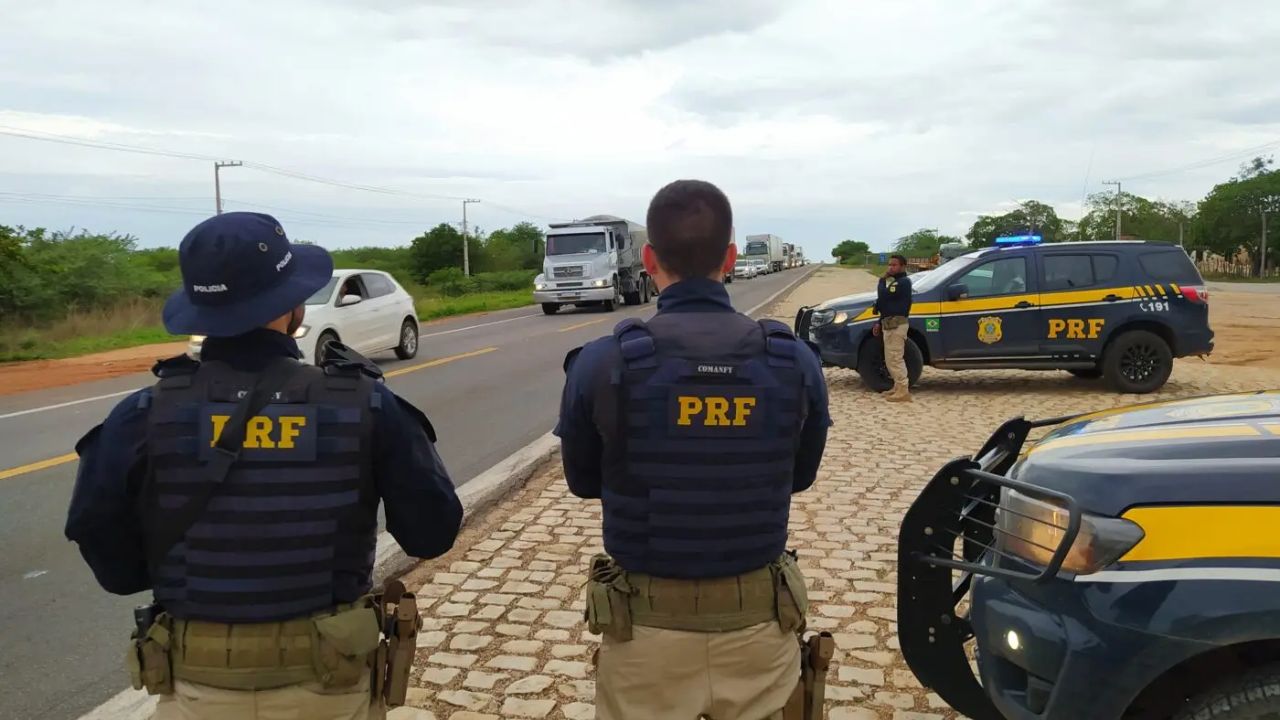


Know What Is Allowed and What Is Not During a Traffic Blitz and Discover Your Rights and Duties as a Driver.
During a traffic blitz in any Brazilian city, drivers and agents must follow clear rules. Drivers have the duty to stop and present documents, but they also have guaranteed rights.
Authorities can only act within legal norms. Knowing what a traffic blitz allows or does not allow is essential to avoid violations or abuse.
What Does the Law Allow During the Traffic Blitz?
Documents and Equipment Checks
During a traffic blitz, agents may request the driver’s license (CNH) and the vehicle registration document (CRLV).
-
Seniors Over 60 Can Travel for Free Across Brazil: Elderly Statute Ensures Two Free Bus Seats and 50% Discount When Full for Low-Income Passengers

-
Detran RJ starts requiring a toxicological test for those obtaining their first driver’s license in the car and motorcycle category starting June 29; see who will be affected.

-
Florida takes TikTok to court and accuses the Chinese giant ByteDance of ignoring the law that bars minors under 14, while parents and authorities demand more protection for children on social networks.
-
Chamber approves constitutional amendment reducing the age of criminal responsibility from 18 to 16 years; what now?




It is also permitted to check if headlights, tires, and lights are in order — basic items for safety in traffic.
Visual Inspection and Breathalyzer Test
The inspection of the vehicle’s condition can be conducted without a court order, such as verifying license plates, chassis, tires, or lights — which helps to quickly identify irregularities.
In the case of suspected alcohol, a breathalyzer test may be requested. But beware: refusal to take the test constitutes a serious infraction, with penalties specified in the Traffic Code.
Right to Film and Monitor the Approach
If the driver doubts the legality of the blitz or wants to document the process, they may film the approach.
Audio and video serve as evidence in case of abuse. After all, public vehicles on public roads mean visible and transparent monitoring.
What the Traffic Blitz Cannot Do — and Common Mistakes by Drivers
Seizing the Vehicle Without Valid Reason
A recent change in legislation eliminated the penalty of automatic “seizure” of the car in a blitz.
Now, vehicles can only be removed or retained, and this depends on the detected irregularity — it is not enough just to fine the driver.
Off-Duty Agents or Those Without Uniform Have No Authority
For the blitz to be legitimate, the agents must be uniformed and on duty. If they are not — or if the monitoring vehicle is not marked — the approach may be considered irregular.
Actions That Violate Rights: Humiliation, Out-of-Standard Searches, or Undue Demands
During the blitz, the agent cannot use intimidation, threats, harassment, or request personal documents (such as CPF, work card, etc.).
They also cannot compel something that violates rights, such as demanding to reveal a cellphone password.
Consequences of Disobeying or Breaking Through a Blitz
Refusing to stop when requested constitutes a serious infraction, with a fine and points added to the CNH.
Breaking through a blockade — that is, bypassing the blitz — can be considered a severe infraction, with high fines, seven points on the license, and even suspension of the right to drive.
Moreover, in extreme cases, fleeing can be interpreted as a crime, especially if there is disobedience to a legal order, as defined by the Supreme Court.
Tips for Drivers Stopped at a Traffic Blitz
- Reduce speed and safely pull over upon noticing a blockade — this shows cooperation and avoids suspicion.
- Present the requested documents (CNH and CRLV), whether physical or digital.
- Keep your hands visible on the steering wheel and avoid sudden movements when approached.
- If deemed necessary, you can film the blitz — but maintain a calm demeanor and do not interfere with the agent’s actions.
- If you notice abuse or illegality, write down the patrol car’s license plate, the agent’s name or number, and file a complaint through the appropriate channels.
Why Knowing Your Rights and Duties in a Traffic Blitz Matters?
Understanding what a traffic blitz allows or does not allow prevents injustices and undue punishments. For the citizen, it means a guarantee of respect.
For the agent, it means acting within the law and with legitimacy.
Knowing when the enforcement is correct — and when it exceeds limits — protects drivers, passengers, and pedestrians.
Therefore, information and awareness are essential conditions for safer and fairer traffic.






Muito bom e muita segurança essa prática para o cidadão do bem nas rodovias brasileira.
Achei interessante e bom demais nós ajuda a entender mais a legislação de trânsito