Portuguese
  Spanish


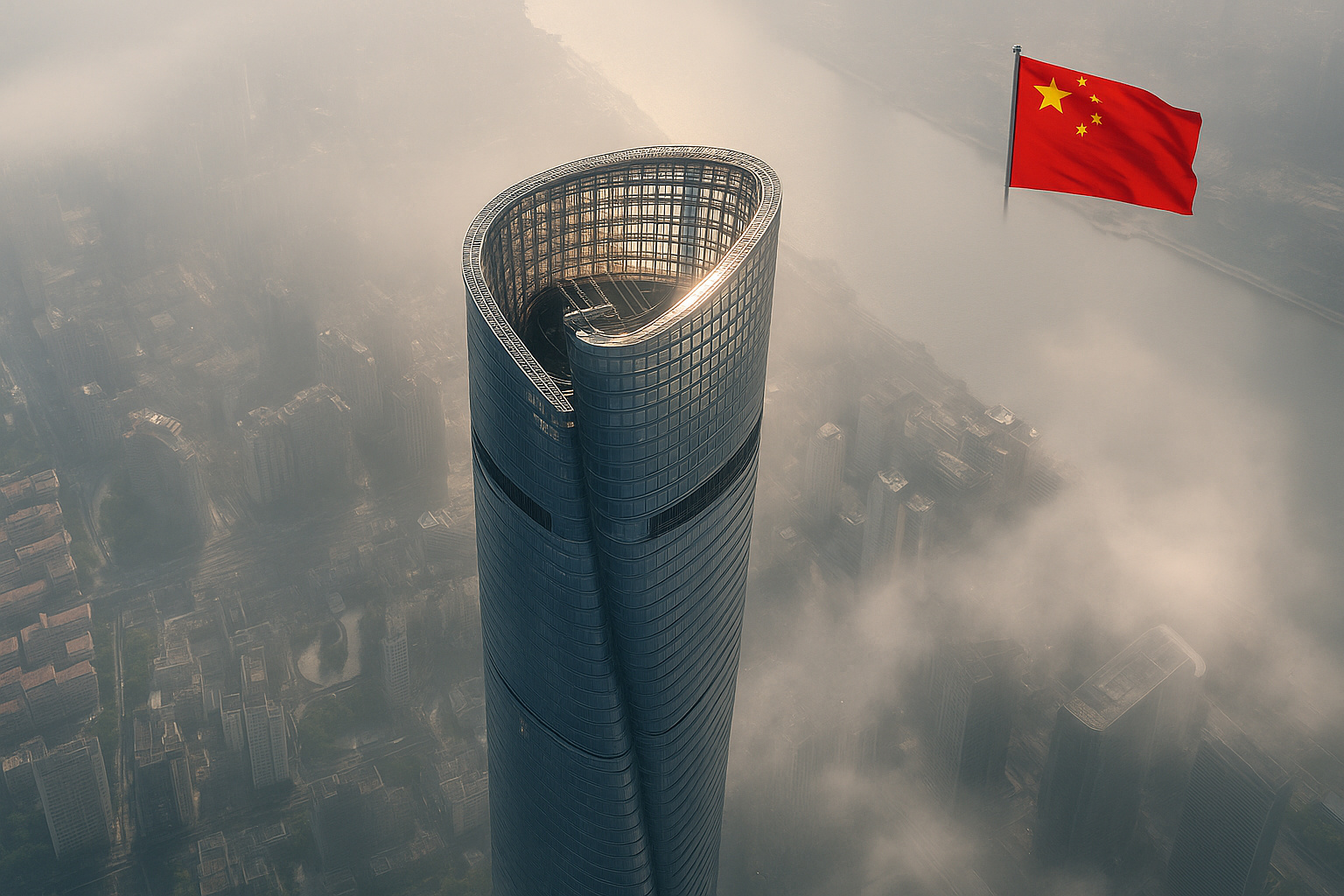

With 632 Meters and 128 Floors, the Shanghai Tower Is the Second Tallest Building in the World and Houses the Highest Observatory on the Planet, a Symbol of Chinese Modern Engineering.
Located in the financial heart of Shanghai, the Shanghai Tower is not just a skyscraper — it is a manifesto of China’s technological and architectural capacity in the 21st century. At 632 meters tall, with 128 floors and an observatory at 632 meters recognized by the Guinness World Records as the highest in the world, the building has become a global icon of modern engineering and a landmark of urban sustainability.
A Colossus That Redefines the Horizon of Shanghai
The Shanghai Tower was officially inaugurated in 2016, after seven years of construction and an estimated investment of US$ 2.4 billion. Designed by the American firm Gensler and built by the state-owned Shanghai Construction Group, it represents the pinnacle of an urban project that transformed the Lujiazui district into one of the most sophisticated financial centers on the planet.

The tower is the tallest structure in China and the second tallest in the world, second only to the Burj Khalifa in Dubai. However, its design goes beyond the pursuit of height: the helical shape that twists 120 degrees from base to top is not merely aesthetic but functional — it reduces wind resistance by up to 24%, saving millions in structural and energy costs.
-
Engineering Feat in Brazil: 6.4 km Tunnel and Powerful Pumps Overcome 200-Meter Elevation to Save São Paulo’s Cantareira Water System

-
Engineering Students Build Off-Grid Tiny Home with Sustainable Features and Offer Free DIY Guide
-
Historic Brazilian Championship Stadium Demolished for New Supermarket and Shopping Center Development

-
Workers excavate one of the world’s longest railway tunnels beneath the Alps between France and Italy, stretching nearly 60 km, 600 meters deep, with an investment of 11 billion euros.


With 380,000 m² of total area, the building houses offices, hotels, conference centers, retail areas, and panoramic observation decks. At the top is the Shanghai Tower Observation Deck, a glass deck 561.25 meters high offering a complete view of the city and the Huangpu River, attracting millions of tourists each year.
A Machine of Engineering and Energy Efficiency
The Shanghai Tower is considered one of the most sustainable buildings ever constructed, with LEED Platinum certification — the highest level of international environmental recognition. The double glass facade, composed of 26,000 individually curved panels, creates a layer of natural thermal insulation that reduces energy consumption by up to 40% compared to similarly sized buildings.
The ventilation system utilizes air filtered by plants in indoor gardens, and rainwater is collected and reused for irrigation and cooling. Additionally, the building houses 270 wind turbines integrated into the top, responsible for generating part of the energy used in common areas.
The elevators, manufactured by Mitsubishi Electric, are another technological feat: they can reach 74 km/h, taking passengers from the basement to the observation deck in less than a minute — a world record for vertical speed.
The Architectural Symbolism of New China
The tower was conceived to symbolize China’s economic and technological rise in the 21st century. Each of the nine vertical zones of the building represents a “vertical neighborhood,” with hanging gardens, internal plazas, and common spaces. This segmented structure allows the building to function as a self-sufficient city, where thousands can work, live, and move without leaving the building.

The spiraling design was inspired by the Chinese philosophy of harmony and motion, evoking the constant flow of the Huangpu River and the dynamic growth of the nation. The shape also references ancient pagoda towers, reinterpreted through a lens of technology and modernity.
The Highest Observatory in the World
The view from the Shanghai Tower observatory is one of the most impactful architectural experiences on the planet. At 632 meters high, visitors see not only the vastness of the metropolis but also the two neighboring towers — the Shanghai World Financial Center (492 m) and the Jin Mao Tower (420 m). Together, they form the most impressive trio of skyscrapers in Asia, known as the “Pudong Trio.”
During sunset, the golden reflections of the spiral tower merge with the horizon, and at night, the building transforms into a giant LED screen, displaying images and messages that can be seen for miles.
According to the Guinness World Records, the observatory of the Shanghai Tower officially surpassed the previous record held by the Burj Khalifa, becoming the highest observation platform on the planet since 2022.
The Tower That Marks the Future
Today, the Shanghai Tower is much more than a tourist attraction — it is a symbol of China’s technological ambition and a model for the future of vertical architecture. Its combination of intelligent design, energy efficiency, and functionality places it among the most advanced structures ever built by mankind.
Even surrounded by dozens of other skyscrapers, the tower dominates the Shanghai skyline as a beacon of Asian modernity. As China advances in mega-infrastructure and sustainability projects, the building remains a monumental reminder of how far human engineering can go when the goal is to challenge the limits of gravity itself.