






 Portuguese
  Spanish


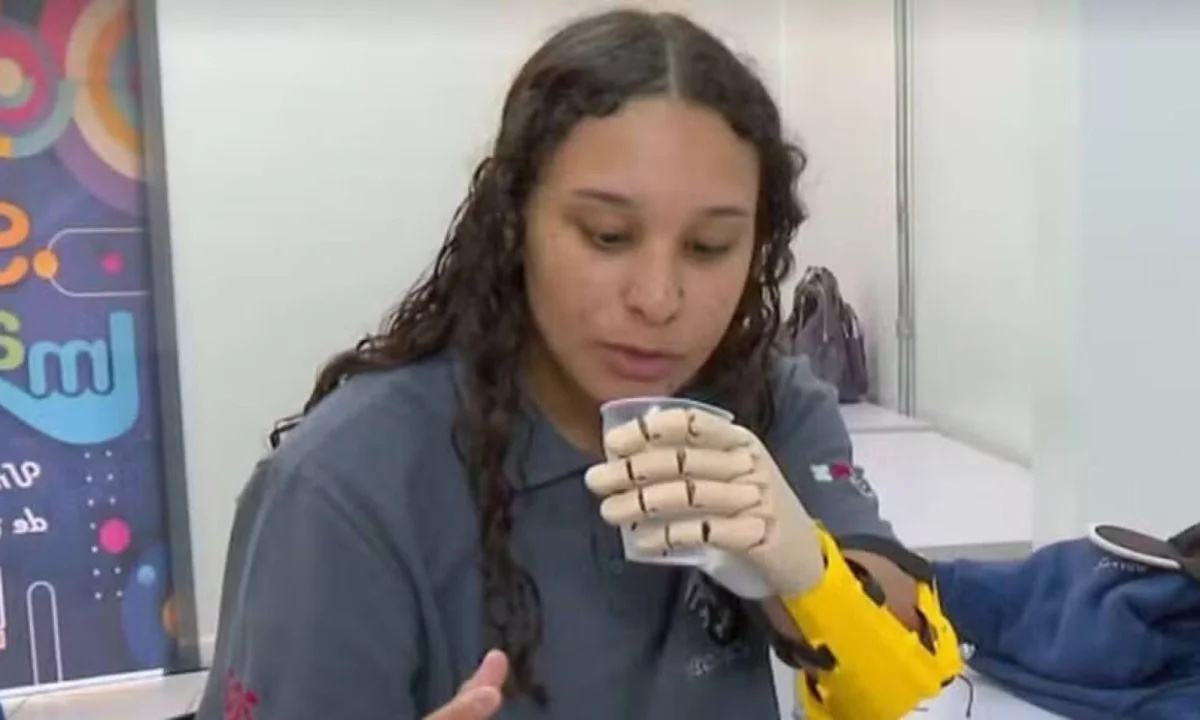

A school project born from 3D printing transformed the routine of a student and highlighted how technology, technical education, and accessibility can meet in low-cost solutions with practical application in daily life.
3D Printing and Accessibility within the School
A student from the Francisco Garcia State Technical School in Mococa, in the interior of São Paulo, inspired her classmates to develop an accessibility solution within the school itself.
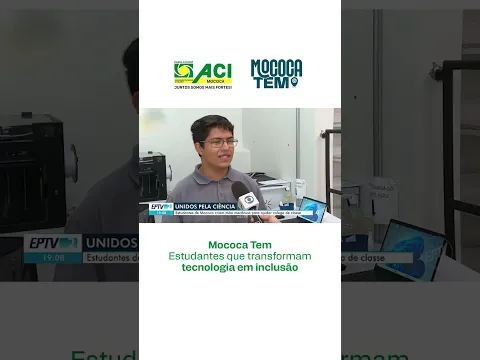
Maria Alice Francisco, who was born without part of her left arm, participated in the creation of a mechanical prosthesis produced with 3D printing by students Fabrício Bueno Francisco and Lucas Marques de Souza, under the guidance of teachers Jayro do Nascimento Neto and Regina Destro Silva.
Named Adaptamão, the project was presented as a functional and lower-cost alternative compared to models available on the market.
-
Detectorist finds 2,700-year-old bronze sword embedded vertically in forest in Poland; artifact may reveal ancient Bronze Age ritual

-
At the bottom of the Mediterranean, Italian engineers have sunk a “plant” in the shape of a giant donut that uses the ocean’s own weight to store energy, storing electricity generated by wind and sun at the sea floor and returning it to the grid without dams, mountains, or chemical batteries.

-
Scientists create robotic bird that uses articulated wings to maintain balance, mimicking hawks and flying with stability where common drones fail.
-
U.S. university performs surgeries with remotely controlled humanoid robots

The initiative arose after the Etec received a 3D printer and began to encourage students to produce simple parts.
With the advancement of activities, the proposal in the classroom began to seek practical applications for the equipment.
In this context, Maria Alice’s story led the class to direct their learning towards a concrete demand, related to their classmate’s autonomy in daily life.
How the Adaptamão Project Came About
According to a report from g1 reproduced by Estado de Minas, the work began with the production of a single finger.
Gradually, other groups began to collaborate with new parts, until the idea evolved into assembling a complete hand.
In a statement reproduced by the press, Maria Alice stated that the class’s involvement drew attention due to the collective effort around the project.
The result was a jointed prosthesis, made with lightweight materials and designed to be low-cost.
According to the report, the estimate is that the device could cost less than R$ 300.
Official bodies and those responsible for the project point out that myoelectric or bionic prostheses can have significantly higher prices, depending on the technology used.
Technical Challenges in Creating the 3D Prosthesis
During development, the students reported technical difficulties until they reached a functional model.
Fabrício stated to Agência SP that one of the main challenges was finding materials compatible with the design of the piece, without compromising the movement of the fingers and the strength of the assembly.
According to him, the goal was to achieve a material that allowed movement without the risk of fracturing the structure or breaking the cables during use.

The first version had limitations, mainly in the fastening system and movement.
Lucas reported that the group needed to reposition the brace above the elbow after realizing that the initial solution, close to the wrist, did not deliver the expected result.
As he explained to Agência SP, this change was necessary to automate the movement of the cables responsible for opening and closing the fingers.
What changed in Maria Alice’s routine
In the second version, the prosthesis began to use wires that function like tendons and are activated by the movement of the user’s arm.
It was this model that started to allow practical tasks in Maria Alice’s routine.
In a report to Agência SP, the student said she was able to hold cups, objects, and perform simple daily activities, such as tying her hair, something she could not do in the same way before.
Besides the functional aspect, the project had repercussions in the school environment and in the personal experience of the student, according to testimonies reproduced by the press.
Maria Alice associated the process with the feeling of welcome and the support received from classmates during the development of the prosthesis.
In this sense, the initiative ceased to be merely a technical exercise and began to be treated, also, as an action linked to inclusion in the school space.
Assistive technology and technical education
At the same time, Adaptamão consolidated a work dynamic among different areas of the school.
On the official page of the 16th Technological Fair of Centro Paula Souza, the project is described as an initiative that combines modeling software, 3D printing, and assembly of the pieces in the course workshop.

The proposal, according to the official description, was designed to simulate functions of the human hand and facilitate the execution of routine activities by people with physical disabilities in the upper limbs.
The project gained visibility outside the educational unit.
Agência SP reported that Adaptamão was presented at the 16th edition of the Technological Fair of Centro Paula Souza, an event focused on innovation and student entrepreneurship in the Etecs and Fatecs of São Paulo.
There is also a record at the British Council Brazil that the work placed second in the São Paulo final stage of the challenge Learning Sectors: Accelerating in the Learning Circuit, held on June 7, 2025, among teams from the public network.
Prosthetics, innovation, and project continuity
Meanwhile, the group continues to work on improving the prosthesis.
According to Agência SP, the students are developing the third version of the device, with structural changes to enhance flexibility and movement possibilities.
In the presentation of Feteps, there is also the perspective of advancing in the automation of functions such as opening and closing the fingers, indicating the continuity of the project within the school.
Data on disability and amputation in Brazil
The repercussions of the case also draw attention to the lack of specific data on people with upper limb absence in Brazil.
Agência SP itself mentions this gap.
The most comprehensive national data available today comes from the 2022 Census: IBGE reported in May 2025 that the country has 14.4 million people with disabilities, equivalent to 7.3% of the population aged two years or older.
However, the survey does not detail how many cases involve amputations or congenital malformations of upper limbs.
In public health, the available numbers help to gauge the demand for rehabilitation and assistive technologies, although they do not resolve this absence of specific breakdown.
Agência SP reported that in 2022, approximately 31,000 limb amputation procedures were recorded in the Unified Health System.
Conass, based on cited data from the Brazilian Society of Angiology and Vascular Surgery, reported that the country recorded 31,190 amputations that year, mainly associated with feet and legs in the public network.
In Mococa, the development of the prosthesis occurred from a demand observed within the school and the direct participation of the student served by the project.
The case brings together technical education, the use of 3D printing, and practical application of knowledge in an initiative aimed at expanding autonomy in everyday activities.


