






 Portuguese
  Spanish


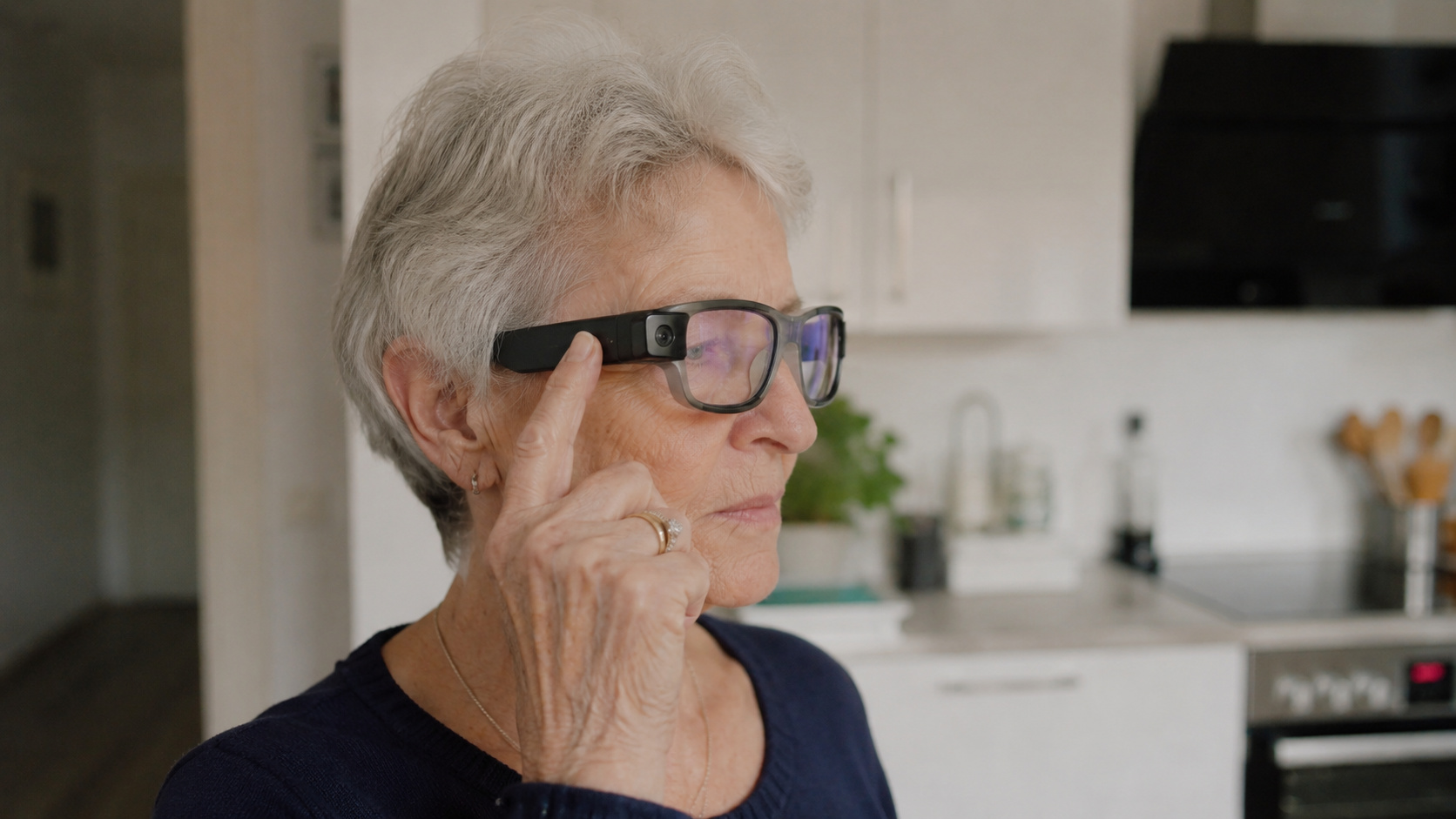

With artificial intelligence and real-time assistance, CrossSense glasses aim to restore autonomy to people with early-stage dementia, transforming daily tasks into activities that are once again possible and independent.
In March 2026, a technology that seems straight out of a science fiction movie won one of the world’s most important awards for innovation in health. The CrossSense system, developed for smart glasses, won the Longitude Prize on Dementia, receiving £1 million to expand its implementation and accelerate its arrival to the public. The aim of the technology is to help people with early-stage dementia continue performing daily tasks without constantly relying on family members or caregivers.
The project attracted attention because it does not seek to cure the disease. Instead, it uses artificial intelligence to tackle one of the biggest challenges of dementia: the gradual loss of autonomy. Through cameras, sensors, and a virtual assistant called Wispy, the glasses can recognize objects, identify environments, and provide real-time guidance to help the user perform simple day-to-day activities. The Alzheimer’s Society released details of the technology and gathered opinions from experts in the field about the potential of the initiative.
The technology can identify everyday objects and guide the user during simple tasks at home
The proposal of CrossSense is to function as a kind of digital companion. The glasses continuously analyze the environment around the person and use artificial intelligence to identify objects, recognize situations, and provide contextual guidance. When the user encounters difficulties in identifying an item or remembering a step of a certain activity, the system can provide visual and auditory cues.
-
Pigeons Trained to Detect Cancerous Changes in Medical Images Astonish Scientific Community

-
Plastic Waste from Beaches and Poor Communities in Kenya Transformed into School Desks, Replacing Wood in Classrooms and Turning Marine Litter into Durable Study Tables

-
Your Old Gmail Address Might Be Obsolete Soon: Google Introduces Feature Changing Account Usage.
-
Lost Fossil Found in Brazil Unveils 240-Million-Year-Old Reptile Predating Dinosaurs, Redefines Evolutionary Map and Highlights Southern Brazil’s Role in Understanding Crocodile and Dinosaur Ancestors



In practice, the technology can assist in tasks such as preparing a simple meal, making a drink, getting dressed, locating objects, or following household routines. The system was also developed to learn individual habits and adapt its guidance according to the specific needs of each person.
The virtual assistant called Wispy learns routines and adapts the guidance as the disease progresses
The major differentiator of the project lies in the artificial intelligence component. The Wispy assistant does not function merely as a visual recognition system. It also learns user behavior patterns, preferences, and routines over time. This allows the guidance to become progressively more personalized.
According to the developers, the system was specifically designed to keep up with changes caused by the progression of dementia. As the user’s needs change, the artificial intelligence adjusts how it provides reminders, instructions, and cognitive support. This feature was considered one of the most innovative aspects by the evaluators of the Longitude Prize on Dementia.
The glasses can highlight domestic hazards and assist in navigation within the home
In addition to object recognition, the system also uses augmented reality to insert information directly into the user’s field of vision. According to information released by the University of Sussex, a project member, the glasses can visually highlight certain objects, insert words identifying items in the environment, and even alert about potential domestic risks, such as a hot stove.


The idea is to reduce situations of confusion, forgetfulness, or disorientation that often affect people with dementia. The developers believe that this approach can increase home safety and prolong the period during which a person can live relatively independently.
The project won an international competition created to tackle one of the greatest challenges of global aging
The Longitude Prize on Dementia was launched in 2022 to encourage technological solutions capable of helping people with dementia maintain their independence for longer.
The competition brought together teams from various countries and selected dozens of projects over several years. CrossSense ended up being chosen as the winner after evaluations involving technological innovation, potential impact, and adaptation to the real needs of users.
The prize is funded by the Alzheimer’s Society and Innovate UK, coordinated by Challenge Works. The amount of £1 million, equivalent to approximately US$ 1.36 million or R$ 7.5 million at the current direct conversion, will be used to expand the development of the technology.
The initial tests showed improvement in object identification and daily activities
The developers claim that the initial tests presented promising results. Reports published after the award indicate that participants significantly improved object identification using the smart glasses. In some preliminary tests, the object recognition rate reportedly increased from approximately 46% to 82%.
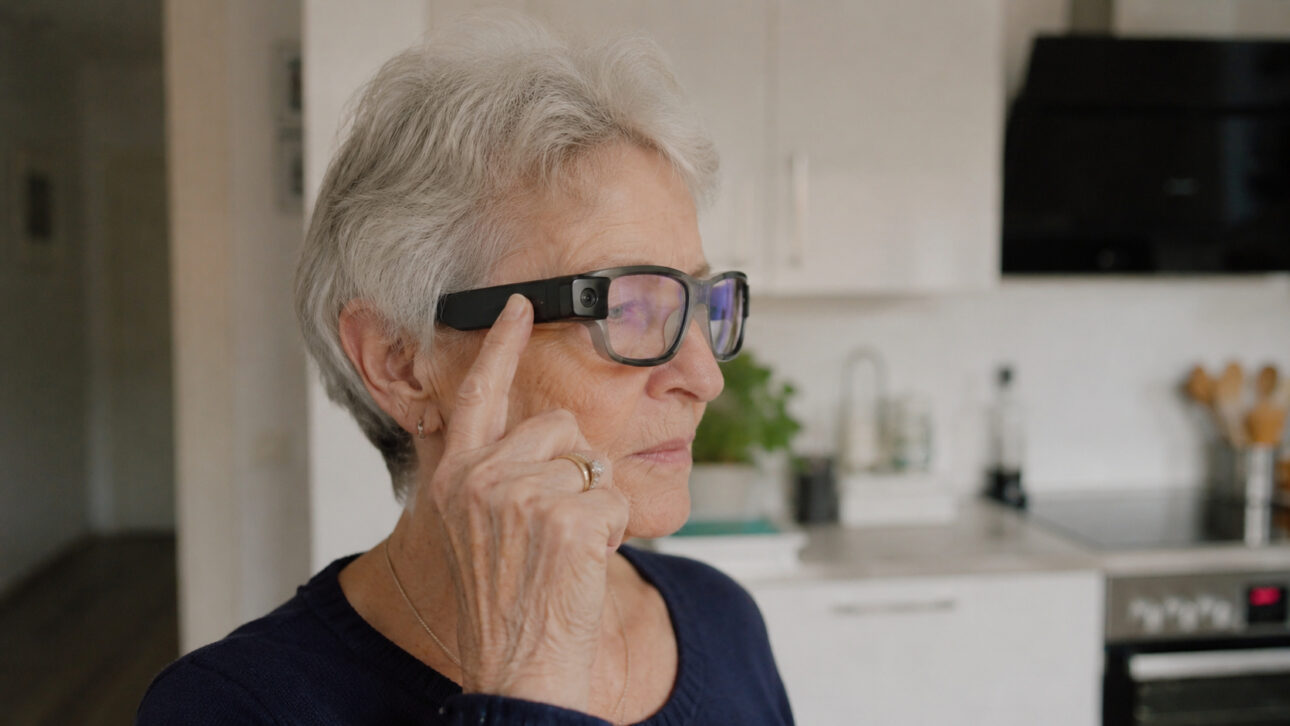
It is important to note that these results still need to be confirmed in larger and longer studies. Experts involved in the field emphasize that the technology is promising but is still in the validation phase before wider adoption.
The number of people with dementia continues to grow worldwide
The progression of dementia is one of the biggest public health challenges associated with an aging population. The Alzheimer’s Society highlights that millions of people currently live with some form of dementia and that this number is expected to grow significantly in the coming decades. International estimates suggest that the total number of affected people could reach about 150 million by 2050.
In this scenario, there is growing interest in technologies capable of providing daily support, reducing dependency, and improving patients’ quality of life. CrossSense emerges precisely within this trend, focusing less on the disease itself and more on preserving autonomy.
Technical specifications of CrossSense
| Item | Information |
|---|---|
| Technology | AI assistant for smart glasses |
| Virtual assistant name | Wispy |
| Main application | Support for people with dementia |
| Function | Object recognition and daily guidance |
| Uses camera | Yes |
| Uses audio | Yes |
| Augmented reality | Yes |
| Personalized adaptation | Yes |
| Prize received | Longitude Prize on Dementia |
| Prize amount | £1 million |
| Approximate value in dollars | US$ 1.36 million |
| Approximate value in reais | R$ 7.5 million |
| Planned commercial availability | Beginning of 2027 (as informed by developers) |
A technology that does not promise a cure, but can restore some of the lost independence
Unlike many innovations announced for neurodegenerative diseases, CrossSense does not promise to halt or reverse dementia. Its goal is more pragmatic: to help people continue recognizing objects, performing tasks, and maintaining routines for a longer time. For families who live daily with the disease, this difference can represent additional months or even years of autonomy at home.
If the results observed in initial tests are confirmed in larger studies, the smart glasses could become one of the most important assistive technologies ever developed for people with dementia, turning artificial intelligence into a practical tool to tackle one of the greatest challenges of human aging.


