Portuguese
  Spanish


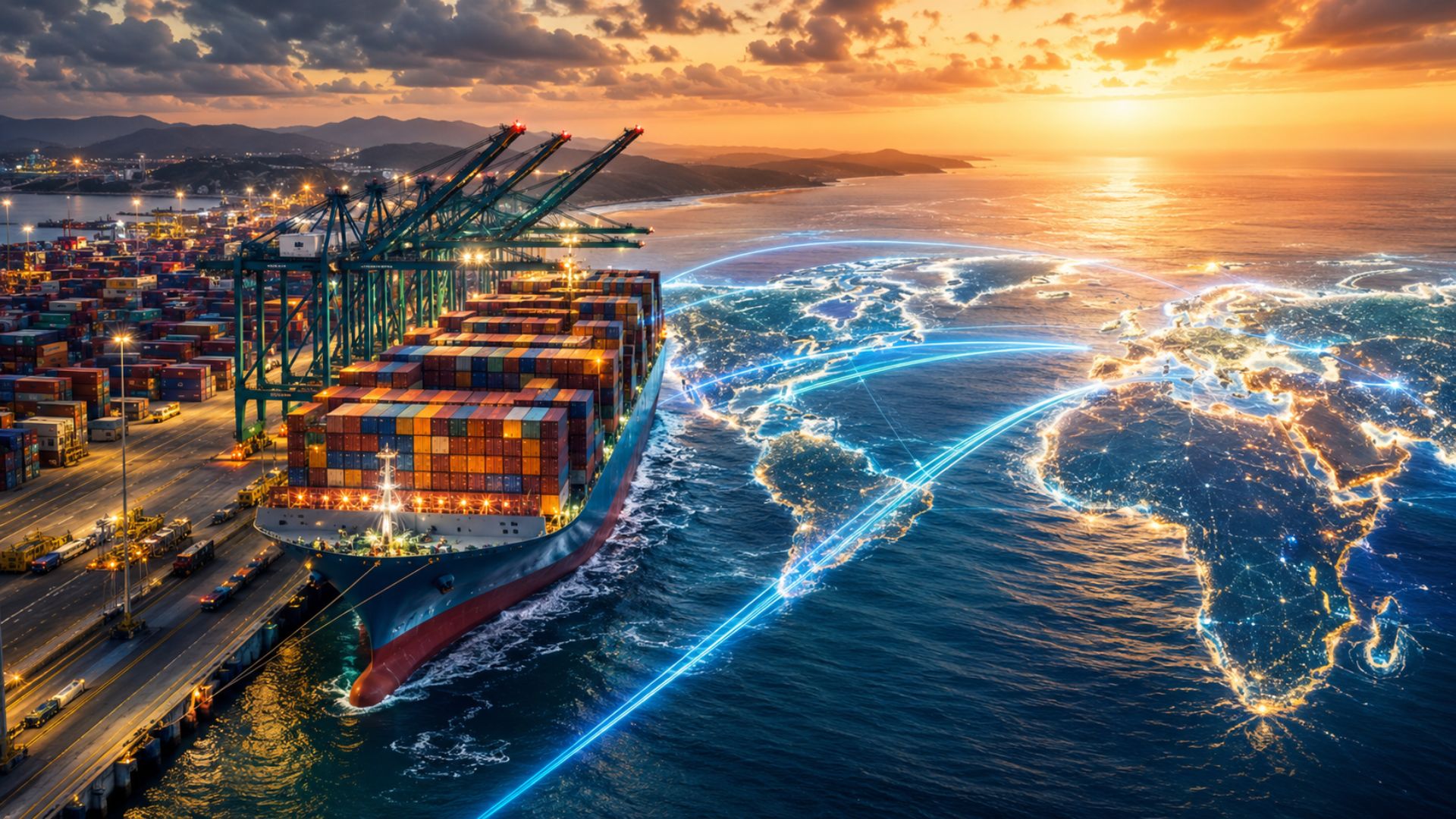

The SC Itapoá Port was included in the rotation of Maersk’s NEOSAMBA service, which connects the Santa Catarina terminal directly to the largest ports in Europe: Southampton, Rotterdam, Hamburg, Bremerhaven, and Antwerp. In the national scenario, the SC Port will also gain the ALCT1 service from Aliança Navegação, scheduled to start in June, connecting Itapoá to Manaus in 13 days. According to information from the NSC portal, in 2025, the terminal handled 298 thousand TEUs in cabotage, a growth of 32%, and the dredging work that will allow receiving ships up to 366 meters has already reached 70% completion.
The SC Itapoá Port, on the northern coast of Santa Catarina, has just secured a strategic position in global maritime trade by being included in one of the main navigation routes between South America and Northern Europe. The NEOSAMBA service, operated by Maersk, the world’s largest shipping company, now calls at the Santa Catarina terminal in a rotation that includes Southampton in the UK, Rotterdam in the Netherlands, Hamburg and Bremerhaven in Germany, Antwerp in Belgium, and Tangier in Morocco. The inclusion of the SC Port in the route strengthens the terminal’s competitiveness, which already operates two other services to Europe via the Mediterranean: the Bossa Nova/Sirius 1, from Maersk and CMA CGM, and the WMED/MSE, from MSC and Hapag-Lloyd.
In the domestic scenario, the SC Port gains reinforcement with the ALCT1 service from Aliança Navegação e Logística, which will connect Itapoá to Manaus with a transit time of approximately 13 days. Operations are expected to start in June, with two weekly calls at the terminal, expanding the logistical capacity for industrial, electronic, and refrigerated products between the South and North regions of the country. The terminal, a leader in cabotage in Southern Brazil, also maintains the BRACO service, operated by Mercosul Line and CMA CGM, which already connects Manaus to ports on the Brazilian coast.
The weight of Europe in the movement of the SC Port

The connection with the European market is not new for Porto de SC Itapoá, but the numbers show that the relationship is deepening. In 2025, imports from the European Union accounted for 19% of all cargo imported by the terminal, totaling approximately 285 thousand TEUs. Of the total imported food and beverages that passed through Porto de SC, 76% originated from the European Union, a proportion that demonstrates the terminal’s dependence on trade with the continent.
-
Brazil’s Port of Santos to Receive New $1.1 Billion Container Terminal, Tecon Santos 10, Set to Begin Operations in 2029

-
Ports without drivers and cabins already move containers like automated factories: robotic cranes, autonomous electric vehicles, and software transform giant terminals into 24-hour logistics machines.
-
About 300 American ports still breathe diesel from trucks, cranes, and locomotives, but they are now trying to electrify heavy machinery to clean the air for 31 million nearby residents.

-
A 220-meter giant powered in part by solar energy and lithium batteries has just unloaded nearly 5,000 Chinese cars at the Port of Itajaí. It is the first of ten Grimaldi super ships and the first in the world prepared to run on ammonia as fuel.


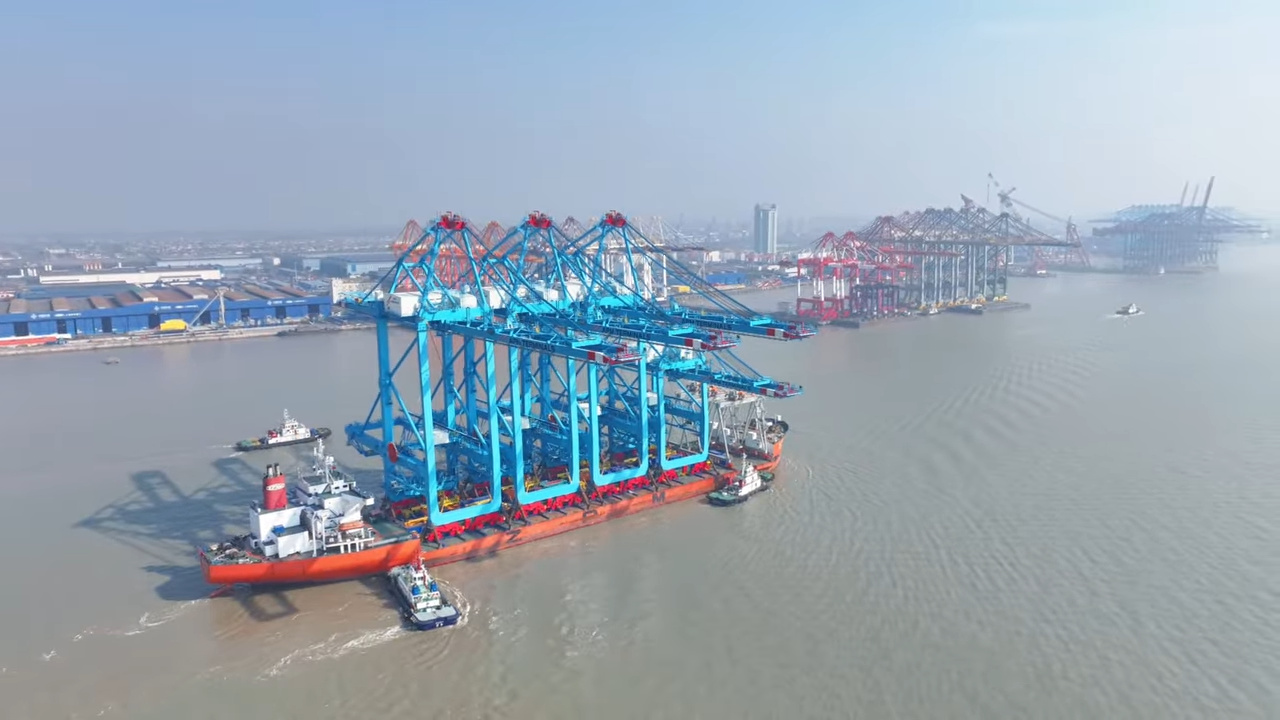


In the export flow, the European Union represented 12% of all cargo exported in 2025, with about 180 thousand TEUs. The main segments include forest products such as wood and pulp, with 19% destined for Europe, as well as 22% of household appliances and electronics and 14% of machinery and steel cargo. Inclusion in Maersk’s NEOSAMBA route reinforces this European vocation of Porto de SC and adds Northern European ports that complement the existing Mediterranean routes of Maersk, CMA CGM, MSC, and Hapag-Lloyd.
The cabotage that grows 32% and leads in Southern Brazil
Porto de SC Itapoá has established itself as a leader in cabotage movement among the ports of Southern Brazil. In 2025, the terminal moved approximately 298 thousand TEUs in this mode, a volume 32% higher than recorded the previous year.
The growth of cabotage reflects a national trend. Data from the Brazilian Association of Cabotage Shipowners indicate that the maritime mode can reduce freight costs by up to 30% on strategic routes, thanks to economies of scale. A single ship is capable of transporting the equivalent of 200 or even 300 trucks in one trip, diluting operational costs such as fuel, crew, and maintenance. The CEO of Porto de SC Itapoá, Ricardo Arten, stated that “cabotage is gaining ground because it combines movement capacity, operational predictability, and logistical competitiveness.”
The dredging that paves the way for giant ships
The dredging work to deepen the access channel to Babitonga Bay reached 70.3% completion in May 2026. The dredger Galileo Galilei has already removed 5.5 million cubic meters of sediment from the seabed, and completion is expected in the second half of 2026.
With the deepening completed, Porto de SC and the São Francisco do Sul port complex will be able to receive vessels up to 366 meters in length, compared to the current limit of 336 meters. The cargo capacity will also grow: ships that currently transport up to 10 thousand TEUs will give way to vessels of up to 16 thousand TEUs. For the terminal, this means being able to compete with larger ports in attracting New Panamax and Post Panamax class ships, increasing cargo volume and operational efficiency.
What the new routes mean for Santa Catarina
The combination of new international routes, growth in cabotage, and dredging for larger ships positions the SC Itapoá Port as one of the most dynamic terminals in Brazil. The terminal’s strategic location, close to the industrial hubs of Joinville, Curitiba, and São Paulo, ensures direct access to one of the country’s most productive regions.
Arten summarized the strategy: “Santa Catarina has an industrial base highly connected to the European market, and the Itapoá Port is strategically positioned to meet this demand with logistical efficiency, proximity to production hubs, and increasingly robust maritime services.” With three routes to Europe via Maersk, CMA CGM, MSC, and Hapag-Lloyd, direct connection with Manaus, and the capacity to receive giant ships from 2027, the SC Port enters a new phase of competitiveness.
Did you know that the SC Itapoá Port now has a direct route to Northern Europe and a connection to Manaus in 13 days? Do you think cabotage should be more used in Brazil? Tell us in the comments.