






 Portuguese
  Spanish


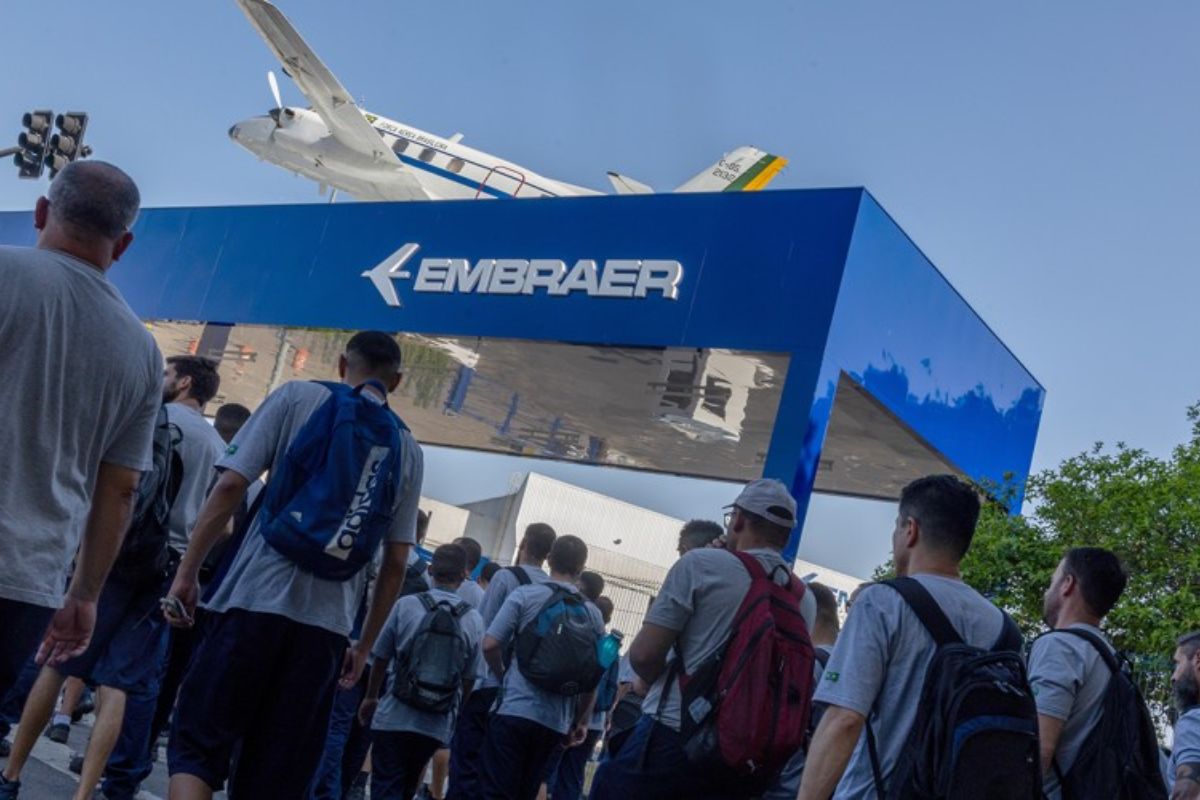


Embraer Defines Return to In-Person Work Without Agreement With Workers, Generating Union Resistance and Legal Actions for Unnegotiated Changes.
The Metalworkers’ Union of São José dos Campos and Region filed a class action against Embraer after the company’s decision to resume in-person work starting in January 2026. Since the pandemic, employees had been working remotely, and the change was communicated without prior agreement with the workers, according to a report by O Globo.
The decision generated criticism and protests, as alternative proposals presented by the union were ignored. Among them were maintaining remote work for those who live far away or have health issues and adopting a hybrid system for others. Despite this, Embraer continued to require physical presence at least three days a week.
Union Presses for Negotiation
The union, led by Herbert Claros, claims it attempted to negotiate with Embraer’s Board of Directors and even with the Ministry of Labor, but was unsuccessful. The workers approved a hybrid model proposal in a meeting, but the company remained firm in its decision for a full return.
-
Trump’s 50% Tariff on Brazilian Goods Cuts U.S. Exports by 30%, Brazil Sets Records in 42 Countries and Germany Becomes Top Coffee Buyer

-
Brazil Harvests Record 358 Million Tons of Grain but Lacks Storage for 134 Million Tons

-
A New Bakery Opens Every Six Minutes in Brazil, Highlighting a Surge of 26,400 Small Businesses in Early 2025
-
Brazil’s Lula Government Allocates $463 Million Quota for Electric Car Parts, Waives Import Tax Until December, Sparking Competition Among BYD, Automakers, and Unions as Consumers Question Impact on Prices and Local Industry


According to Embraer, in-person work is necessary to expedite communication, strengthen team bonds, and improve collaboration between sectors. For the company, the measure aligns with a growth period after recording one of the best years in its history.
Financial Aid in Dispute
Another point of contention is the end of the 900 BRL shopping voucher that employees received during the remote period. The benefit helped with food expenses and bills for internet, electricity, and water. For the union, the removal of the aid represents a significant loss in workers’ income.
Furthermore, the entity demands that specific clauses regarding remote work be included in base date negotiations. The initial hearing of the legal process does not yet have a defined date.
Dispute Reflects Post-Pandemic Scenario
The action against Embraer symbolizes a broader conflict: the redefinition of the post-pandemic work model. Companies that experienced significant gains in the recent period, such as Embraer, face resistance when imposing a return to in-person work without dialogue with employees.
The outcome of this process could set a precedent for other companies in Brazil, as in-person work continues to be a topic of strong tension between corporate productivity and employees’ quality of life.
Do you agree with this change? Do you think the end of remote work impacts the Brazilian job market? Leave your opinion in the comments — we want to hear from those who live this reality firsthand.


Que tal então a Embraer mas as pessas para os empregados montarem os aviões em suas casas então
A Empresa já mudará parte da produção para os Estados Unidos, devido aos problemas que o governo cria com suas políticas fracassadas, com essas intervenções do sindicato, vai acabar é se mudando completamente para lá. Mas aí é simples, é só fazer o L que ficará tudo bem!
Então,esse povo não quer trabalhar, exigem uma monte de coisas e que mamata, daqui a pouco se fechar a Fábrica ficarão desempregados aí eu quero ver.😒