






 Portuguese
  Spanish


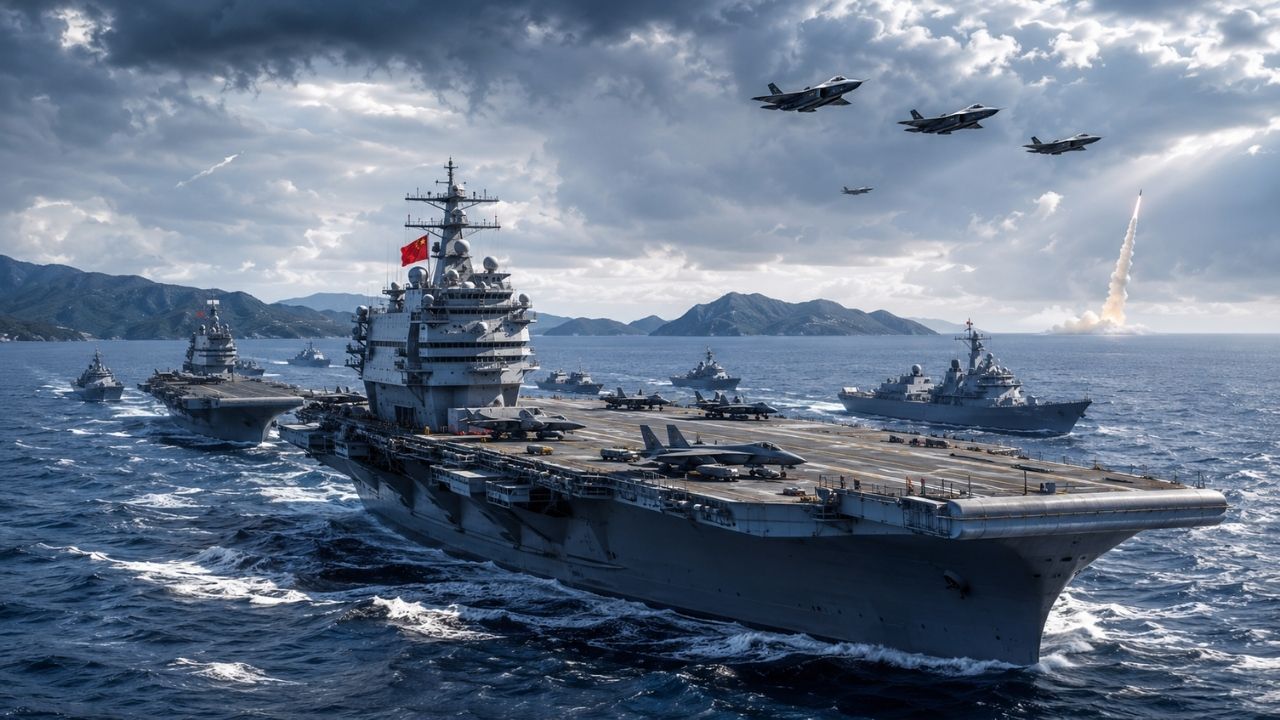

Chinese aircraft carriers became a focus of alert after Japanese exercises with 64 anti-ship missiles, advancement of F-35 fighters, and modernization of Type-12 missiles. Published on June 7, 2026, the analysis shows pressure on Liaoning, Shandong, and Fujian in the Western Pacific, near Taiwan.
Chinese aircraft carriers have become the center of new military evaluations after experts advocated for accelerating the fleet’s modernization in light of Japan’s reinforcement in the Western Pacific. The analysis was published by the South China Morning Post on June 7, 2026, amid tensions between Beijing and Tokyo.
According to information published by the South China Morning Post, the scenario involves the People’s Liberation Army Navy, Japanese forces, the aircraft carriers Liaoning, Shandong, and Fujian, as well as F-2, F-35A fighters, ASM-2 anti-ship missiles, and Type-12 systems. The sensitive point is the ability to protect Chinese naval groups against saturation attacks near Japan and Taiwan.
Chinese aircraft carriers face new risk environment
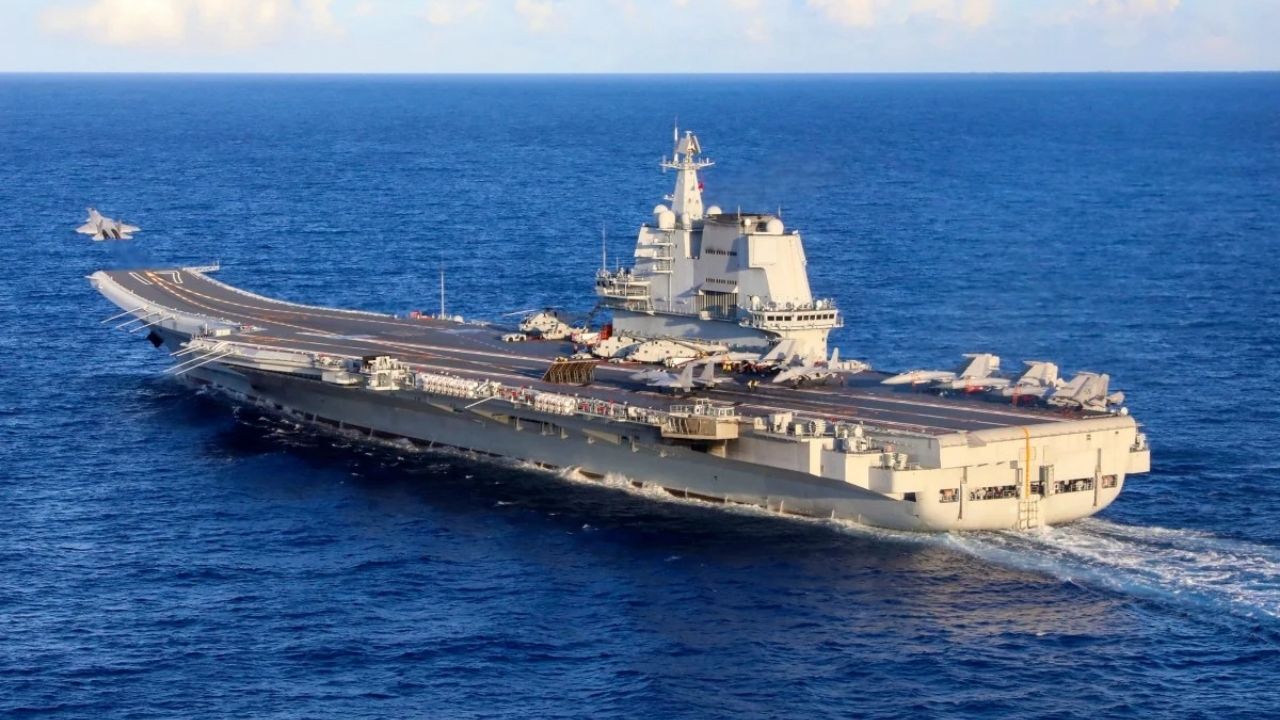
The modernization of Chinese aircraft carriers has gained urgency because Japan is expanding its maritime attack capability. According to the analysis, Tokyo is reinforcing long-range anti-ship missiles and positions on islands near Taiwan, which increases pressure on the Chinese fleet.
-
New Brazilian Frigate Equipped with Advanced Missiles and Radars to Safeguard Strategic Maritime Areas

-
New Brazilian Frigate Equipped with Advanced Missiles and Radars to Protect Strategic Maritime Areas, Including the Blue Amazon and Pre-Salt Reserves
-
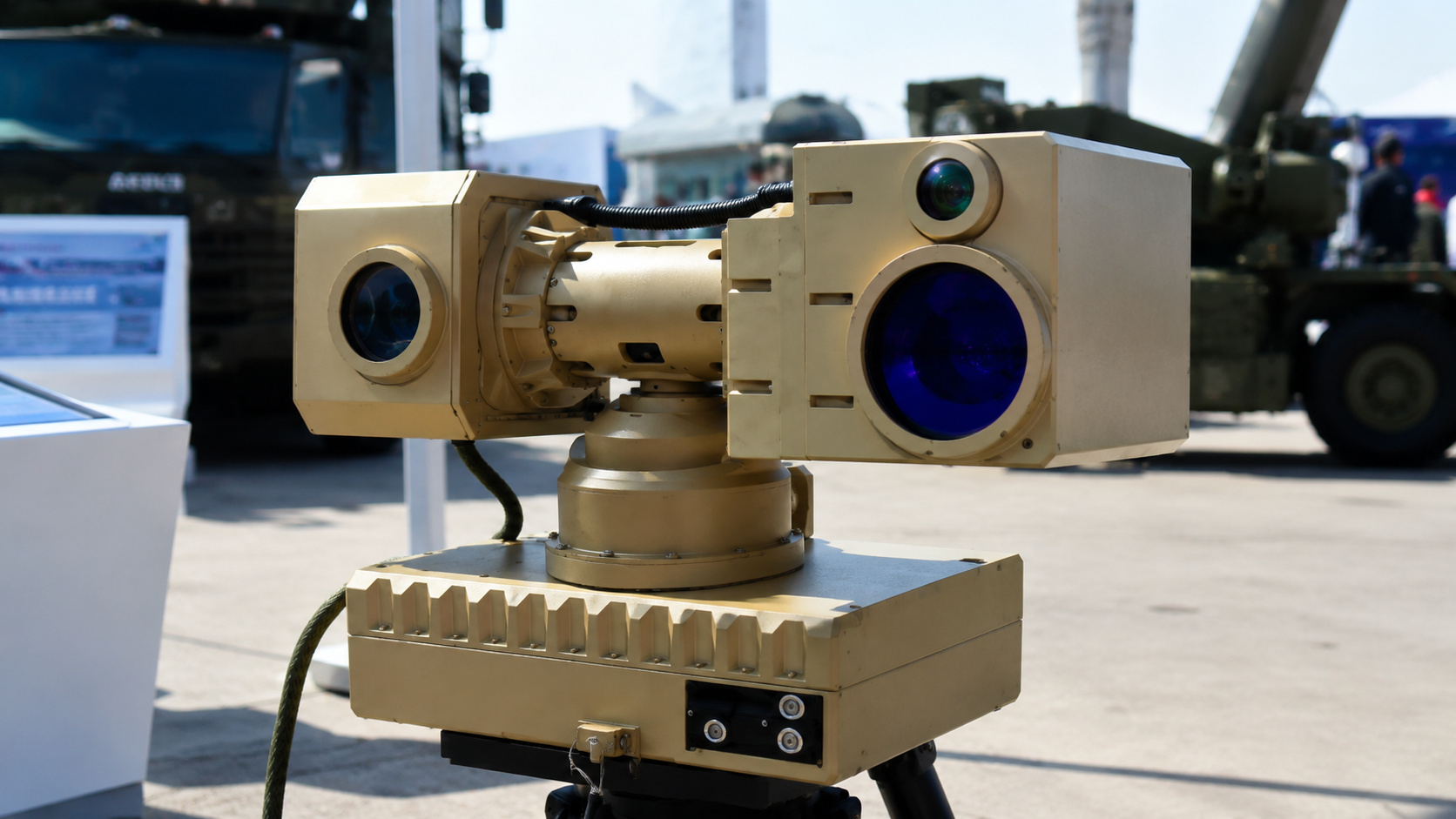
China Unveils Laser Weapon Capable of Instantly Neutralizing Military Drones, Marking a Significant Advancement in Air Defense Technology
-
U.S. Navy’s Ticonderoga-class Cruiser Becomes a 9,800-Ton Missile Fortress with Advanced Aegis System Capable of Tracking Hundreds of Targets



The problem is not just the size of the ships, but the ability to protect them against coordinated attacks. In a real operation, a carrier strike group needs to deal with aircraft, missiles, sensors, escorts, air defense, and electronic warfare simultaneously.
The Chinese fleet has three aircraft carriers in active service: Liaoning, Shandong, and Fujian. The newest, Fujian, is the most advanced, as it uses electromagnetic catapults capable of launching more modern and heavier aircraft.
Liaoning and Shandong use ski-jump ramps, which limit the way their embarked aircraft operate. This technical difference helps explain why the modernization of the older ships has entered the debate.
Japanese exercise with 64 missiles drew attention
The most cited episode occurred in December, when the Liaoning strike group sailed through a route considered unusual in waters east of Japan. In response, Japan sent twelve F-2 fighters armed with 64 ASM-2 anti-ship missiles.
The scale of the mobilization was interpreted as a saturation attack exercise, using the Liaoning fleet as a hypothetical adversary. This type of scenario is concerning because it attempts to overwhelm a naval group’s defenses with many missiles at once.
Fu Qianshao, a military expert and former officer of the People’s Liberation Army Navy, stated that an action with so many fighters and missiles practicing penetration against an aircraft carrier represents a serious threat.
The assessment does not mean that such an attack is imminent, but it shows how military planners observe Japanese capability. For China, the exercise exposed the need to strengthen defensive layers and enhance integration between ships and aircraft.
Type-12 missiles increase Beijing’s concern


Another point of attention is the modernization of Japan’s Type-12 land-to-ship missiles. According to the analysis, these long-range systems can expand Japanese coverage over areas near the East China Sea.
This change is sensitive because it affects the maneuver space of Chinese aircraft carriers. The greater the missile range, the more pressure on routes, safety distances, and escort operations of the fleet.
Song Zhongping, a military commentator based in Hong Kong, stated that an air-launched version of the Type-12 missile would represent an additional threat by combining superior speed and guidance compared to current Japanese anti-ship missiles.
The discussion shows that the challenge does not come from a single weapon. It results from the combination of fighters, air-launched missiles, land systems, sensors, and attack capability on different axes.
F-35 fighters may pressure Chinese defenses
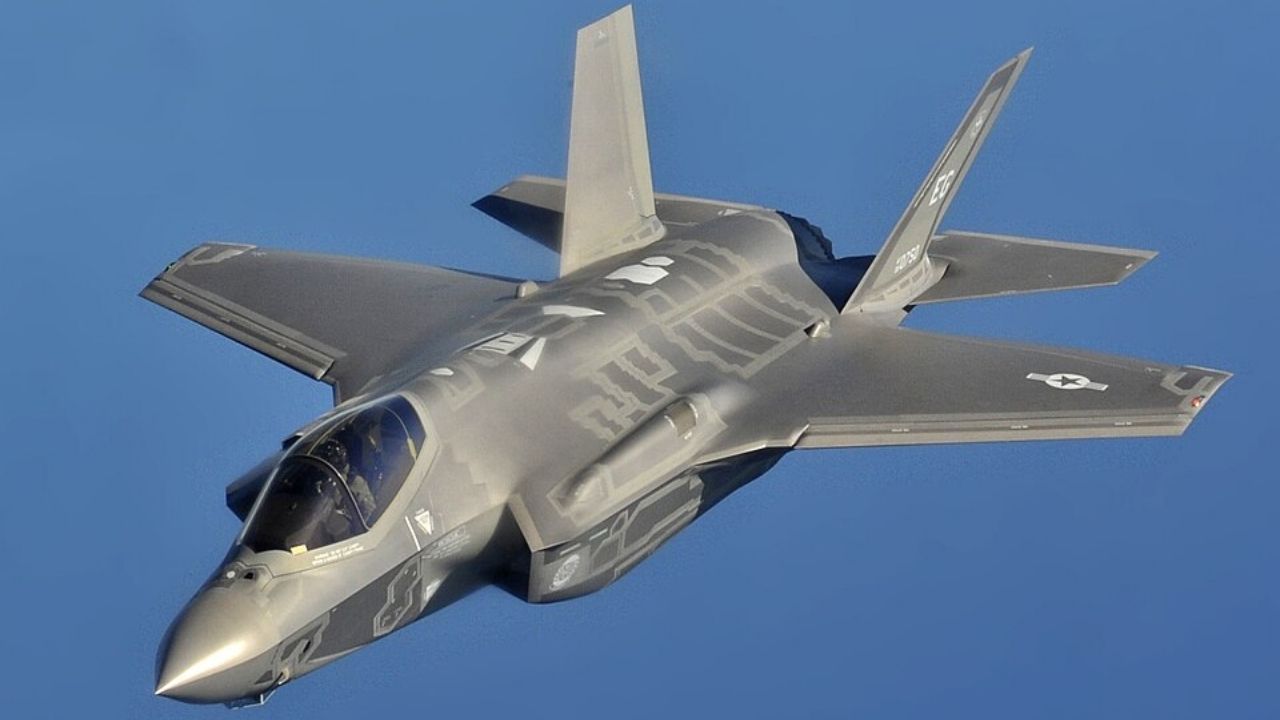
The presence of F-35A fighters in the Japanese inventory is also under evaluation. According to an article cited in the analysis, F-35A formations can operate with a combination of air-to-air and anti-ship missiles, including Joint Strike Missiles.
The concern is that stealth aircraft can penetrate the defensive perimeter of the Chinese fleet. If an F-35A breaks through the first layer of defense, other fighters, like the F-2, could follow with concentrated attacks using anti-ship missiles.
This possibility reinforces the need for layered defense. An aircraft carrier group needs to detect threats at long distances, coordinate interceptions, protect escort ships, and maintain response capability even under multiple attack vectors.
The central point is stealth. Aircraft with a lower radar signature force the fleet to rely on more advanced sensors, early warning, and rapid integration between air and naval platforms.
China attempts to expand the presence of embarked stealth fighters
The main gap pointed out by Fu Qianshao is the limited number of stealth fighters in Chinese strike groups. According to him, the current numbers still do not meet the demand in the face of possible penetration by many enemy stealth aircraft.
The Fujian already appears as the most prepared ship to operate the J-35, a fifth-generation embarked stealth fighter, due to the electromagnetic catapult system. This gives the new aircraft carrier a central role in the next phase of Chinese naval aviation.
Liaoning and Shandong still operate ramp-launched J-15 fighters, but there are indications of modernization to receive the J-35 in the future, according to the analysis. Satellite images of the Shandong were cited as a sign of modifications to accommodate the aircraft.
If this modernization advances, the Chinese fleet could increase the number of embarked stealth fighters. This would reinforce both air defense and offensive capability in longer-range operations.
Fujian can coordinate operations between aircraft carriers

In addition to the J-35, the Fujian may gain a relevant role by operating KJ-600 early warning aircraft. Fu stated that, in the future, the People’s Liberation Army could use the Fujian with more KJ-600s to coordinate aircraft based on other aircraft carriers.
This function is important because early warning aircraft act as detection and command nodes. They help to see threats earlier, distribute information, and coordinate responses in operations with multiple ships and planes.
The lack of fixed-wing early warning aircraft is pointed out as a limitation for fleet defense. The Fujian, by using catapults, can help to compensate for this gap.
This coordination between aircraft carriers will be crucial if China seeks interactive operations with Liaoning, Shandong, and Fujian working together. The challenge is no longer just having large ships but integrating them into an efficient operational network.
Japan strengthens stance amid Taiwan dispute
The tension between China and Japan also has a political and strategic background. According to the analysis, statements by Japanese Prime Minister Sanae Takaichi in November, relating a contingency in Taiwan to Japan’s survival, worsened the relationship with Beijing.
China considers Taiwan part of its territory and does not renounce the use of force for reunification. Most countries, including Japan, do not recognize Taiwan as an independent state, but the island’s security remains a point of regional tension.
It is in this context that the Japanese military advancement gains a sensitive reading for Beijing. Missiles on nearby islands, stealth fighters, and anti-ship exercises are seen by China as elements that could affect its operating space in the Western Pacific.
For Japan, military strengthening is presented within its defensive posture and regional vigilance. For China, it functions as additional pressure on fleets and operations near strategic areas.
Naval race in the Western Pacific should continue
The dispute is unlikely to be limited to a single exercise or a single class of missile. The Western Pacific concentrates maritime routes, military bases, territorial disputes, and interests linked to Taiwan, Japan, China, and the United States.
In this environment, aircraft carriers function as symbols and instruments of power projection. They carry planes, extend military reach, and demonstrate presence, but also become priority targets in case of confrontation.
China is trying to transform its fleet into a more modern force, with stealth fighters, catapults, early warning aircraft, and layered defense. Japan, in turn, is advancing in longer-range missiles, stealth fighters, and maritime attack capability.
The result is a technological and strategic race. Each new system introduced by one side forces the other to review doctrine, training, sensors, escorts, and naval survivability capacity.
Aircraft carriers show the new military pressure in Asia
The discussion about China’s aircraft carriers shows how security in the Western Pacific has entered a phase of greater complexity. The topic involves not only giant ships but also missile networks, stealth fighters, sensors, and political decisions around Taiwan.
The modernization of Liaoning, Shandong, and Fujian may increase China’s capacity to operate far from the coast. But the Japanese response shows that aircraft carriers also need to survive in an environment increasingly saturated by long-range missiles.
The warning from experts is clear: the size of the fleet is not enough. China will need to expand embarked stealth fighters, improve early warning, integrate its strike groups, and train responses against multi-vector attacks.
And you, do you think aircraft carriers are still decisive in an era of anti-ship missiles, stealth fighters, and saturation attacks, or are they becoming more vulnerable in the Western Pacific? Leave your opinion in the comments.



.jpg)