






 Portuguese
  Spanish


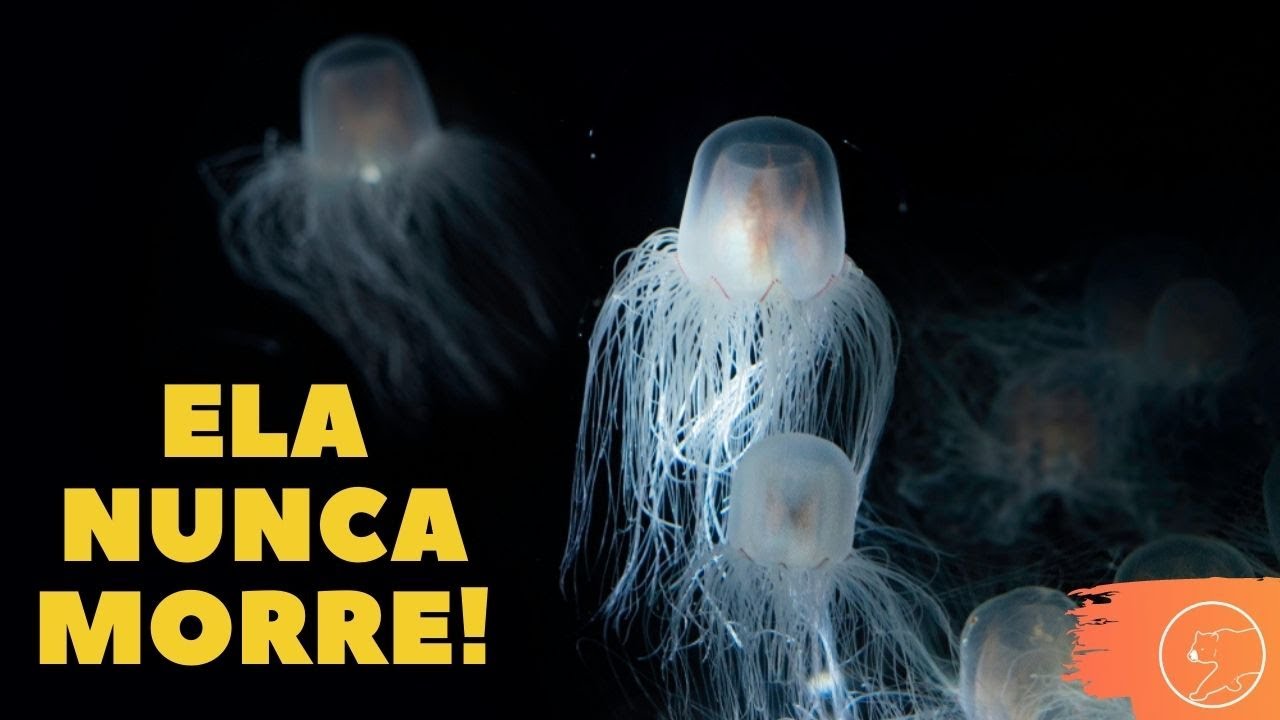


In Japan, The Immortal Jellyfish Turritopsis Dohrnii Reverses Its Life Cycle To Become Young Again, Defying Biology And Intriguing Scientists.
In the seas of Japan and the Mediterranean, there lives an almost microscopic creature that has intrigued scientists for decades. Its scientific name is Turritopsis dohrnii, but it is known worldwide as the “immortal jellyfish”. Unlike almost all living beings on the planet, which inevitably age and die, this species has a biological mechanism capable of reversing its life cycle, returning to the juvenile stage after reaching adulthood.
This unique ability to “start over” makes Turritopsis one of the most fascinating organisms ever studied by modern biology — and a symbol of how nature holds secrets that can challenge even the very idea of mortality.
How Immortality Works
Most jellyfish are born as a microscopic larva called planula, which attaches to a surface and grows as a polyp.
-
World’s Most Powerful MRI Machine in France, Weighing 132 Tons and Generating 11.7 Tesla Magnetic Field, Offers Unprecedented Clarity of the Human Brain

-
Hong Kong Converts Former Coastal Landfill into Desalination Plant Producing 135 Million Liters of Drinking Water Daily
-
Texas Teens Win $50,000 at World’s Largest Science Fair for Developing Non-Surgical Brain-Controlled Bionic Prosthesis with 98% Accuracy
-
Samsung Galaxy A27 Launches with 6.7-inch Super AMOLED Display, Full HD+ Resolution, Android 16, Six Years of Updates, Snapdragon 6 Gen 3, and Dust and Splash Resistance; Available for Pre-order in the US for $350


Later, this polyp transforms into an adult medusa, with tentacles and pulsating bells, responsible for reproduction.

In Turritopsis dohrnii, however, this cycle is not a one-way path. When it faces stressful situations — such as lack of food, physical damage, or sudden changes in the environment — the adult medusa can revert its cells to the initial polyp stage, restarting its life.
This process is called cellular transdifferentiation, in which already specialized cells transform back into other types of cells.
In practice, it is as if an adult human could regress to an embryonic stage, avoiding death and restarting development.
Immortality Does Not Mean Invulnerability
It is important to highlight that the immortal jellyfish is not an invincible being. It can still be killed by predators, diseases, or drastic changes in the ecosystem.
What makes it special is that, biologically, it does not have a natural limit to aging. In theory, a single Turritopsis could live indefinitely, as long as it does not suffer any accident or external threat.
This detail shows the difference between biological immortality and physical invulnerability. The former means the absence of inevitable aging; the latter, nonexistent here, would mean being safe from any form of death.
What Science Learns From Turritopsis
The discovery of Turritopsis dohrnii has opened new horizons for research in cell biology and aging. Scientists are seeking to understand how the jellyfish can manipulate its cells so radically.

Studies suggest that the molecular mechanisms involved in transdifferentiation may offer clues for treatments of degenerative diseases, tissue regeneration, and even extending human life expectancy.
If we can understand how a mature cell can revert to a youthful state, it would be possible to apply this knowledge in revolutionary cellular therapies.
Still, the road is long. The complexity of human biology is much greater than that of a jellyfish, and applying this phenomenon in medicine is still a distant dream.
The Human Fascination With Eternal Life
The idea of a living being capable of escaping natural death has always stirred the human imagination. Throughout history, alchemists and philosophers have sought the fountain of youth, the philosopher’s stone, or magical formulas to prolong life.
Turritopsis dohrnii shows that, at least on a microscopic scale, nature has already found a solution.
It is no coincidence that it gained worldwide attention when it was dubbed by the media as the “immortal jellyfish.” Its cycle of eternal rejuvenation is almost a metaphor for what humanity has always pursued: the chance to restart infinitely.
Lessons From A Few Millimeter Being
Despite measuring just a few millimeters in diameter, Turritopsis has a disproportionate impact on science and popular culture.
Its study reinforces the idea that life on Earth holds secrets yet to be revealed, hidden even in the simplest organisms.
It reminds us that immortality, far from being a myth, can be a biological reality in certain forms of life — but also challenges us to reflect on what it means to live forever. For science, it represents a promising puzzle; for humanity, a mirror of our oldest desires.
The Future of Research
As laboratories around the world continue to investigate the genes and proteins that enable this cellular feat, the ethical debate grows: if we discovered how to apply this biotechnology to humans, would we be ready to deal with the consequences of a life without end?
Perhaps we may never reach absolute immortality. But understanding how Turritopsis dohrnii works could open doors to extending health, regenerating organs, and slowing aging in unprecedented ways.


