






 Portuguese
  Spanish


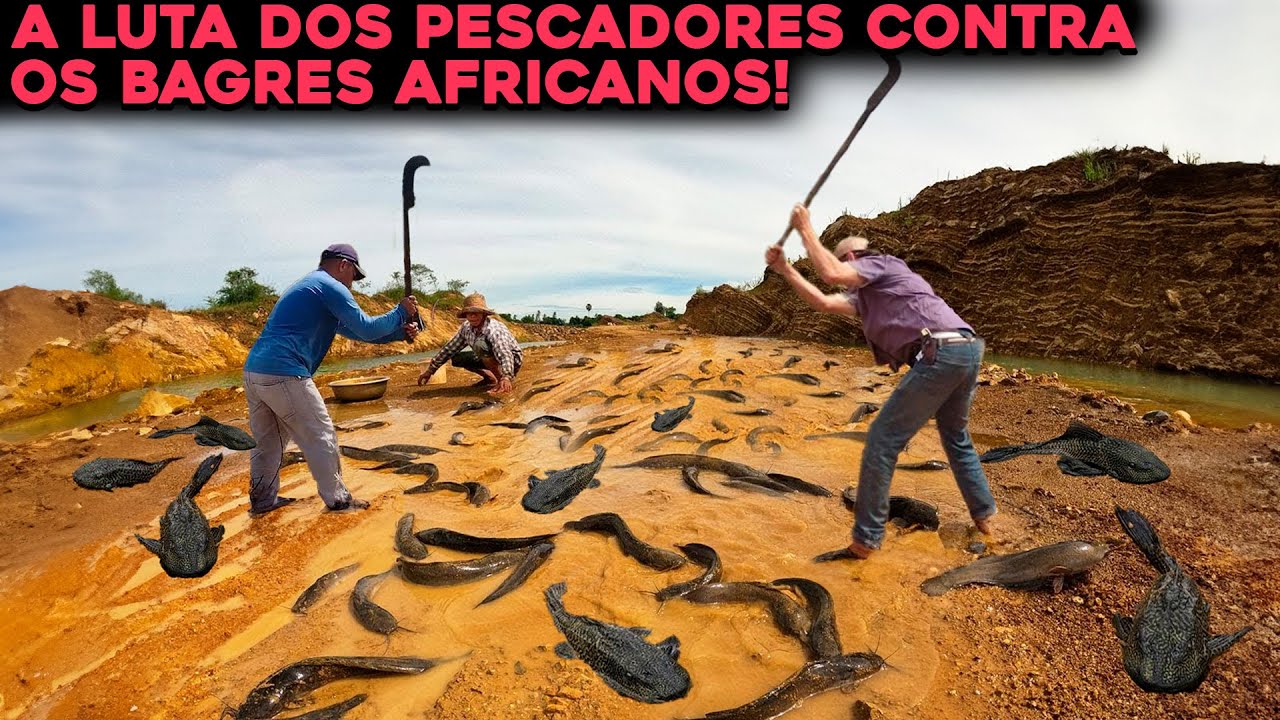


Able to Breathe Out of Water and Produce Up to Millions of Eggs, the African Catfish Spreads Through Tropical Rivers, Causes Local Extinctions, and Concerns Scientists.
The advancement of the African catfish does not attract attention for its size or appearance, but for the deep consequences it causes where it arrives. It is an extremely resilient, opportunistic, and adaptable fish capable of surviving in environments where most native species simply cannot exist. This combination has turned Clarias gariepinus into one of the most problematic invasive species in tropical and subtropical river systems in recent decades.
Originally distributed across much of Africa and the Middle East, the African catfish was introduced to other continents mainly through aquaculture, commercial fishing, and poorly planned animal protein production projects. From these introductions, it escaped to rivers, lakes, and urban channels, where it began to compete brutally with local species.
A Fish That Challenges the Limits of Aquatic Physiology
What makes the African catfish so dangerous is not only its predatory behavior but also its unusual biology.
-
NASA Issues Warning: 20-Year-Old Telescope That Detected Over 2,000 Explosions More Energetic Than the Sun Is Rapidly Losing Altitude; Unprecedented Mission Aims to Prevent Its Fall and Extend Operation by 5 Years.

-
NOAA Scientists Discover Mysterious Aligned Holes on the Mid-Atlantic Ridge Seafloor at 2,540 Meters Depth

-
Interstellar Comet 3I/Atlas, Potentially 12 Billion Years Old, Baffles NASA Scientists with Unprecedented Features
-
Microwave Stone-Melting Machine Aims to Drill Deeper Than Steel and Unlock Near-Infinite Energy Source


Unlike most fish, it has an accessory respiratory organ that allows it to absorb oxygen directly from the air. In practice, this means it can survive for hours — and in some cases days — out of water, as long as its skin remains moist.
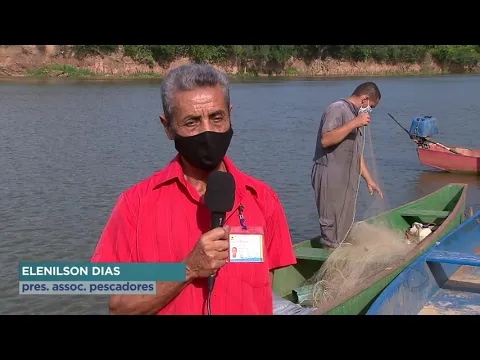

This ability allows it to traverse flooded lands, sewage channels, agricultural areas, and even urban stretches during periods of heavy rain. In tropical regions, records show individuals moving between isolated water bodies, something impossible for native fish restricted to gill respiration.
Additionally, the African catfish tolerates extreme levels of pollution. It survives in waters with very low dissolved oxygen, high organic load, the presence of domestic sewage, and industrial waste. Degraded environments that would function as natural barriers for other species become dispersal corridors for this fish.
Explosive Reproduction and Numbers That Explain the Advance
The real driver of the invasion lies in reproduction. Adult female African catfish can produce, in a single reproductive cycle, between 100 thousand and over 1 million eggs, depending on the size of the animal and environmental conditions.
In favorable systems, with warm water and abundant food, the survival rate of juveniles is high.
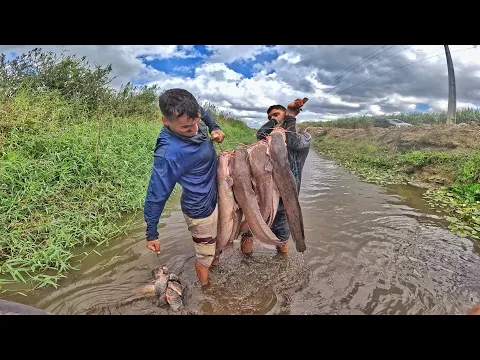
Reproduction occurs opportunistically, often associated with floods and rainy periods, when flooded areas serve as natural nurseries.
Under these conditions, the fry grow quickly and reach sexual maturity in a few months, creating successive cycles of population growth.
This pattern explains why, in some rivers in Asia and South America, the density of African catfish has increased abruptly in less than a decade, replacing entire communities of native fish.
Generalist Predator and Destroyer of Natural Nurseries
The most severe ecological impact lies in feeding. The African catfish is an extreme generalist predator. It consumes aquatic insects, crustaceans, mollusks, amphibians, small mammals, water birds, and, above all, fish.
One of the most destructive behaviors is the direct predation of eggs and larvae of other species. By invading shallow areas used as spawning sites, the catfish eliminates entire generations before native fish even have a chance to grow. This effect is silent but devastating: populations collapse without any visible large-scale mortality.
Studies document local extinctions and abrupt declines in biodiversity in rivers where the African catfish has become dominant, especially in systems already stressed by pollution, dams, and water extraction.
From Aquaculture to a Global Environmental Problem
The expansion of the African catfish is directly tied to its popularity in aquaculture. It grows quickly, accepts low-cost feed, tolerates high densities in tanks, and shows good feed conversion.
These characteristics have led to its deliberate introduction in countries across Asia, South America, and even parts of Europe.

The problem arises when farming systems fail, floods break breeding ponds, or illegal disposals occur. Once in the natural environment, control becomes extremely difficult. Unlike other invasive species, the African catfish does not depend on clean water or preserved habitats to establish itself.
In urban areas, it finds refuge in channels, storm drains, and highly degraded rivers, functioning as a “winner” of environmental collapse.
Why Control is So Difficult
Eradicating the African catfish after establishment is practically impossible. Traditional fishing methods rarely reduce populations effectively, as the species reproduces too quickly. Physical barriers also fail, as the fish can move over land under favorable conditions.
Additionally, the use of aquatic pesticides or selective toxins faces severe environmental risks, as it would affect remaining native species. In many countries, current strategies are limited to containment, monitoring, and attempts to prevent new introductions.
The scientific consensus is clear: prevention is much more effective than trying to control later. Once established, the African catfish permanently alters the ecological dynamics of invaded systems.
A Silent Symbol of Modern Ecological Collapse
The advance of the African catfish illustrates an increasingly common pattern on the planet. Highly adaptable species thrive in degraded environments created by human activity, while specialized organisms disappear. Polluted rivers, open sewage, and urban channels cease to be dead zones and become territories dominated by resilient invaders.
More than just a problematic fish, the African catfish serves as a biological indicator of environmental imbalance. Where it dominates, something fundamental has already been lost in the ecosystem.
The expansion of this species through Asia, South America, and Europe shows that the biodiversity crisis is not occurring only in distant forests or coral reefs, but also in the rivers that cross cities, farmlands, and industrial areas. And in this scenario, the invasion occurs silently, generation after generation, egg after egg.


As a person who has kept these fish in captivity for many years I can honestly say that most of this is untrue. They can life i low oxygen waters but not heavily populated water and certainly not sewers. It is able to cross areas of land when its pond dries up. The article is so exaggerated as usual. Any excuse to justify mass killing.
Now what needed is some asean people who really like tilapia and mudfish..they will harvest it into extinction
Easily dealt with in Africa, more or so East Africa where it is an expensive delicacy. Get hold them, roast and back to Africa and it will earn revenue. Most Africans eat fresh water fish and that is why they have no chance in Africa.
Thank you Aluoch but understand that the issue is not about consumption. The fish is feared to cause extinction of the other species of fish and the point is on how to control it to prevent it from spreading everywhere on the world. But my advice on the researchers is that with the ongoing environmental change, there will be no retreat. Quoting the father of evolution theory and argument on existence of species by natural selection, the best suited species will survive and outdo the disadvantaged ones.