





 Portuguese
  English
  Spanish
  4 min of reading
  0 comments



Nigerian Youngster Creates Startup That Transforms Plastic Waste Into Solar Energy and Brings Electricity to 10 Thousand Refugees. Award-Winning Invention Revolutionizes Access to Light in Africa.
On a continent where over 600 million people still live without reliable access to electricity, a young Nigerian decided to transform one of Africa’s biggest environmental issues — the accumulation of plastic waste — into an innovative energy solution. Stanley Anigbogu, at just 25 years old, is the creator of the LightEd project, a social startup that converts plastic waste into modular solar systems, bringing light, safety, and dignity to thousands of families in vulnerable communities and refugee camps.
The idea, born in 2020 in his hometown, Onitsha, began with a personal challenge: finding a way to give utility to tons of bottles and packaging that accumulated in the streets, with no destination. “I grew up seeing children studying by candlelight and families cooking in the dark. It was impossible to accept that so much plastic was being wasted while people lived without energy,” Stanley said in an interview with the Sun-Connect News portal in a report published in March 2025.
Transforming Waste Into Clean Electricity
The system created by Anigbogu is ingenious and sustainable. He collects discarded plastics, mainly PET bottles and food packaging, and transforms them into modular structures that serve as supports for recycled solar panels. The result is a compact solar energy station capable of powering lights, fans, and small electrical appliances for up to 12 continuous hours.
-
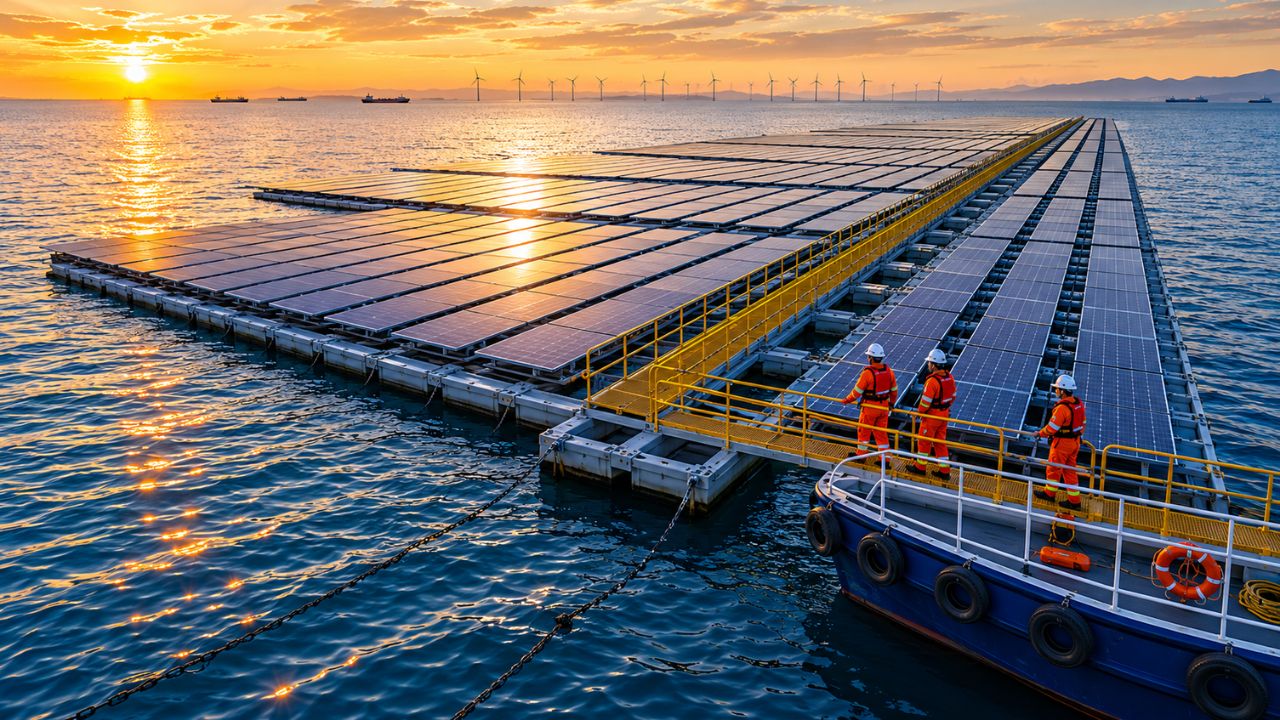
Solar panels at sea can generate up to 12% more energy than land-based plants, study finds: Researchers from Taiwan discovered that offshore solar panels take advantage of the natural cooling of water to increase electrical efficiency, reduce heat losses, and expand renewable energy production in regions with limited available land space.

-
The era of solar panels attached to roofs is beginning to change with transparent glass that generates energy while keeping the view unobstructed, and perovskite photovoltaic windows already tested in offices in Japan promise to transform entire facades into invisible power plants without blocking light or altering the appearance of buildings.

-
The era of silicon alone in solar energy comes to an end with the arrival of perovskite, a material that captures a broader light spectrum, is applied as a thin film, and, together with silicon, reaches a theoretical limit of 45% efficiency in tandem modules.

-
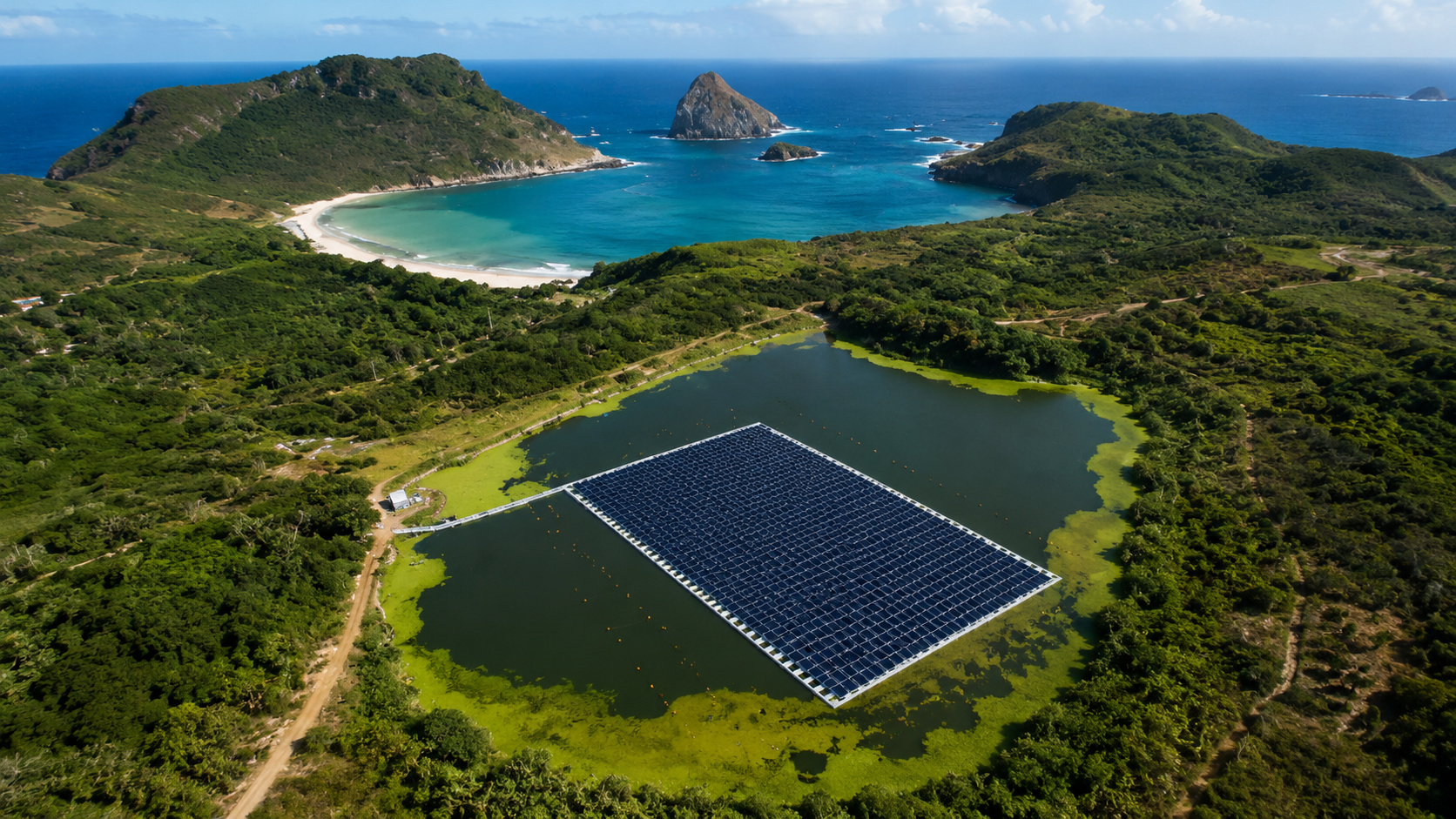
Fernando de Noronha begins unprecedented energy transformation with a R$ 350 million solar plant that promises to replace diesel generation and change the island’s sustainable future by 2027.




In addition to sustainable engineering, the project’s differential lies in its mobility and low cost. The mini-stations can be easily transported and assembled without the need for prior electrical infrastructure, making them ideal for isolated communities and internally displaced persons camps. Today, the LightEd system provides energy for over 10 thousand people in rural areas of Nigeria, Cameroon, and Chad, according to a report published by the startup itself and confirmed by the Commonwealth Foundation.
The Social Impact and International Recognition
The humanitarian impact of the project was so significant that, in April 2025, Stanley Anigbogu was named “Commonwealth Young Person of the Year”, an award granted to young leaders promoting sustainable transformations in Commonwealth member countries. He also received recognition from the Obama Foundation for Social Innovation and the United Nations Development Programme (UNDP).
During the awards ceremony, Anigbogu emphasized that his company’s goal goes beyond providing energy — it’s about restoring autonomy to people. “When a community has light, it gains safety, education, and hope. Electricity is the foundation of all social transformation,” he stated.
LightEd also created a training program called “Recycle to Empower”, which teaches young people and women to collect, clean, and process plastics for the manufacture of new solar modules. This project generates local employment and income, while also reducing the volume of waste that pollutes rivers and landfills.
African Technology with a Global Purpose
The numbers from LightEd are impressive: since 2021, the startup has recycled over 250 tons of plastic and installed over 2,000 solar units in communities without power grids. The business model is hybrid — half social, half commercial — allowing part of the production to be sold to small businesses, while the other part is donated to humanitarian projects.
In 2024, the company partnered with the University of Lagos and the Massachusetts Institute of Technology (MIT) to enhance the design of solar cells and increase energy efficiency by up to 35%. The goal, according to Stanley himself, is to create a continental network of solar mini-stations that supplies remote areas and helps build Africa’s energy independence.
“The future of Africa lies in the hands of those who see opportunity in chaos. Plastic is a global problem, but here it has become part of the solution,” declared the inventor at a lecture at the Africa Tech Festival 2025 in Nairobi.
From Scarcity to Innovation
Anigbogu represents a new generation of African entrepreneurs who create technology not from abundance, but from necessity. Without government support and with improvised equipment, he built his first prototype with repurposed batteries, discarded LEDs, and electronic waste cables. Today, the same young man who once had to study by the light of a homemade solar lamp leads one of the continent’s most admired environmental and social initiatives.
Stanley’s story is proof that innovation and hope can arise from scarcity. His work redefines the concept of sustainability, showing that the true African energy revolution may not come from large hydropower plants or refineries, but from the hands of a young man who decided to transform waste into light.







Be the first to react!