Portuguese
  Spanish


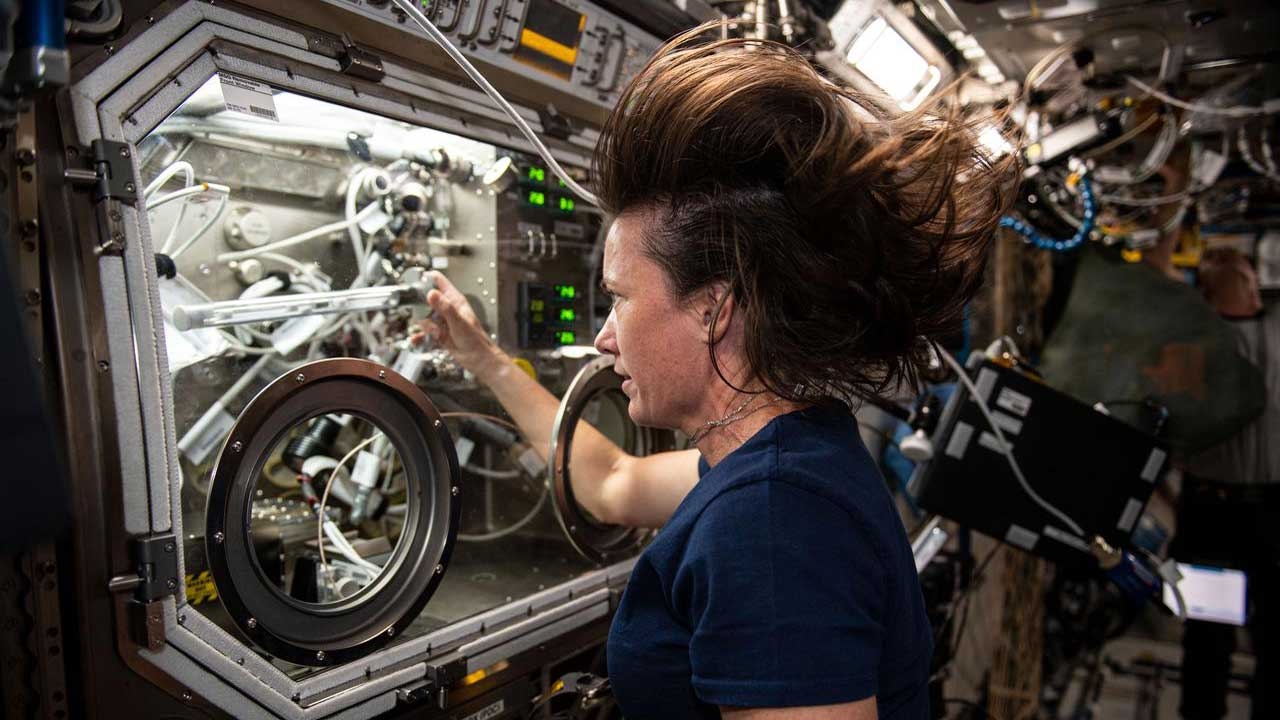


Without Gravity, Crystals Grow With Fewer Defects, Optical Fibers Achieve Extreme Performance, and Superalloys Reach Unprecedented Homogeneity, Elevating Medicine, Electronics, and Aerospace to a New Level
The 21st Century Space Race is not just about exploring distant planets but also about transforming the vacuum and microgravity into a new industrial frontier. A silent revolution is underway: innovative startups and space agencies are collaborating to send “mini-factories” into Earth’s orbit, aiming to produce materials and components with unique properties that are impossible to replicate on the surface of our planet due to the force of gravity.
Startups and Space Agencies Are Sending Mini-Factories into Orbit to Produce Materials Impossible to Manufacture on Earth
Microgravity offers an environment free of convection and sedimentation, phenomena that impact the uniformity and purity of many materials on Earth. Without gravitational influence, metal alloys can be melted with unprecedented homogeneity, crystals grow with fewer defects, and semiconductors achieve a higher level of purity. This opens doors for the creation of superalloys for airplane turbines, high-performance optical fibers, and even more complex bio-printed organs.
One of the pioneers in this field is the startup Varda Space Industries, which has recently gained prominence. Varda aims to be the “next generation of space factory,” designing satellites that act as automated production capsules. Once launched into space, these modules carry out specific manufacturing processes in microgravity and, after production, return to Earth with valuable products.
-
Brazilian Engineer Who Grew Up Without Electricity Develops Software, Expands AltoQi to 67,000 Clients, Aiming for $21 Million by Digitizing Brazil’s Construction Industry

-
Spain Launches World’s Largest Floating Dry Dock: 56-Meter Giant Produces Massive Concrete Structures in A Coruña Using Technology Proven in Brazil

-
AI-powered toys that talk, recognize faces, and collect data face scrutiny from Brazilian government over children’s privacy concerns

-
4,000-Year-Old Child’s Skull Unveils Ancient Burial in 7,500-Year-Old Norwegian Rock Shelter, Impressing Archaeologists




In 2023, Varda successfully conducted a test demonstrating the capability of a return capsule to safely re-enter the atmosphere, a crucial step for the commercial viability of its mini-factories.
NASA and ESA in the Running
Space agencies, such as NASA and the European Space Agency (ESA), are also making significant investments. NASA, through the International Space Station (ISS), has been a laboratory for countless microgravity manufacturing experiments. Projects on the ISS explore everything from the growth of protein crystals for the development of new drugs to the production of amorphous metal alloys that possess extraordinary strength and lightness. The idea is for the ISS, or future commercial space stations, to become production platforms at scale.
The ESA, on the other hand, focuses on researching new materials for space and terrestrial applications, using parabolic flight platforms and small satellites to test manufacturing processes. There is strong interest in producing superconductors and materials for next-generation electronics, where the purity achieved in orbit could revolutionize energy efficiency and the performance of devices.
Challenges and Expectations
However, the challenges are immense. The high cost of launch, complex automation, and the logistics of returning to Earth are significant barriers. Nevertheless, advancements in reusable rockets and re-entry technologies, driven by companies like SpaceX, are gradually making space manufacturing more accessible. Additionally, the miniaturization of processes and the standardization of manufacturing modules are optimizing the use of space and resources.
The expectation is that in the next decade, space manufacturing will transcend the experimental stage, becoming a multibillion-dollar industry. Materials produced in orbit, although initially expensive, will find niches in high-tech sectors such as precision medicine, advanced electronics, aerospace, and defense, where their superior properties justify the investment. We are on the brink of a new industrial era, where the sky (and space) is no longer the limit, but rather the very factory floor.