






 Portuguese
  Spanish


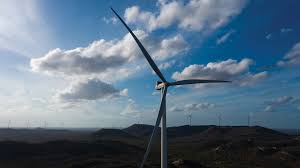

Sol de Brotas Project Combines Solar and Wind Energy in the Brazilian Interior
The European renewable energy giant Statkraft announced a substantial investment of R$ 926 million to implement the Sol de Brotas complex. Located in the heart of Bahia, this ambitious project will transform two existing wind farms — Ventos de Santa Eugênia and Morro do Cruzeiro — into hybrid solar and wind generation facilities, creating a total of 275 MW of power capacity.
Technological Innovation in the Heart of Bahia
Internally developed by Statkraft, the Sol de Brotas complex is pioneering the integration of BESS (Battery Energy Storage Systems) technology, which leverages the same connection point used by wind and solar sources. This advancement will enable more efficient and sustainable energy management. Construction at Morro do Cruzeiro is scheduled to start at the end of May this year, with expected completion by August 2025. Concurrently, works at Ventos de Santa Eugênia are set to begin in July, with a projected finish by November 2025. During the construction phase, Statkraft expects to generate approximately 1,500 jobs, reinforcing its commitment to local economic development.
Social Commitment and Professional Training
In addition to its energy impact, the Sol de Brotas complex will also bring significant social benefits to the municipalities of Brotas de Macaúbas, Uibaí, and Ibipeba. According to Guilherme Melo, Director of Construction at Statkraft, the initiative aims to empower local communities through job creation, income increases, and the implementation of social programs focused on the professional and socio-economic development of residents.
-
World’s Largest Engie Solar Plant in Brazil Highlights Billion-Dollar Energy Waste Issue: Company Considers Batteries and Bitcoin Mining to Avoid Wasting Production

-
Air Products Cancels $2.9 Billion Clean Hydrogen Megaproject in Louisiana, Shuts Down Arizona Unit, Highlighting High Costs of U.S. Energy Transition
-
Over 60 Tractors Take to the Streets in Lopera as Solar Parks Compete with Olive Groves, Affecting 13,000 to 100,000 Trees According to Conflicting Reports

-
Green Hydrogen Projects in Northeastern Brazil Stalled for 18 Months Awaiting Government Decree, Delaying Billions in Investments


In April, the company launched the Sol do Amanhã Program, which promotes the professional and socio-economic inclusion of local workers. The first action of the program was a free course on the installation of photovoltaic systems, conducted in partnership with SENAI. This course not only trained participants in an emerging technology but also focused on promoting gender equality, with 70% of spots allocated to women in the municipality of Brotas de Macaúbas.
Leadership in Renewable Energy
Statkraft, with over 6,000 employees in more than 20 countries, maintains its position as a global leader in hydropower and is one of the largest producers of renewable energy in Europe. The company not only operates but continues to expand its presence in Brazil, controlling 26 renewable generation assets and recently increasing its installed capacity to over 2.2 GW with the acquisition of Enerfín.
With the implementation of the Sol de Brotas complex and ongoing investments in clean and sustainable technologies, Statkraft reaffirms its commitment to sustainable development and the promotion of traceable renewable energy in Brazil, consolidating its reputation as a pioneering force in the energy sector.
Source:
| Mariana Pupo. |








