






 Portuguese
  Spanish
  4 min of reading
  0 comments


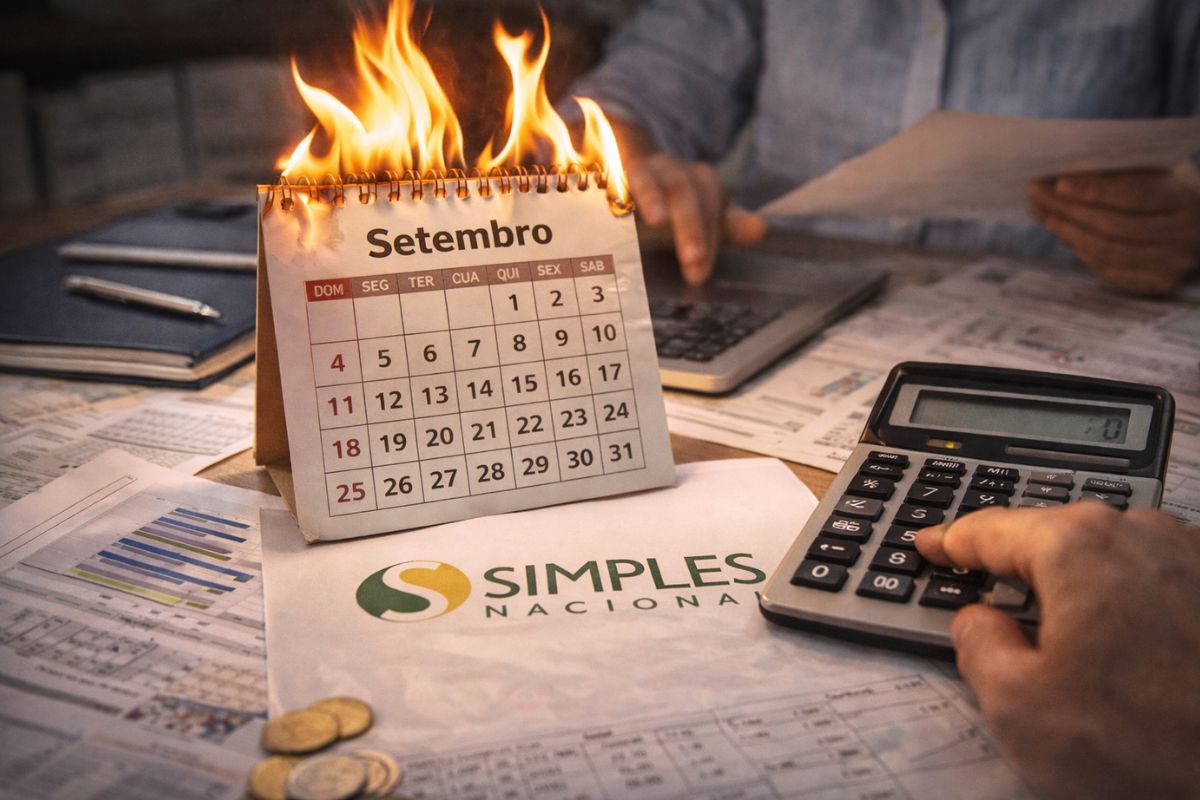
The Management Committee of Simples Nacional published on April 17, 2026, Resolution No. 186, which requires micro and small businesses to decide between September 1 and 30 of this year whether to remain in Simples Nacional or migrate to the new tax regime created by the reform. The decision takes effect from January 2027, when the PIS and the Cofins cease to exist and give way to CBS (Contribution on Goods and Services). Those who do not position themselves within the deadline lose the window of choice and may get stuck in a less favorable model for at least six months.
The deadline is a significant advance compared to the traditional calendar, which allowed joining Simples until the end of January each year. The change exists because 2027 will not be just any year: it is the first year of the tax transition, when the federal CBS begins to be charged with a rate estimated between 8% and 9%, replacing the PIS and the Cofins. Starting in 2029, the state ICMS and the municipal ISS will also begin to be gradually reduced until they disappear in 2033, giving way to IBS (Tax on Goods and Services).
The novelty that changes everything for the small businessman is the option for the so-called hybrid regime. Today, those in Simples pay all taxes in a single guide (the DAS) and, in exchange for simplicity, do not transfer tax credits to their clients. With the hybrid regime, the company can choose to pay the CBS and the IBS outside of Simples, under the normal regime, thus generating full credits for other companies that purchase from it. In practice, this makes the Simples supplier more competitive in the B2B market, because its clients can deduct the tax paid on the purchase.
Who wins and who loses with the choice?
According to experts consulted by Sebrae and Fenacon, the hybrid regime tends to be more advantageous for companies that sell products or services to other companies (B2B).
-
In the year Brazil won the World Cup, gasoline cost R$ 1.77, the cheapest car was worth R$ 13,000, there were no flex-fuel cars, SUVs were rare, and no Chinese brand sold a single vehicle in the country.

-
Neighboring Balneário Camboriú will receive a R$ 1 billion airport with 225 hangars, an area of 2.2 million m², a technology park, and an export zone that promises to transform the economy and generate thousands of jobs.
-
After investing R$ 5,000 in fried chicken in his backyard, a Brazilian transformed two fryers and a freezer into a network with 115 sales points, presence in up to 17 states, and revenue exceeding R$ 115 million per year.
-
Not even Trump convinces the market: U.S. companies state that Brazil has no substitute, pressure Washington against the 25% tariff, and warn that the measure could raise prices, cause layoffs, delay projects, and harm sectors that depend on stones, wood, seeds, and other Brazilian products.




Preliminary simulations by King Accounting showed that paying the CBS and IBS outside of Simples proved to be more advantageous in about 40% of the analyzed cases.
But the calculation depends on the profile of each business: those who sell directly to the end consumer (B2C) may not benefit, as individuals do not take advantage of tax credits.
The director of IBPT, Carlos Pinto, warned that tax credit has become currency in the new system.
In a simulation conducted by the institute, a company under presumed profit that replaced 10% of its suppliers with others that generated credit ended up with more credit to receive than tax to pay at the end of the month.
This means that Simples companies that do not migrate to the hybrid regime may lose clients to competitors that generate credit, even if the price is similar.
The option made in September can be canceled until the last day of November 2026, irrevocably.
If the application for joining the Simples is denied, the entrepreneur has 30 days to regularize pending issues, including tax debts. If the situation is regularized within the deadline, the denial is automatically canceled.
MEIs (individual microentrepreneurs) do not need to make any choice, as nothing changes for them in 2027.
What does the entrepreneur need to do now?
The task list is extensive.
First, ask the accountant for simulations comparing the current regime with the hybrid one, taking into account the profile of clients and suppliers.
Second, check if the suppliers are compliant with the reform, because in the hybrid regime, the credit is only validated by the tax authority if the supplier’s invoice is correct.
Third, review contracts, as taxation outside of the new taxes changes the cost of goods, and this is not accounted for in the current contracts.
Companies that open CNPJ between October and December of 2026 do not follow this calendar.
For them, the option is made at the time of registration and is valid for the entire year of 2027.
The National Simple Portal is the official channel to formalize the choice.
22 million companies have until September to make a decision that could completely change the tax they pay. Comment below: do you already know which regime is better for your business?





Be the first to react!