






 Portuguese
  Spanish
  4 min of reading
  0 comments


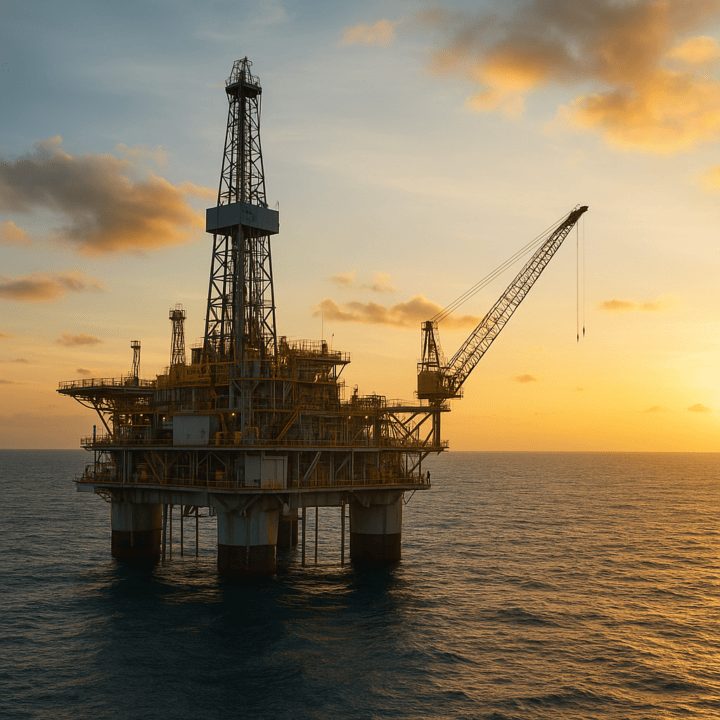
Innovations Such As Ultra-Deep Drilling, Smart Sensors, And AI Shape Energy Efficiency And The Global Economic Scenario
In recent decades, offshore platforms have become pillars of global oil and gas production. Located offshore, these structures face extreme challenges: rough seas, isolation, complex equipment, and the constant risk of leaks and accidents.
Amidst the growing demand for energy and the pressures for efficiency, safety on offshore platforms has ceased to be merely a regulatory requirement. Today, it is essential to protect lives, prevent environmental disasters, and ensure operational continuity. Ignoring this reality can be costly—in terms of human, environmental, and economic losses.
What Are Oil Exploration Technologies
The oil exploration technologies include tools and methods used to locate underground oil reserves, drill the ground, extract the resource, and process it. This ranges from the use of seismic imaging to automated platforms.
-
ANP halts LPG reform, and Sindigás sees technical caution as a decisive point for safety, investments, and the future of the cylinder in Brazil.

-
Oil spill in the Caribbean raises environmental alert and increases tension between Venezuela and Trinidad and Tobago

-
More than 40 Petrobras platforms enter the decommissioning queue and open up a billion-dollar industry in Brazil for cranes, special ships, underwater cutting, and offshore recycling.

-
ANP schedules oil auctions in October and reinforces regulatory predictability for concessions, sharing, and investments in the oil and gas sector


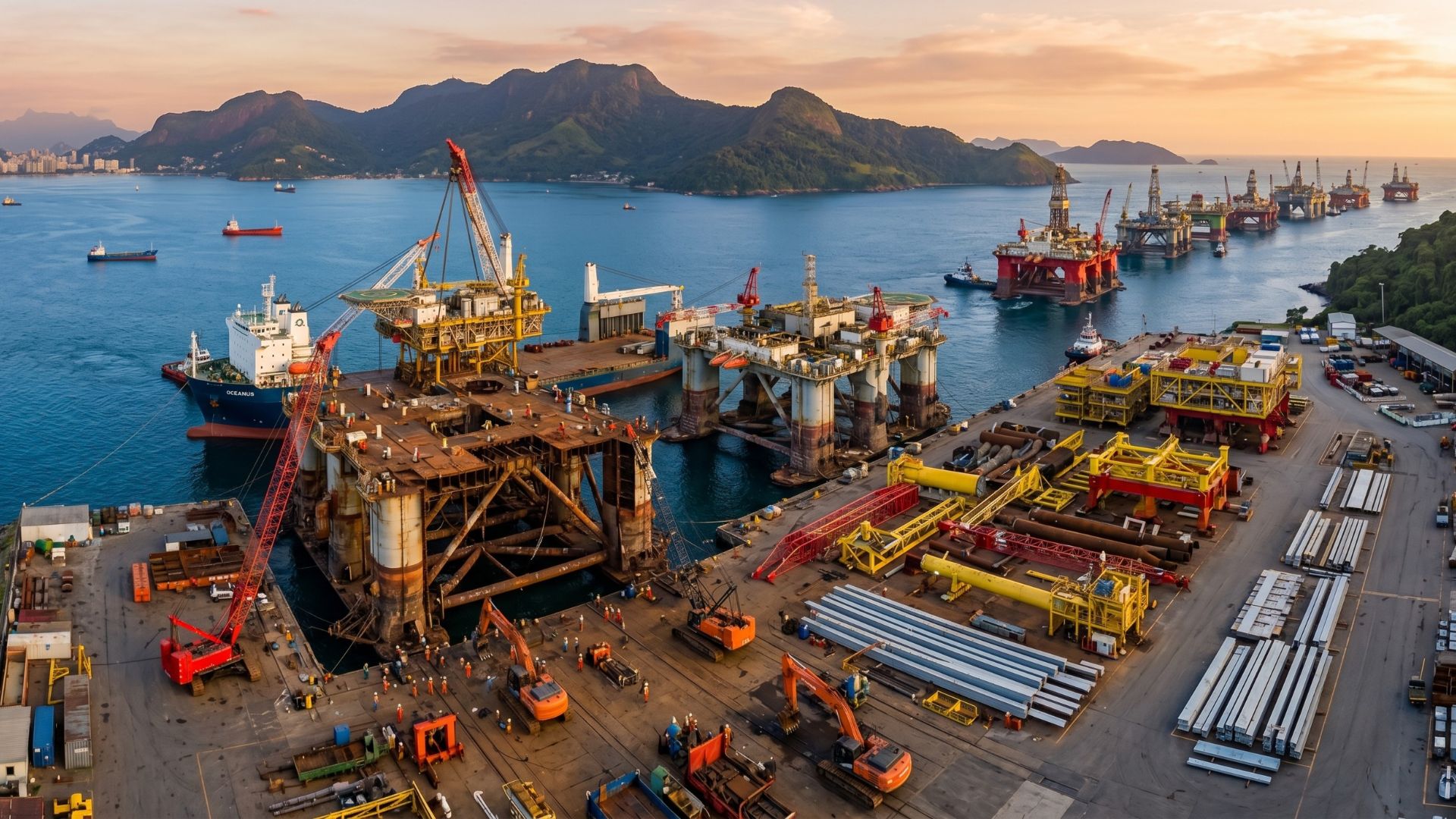

Previously, finding oil depended on luck. Today, satellites, sensors, and artificial intelligence make this process more accurate. This reduces risks and costs.
Innovation In The Search For Oil
Modern exploration begins with subsurface analysis. Companies use vibration sensors and sound waves to map the geology beneath the surface. This information is processed by advanced software.
An example is 4D seismic. It shows how reserves move over time. This helps decide where to drill.
Drones also assist. They quickly map remote areas at low cost. In hazardous locations, they prevent people from taking risks.
Precision Drilling
The oil exploration technologies have also evolved in the drilling stage. Modern platforms use directional drilling systems, which allow access to locations kilometers away from the base.
This makes it possible to explore fields previously considered unviable. Horizontal drilling, for example, increases production with less impact on the ground.
Submarine robots are common in deep waters. They conduct inspections and minor repairs without the presence of divers.
Automation And Artificial Intelligence
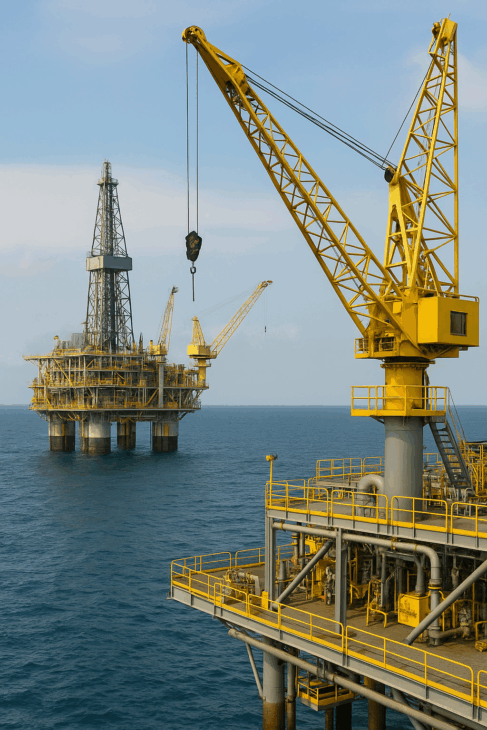
Automation has gained ground. Many processes are performed by remotely controlled machines. This reduces errors and increases safety.
Software with artificial intelligence analyzes millions of data points. They identify patterns, anticipate failures, and optimize production.
A modern oil field operates almost like a connected factory. Sensors monitor everything in real time: pressure, temperature, flow.
Safety And Sustainability
The oil exploration technologies help to reduce risks. Automatic systems detect leaks quickly. Containment barriers are activated within seconds.
There is also a focus on minimizing environmental impact. CO₂ injection techniques in depleted wells reduce gas emissions into the atmosphere.
Many platforms operate on renewable or hybrid energy. This lowers the industry’s carbon footprint.
Impact On The Economy And Prices
When extraction is more efficient, costs decrease. This influences the price of fuels and derivatives, such as plastics, fertilizers, and cosmetics.
With cheaper technologies, countries that were previously dependent on imports begin to produce. This changes the geopolitics of oil.
Companies that master the oil exploration technologies can compete better in the global market. They invest in research to maintain an edge.
The Future Of Oil Exploration
Even with the growth of renewable energies, oil remains essential. Innovations continue.
Studies show that artificial intelligence can double productivity in some fields. Nanometric sensors are expected to further enhance monitoring.
The expectation is that production will become increasingly cleaner and safer. And, even with lower demand in the future, oil will still be used in plastics, medicines, and air transport.
How This Affects Your Life
If production is more efficient, prices become more stable. This impacts the cost of living, transportation, food, and electronics.
Transportation, aviation, and agribusiness companies rely on fuels. With greater control over production, they can plan better.
Additionally, innovation creates jobs. Engineers, data analysts, robotics operators, and technicians are increasingly sought after.
The Role Of Brazil In Exploration Technologies
Brazil is a reference in deep-water exploration. Petrobras leads research with underwater robotics and artificial intelligence.
The pre-salt layer has boosted investments. Modern platforms have been installed in the South Atlantic. Brazilian technicians are developing solutions recognized abroad.
The country is also advancing in reducing emissions. Many carbon capture and reinjection projects are already in operation.
Ensuring safety on offshore platforms is not just a technical issue—it is a responsibility to people, the environment, and society as a whole.
In a scenario where energy production continues to be essential, but the pressure for more sustainable operations grows, investing in protective measures becomes even more urgent.
This involves ongoing training, the use of cutting-edge technologies, rigorous inspections, and clear protocols for emergency situations. Each failure can have irreversible consequences, as tragic past cases have shown.
Furthermore, public and market trust depends on companies’ ability to operate safely and transparently.
An accident offshore can damage not only a company’s reputation but also affect entire communities and compromise marine ecosystems for decades. Thus, safety is not a cost—it is a strategic investment.
Protecting workers, avoiding environmental impacts, and maintaining operational integrity should be a priority on every offshore platform.
As exploration advances into increasingly remote and deep areas, the commitment to safety must keep pace. The future of energy lies at sea—and it needs to be safe.





Be the first to react!