Portuguese
  Spanish


In Manaus, 3D printing became a path to entrepreneurship for teenagers who sell keychains, characters, and buttons at school. With technology, family support, and a routine between studies and orders, Heitor Lemos and Antônio Mauro turn curiosity into business and plan to open a store to help their parents in the future with their own production.
3D printing became a starting point for two teenagers from Manaus to turn curiosity into business and learn entrepreneurship while still in school. Heitor Lemos, 13, and Antônio Mauro, 12, started producing keychains, characters, badges, and personalized pieces after discovering the technology in the school environment and in courses related to robotics.
According to a video from the Record Manaus channel on YouTube, published on June 9, 2026, the story takes place in Manaus and gained prominence after the duo began selling products made on 3D printers, including an order of 800 buttons for their own school. What began as learning and interest in technology became a routine of production, study, deliveries, and plans to grow.
Two students swapped passive use of technology for creation
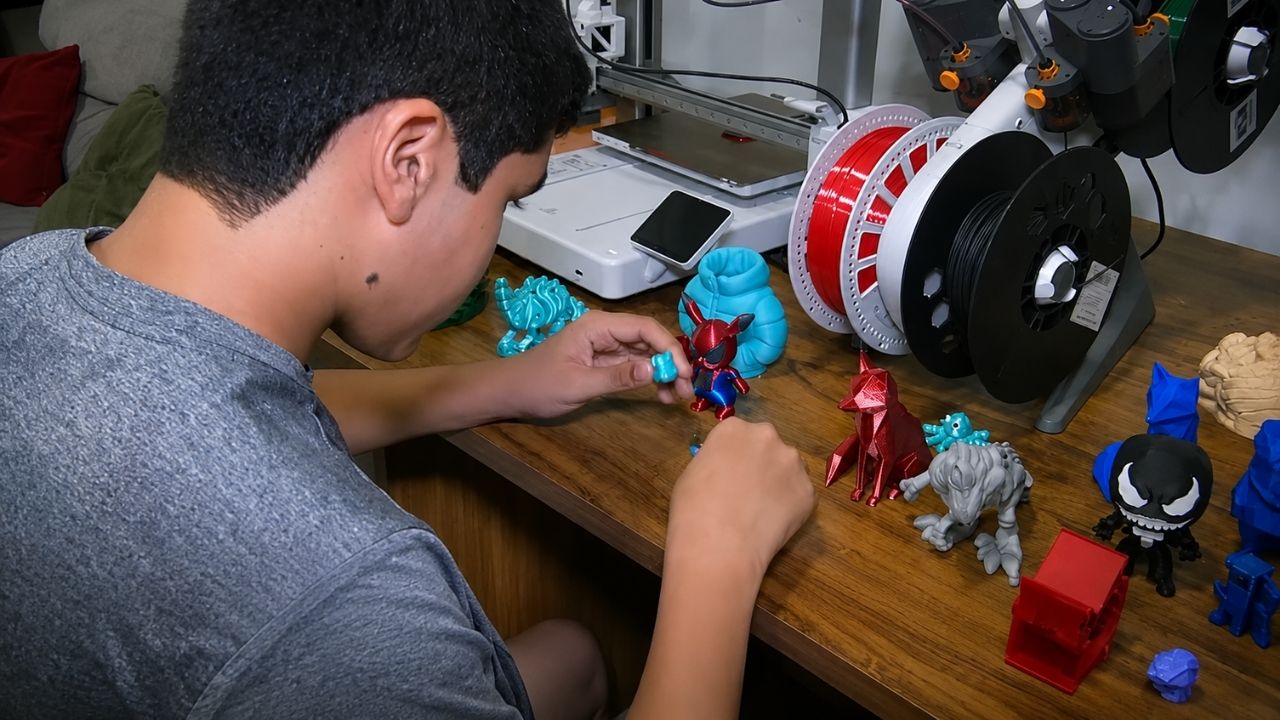
The story draws attention because it starts at a common point for many children and teenagers: daily contact with technology, screens, games, and computers. In the case of Heitor and Antônio, however, this contact stopped being just consumption and became production.
-
Nubank Reaches 131 Million Customers and Reports Record Profit of $2.87 Billion in 2025

-
Brazil Holds 95% of the World’s Niobium and Exported $2.1 Billion Worth in 2024

-
Embraer Hits Record $31 Billion in Orders, Largest Backlog in Its History
-
In 20 Years, Brazil Transformed from Cotton Importer to World’s Largest Exporter


With 3D printing, the two began to see the computer as a tool to design, program, and transform ideas into real objects. The technology stopped being just entertainment and became an opportunity for learning, creation, and income.
According to the account used as a source, the interest was born from contact with 3D printing at school and also with experiences in robotics. The possibility of creating practically any piece, as long as there was a model, adjustment, and patience, sparked the duo’s curiosity.
From there, what seemed like just a learning activity began to take the shape of a small business. The printers started producing keychains, movie characters, items inspired by games, cartoons, and personalized creations.
The first piece wasn’t perfect, but it paved the way for the business
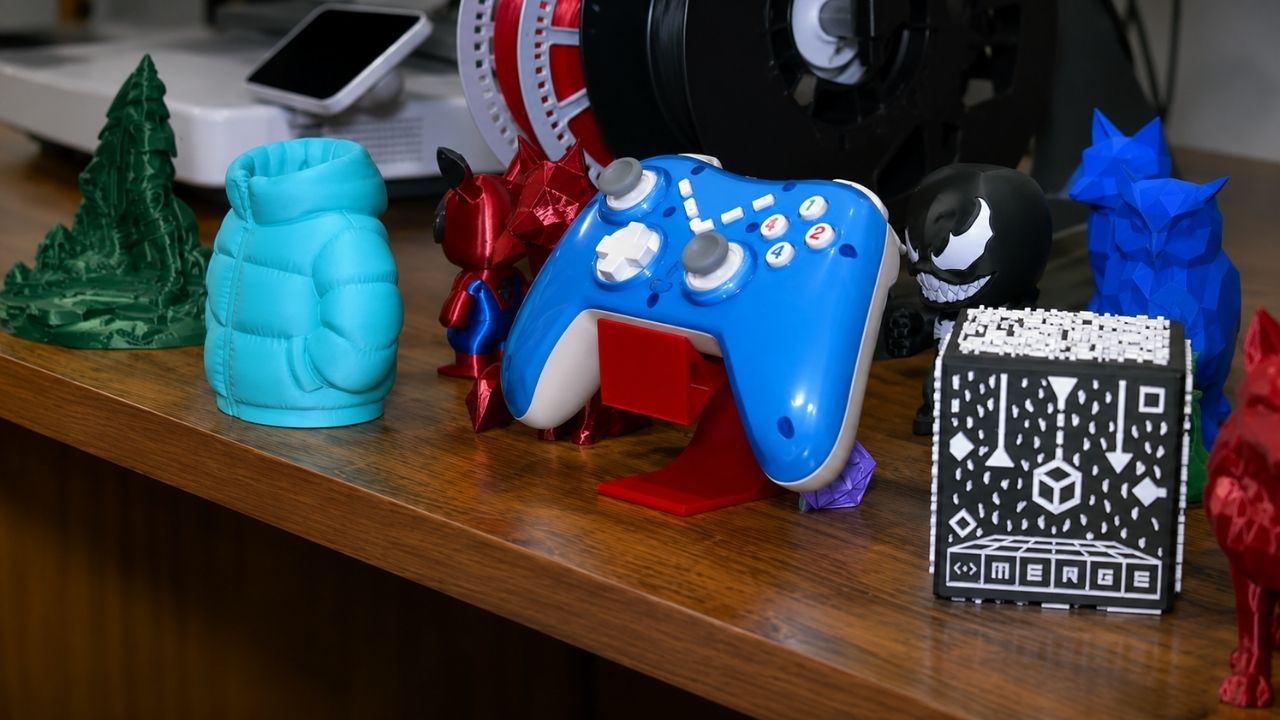
As happens in almost every technical activity, the beginning was not simple. The duo learned that 3D printing requires tests, adjustments, parameter configuration, and constant corrections. A piece can have flaws if height, distance, slicing, or temperature are not adequate.
The first experience mentioned by the students was the traditional little boat used in printing tests. It serves to evaluate quality, details, strings, finish, and machine adjustment. The initial result was not perfect, but it helped the teenagers understand that the process required study.
Over time, the pieces improved. The students began to observe errors, research models, correct settings, and monitor the printing until the end. The evolution came less by luck and more by repetition, patience, and willingness to learn.
This process also helped turn curiosity into an entrepreneurial mindset. What initially seemed like a secondary income or an occasional activity started to occupy an important space in the routine of the two teenagers.
Keychains, characters, and personalized pieces began to attract customers
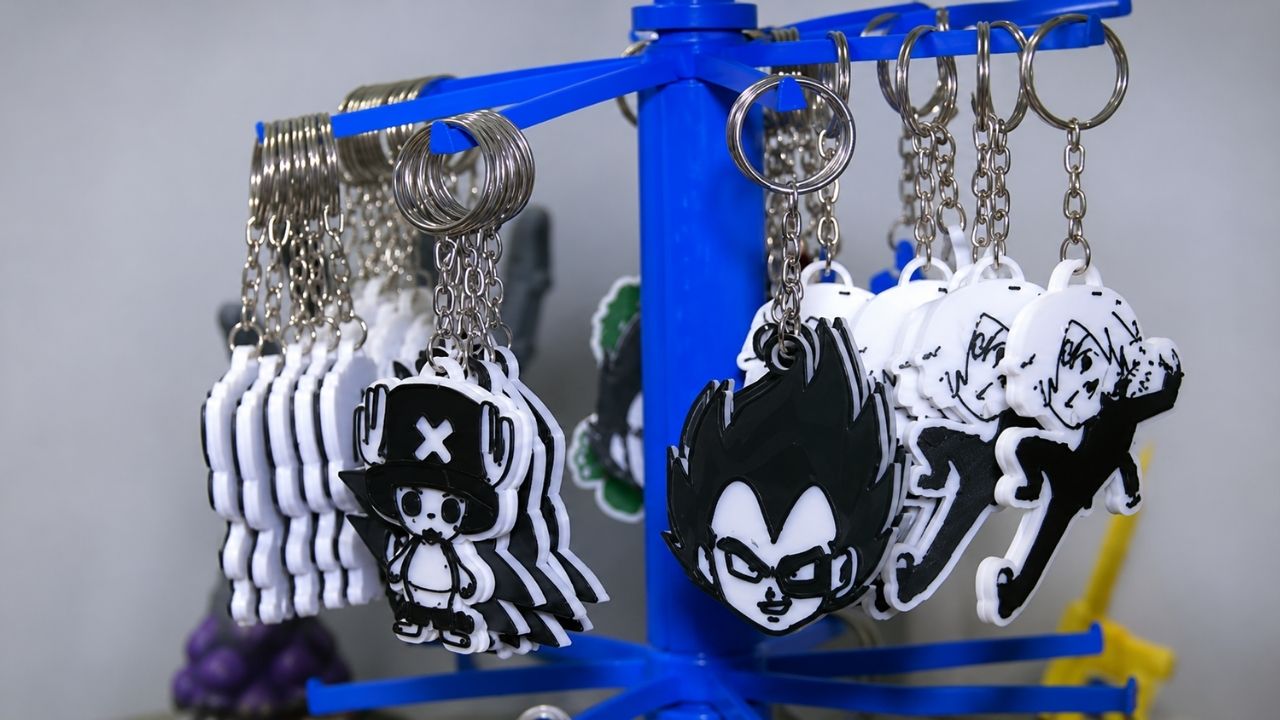
In printers, almost anything can take shape: articulated keychains, characters, brooches, dolls, and small personalized objects. Each item requires model selection, computer preparation, machine setup, and monitoring during production.
The first order remembered by the duo was an articulated shark keychain. For the teenagers, selling the first piece represented more than just a simple transaction. It was the confirmation that someone was willing to pay for something they created.
From there, the small business began to grow. 3D printing ceased to be just a classroom experiment and started circulating among colleagues, teachers, family members, and others interested in the pieces.
Recognition came along with new responsibilities. Producing to sell involves deadlines, quality, organization, customer service, and the ability to solve problems when printing fails or needs to be restarted.
Order of 800 buttons put the duo before a bigger challenge
The turning point mentioned in the report was an order placed by the school. The institution hired the two students to produce over 800 buttons used in an institutional campaign, a much larger volume than the simple orders made until then.
The order required planning, task division, and endurance. According to the source’s account, the production involved nights of work, fatigue, and a lot of dedication to meet the agreed goal. For 12 and 13-year-old teenagers, the challenge had the weight of a professional contract.
The order also showed how the school can function as a space for discovery and encouragement. Contact with robotics and 3D printing paved the way for students to apply technology to something concrete, with visible results and real demand.
Furthermore, the work helped to popularize the topic within the school environment. Other students began to better understand the pieces, the brooches, and the potential of 3D printers, increasing curiosity around the technology.
Family support helped turn idea into routine
Behind the production, there is also family support. Parents and guardians follow ideas, suggest models seen on the internet, encourage new pieces, and observe the duo’s growth. This support appears as an important part of the story.
Family involvement helps because the routine is not simple. The students need to balance school, tasks, leisure, model research, order fulfillment, and machine time. Not every print is successful, and some pieces need to be interrupted, reconfigured, and redone.
3D printing requires attention because the machine can work for hours, but that doesn’t mean the result is guaranteed. An error in the file, slicing, or adjustment can compromise the entire piece.
Even so, the teenagers found a way to fit the business into their routine. One studies at one time, the other helps at another time, and both divide tasks so that orders progress without abandoning their studies.
Entrepreneurship appeared before the CNPJ
The story of the two students shows a vision of entrepreneurship that goes beyond the formal opening of a company. Before talking about CNPJ, store, or counter, they already deal with autonomy, responsibility, communication, organization, and decision-making.
Experts cited in the report highlight precisely this point: entrepreneurial activities in childhood and adolescence can stimulate skills useful for the future. The school, in this context, functions as an experimentation environment.
Technology becomes a bridge between creativity and responsibility. The teenagers not only imagine pieces; they need to fulfill orders, think about the market, evaluate what can sell, and deal with real production problems.
This type of experience can influence future choices. Even if they follow other professional paths, the students already have contact with tools related to innovation, robotics, design, digital manufacturing, and customer service.
Dream now is to increase the printers and open a store


After the first orders, Heitor and Antônio are already talking about the next steps. Among the plans are buying more printers, expanding the machinery, producing more pieces, and seeking colorful models, considered more attractive to the market.
The dream also includes opening their own store, with a counter and structure to sell products made with 3D printers. For such young teenagers, the plan shows an uncommon vision of the future, but consistent with the experience they have already begun to build.
One of the goals mentioned in the account is to use the business to generate stable income and help their parents. This detail gives emotional strength to the story, because it shows that the idea is born not only from the desire to sell but also from the desire to contribute at home.
3D printing, in this case, appears as a tool of opportunity. It transforms filaments, digital files, and creativity into physical products, but it also transforms the way two teenagers see work, future, and responsibility.
Technology can also open paths outside entertainment
A story from Manaus draws attention because it contradicts a common perception about children and teenagers being connected. Instead of using technology only for games, videos, and social media, the two students applied their knowledge to create something marketable.
This does not mean demonizing games or screens. The central point is different: when technology is accompanied by guidance, curiosity, and practice, it can stimulate creation, problem-solving, and entrepreneurship from an early age.
3D printing is a good example because it combines various stages of learning. The student needs to understand design, digital files, material, machine, production time, finishing, and customer expectations.
The final result is a small piece, but the process behind it is large. Each keychain or character carries a sequence of technical decisions that help develop reasoning, discipline, and persistence.
Do you think schools should encourage more entrepreneurship projects with technology, such as robotics and 3D printing, or could this place too much responsibility on children and teenagers? Leave your opinion in the comments.