





 Portuguese
  English
  Spanish
  2 min of reading


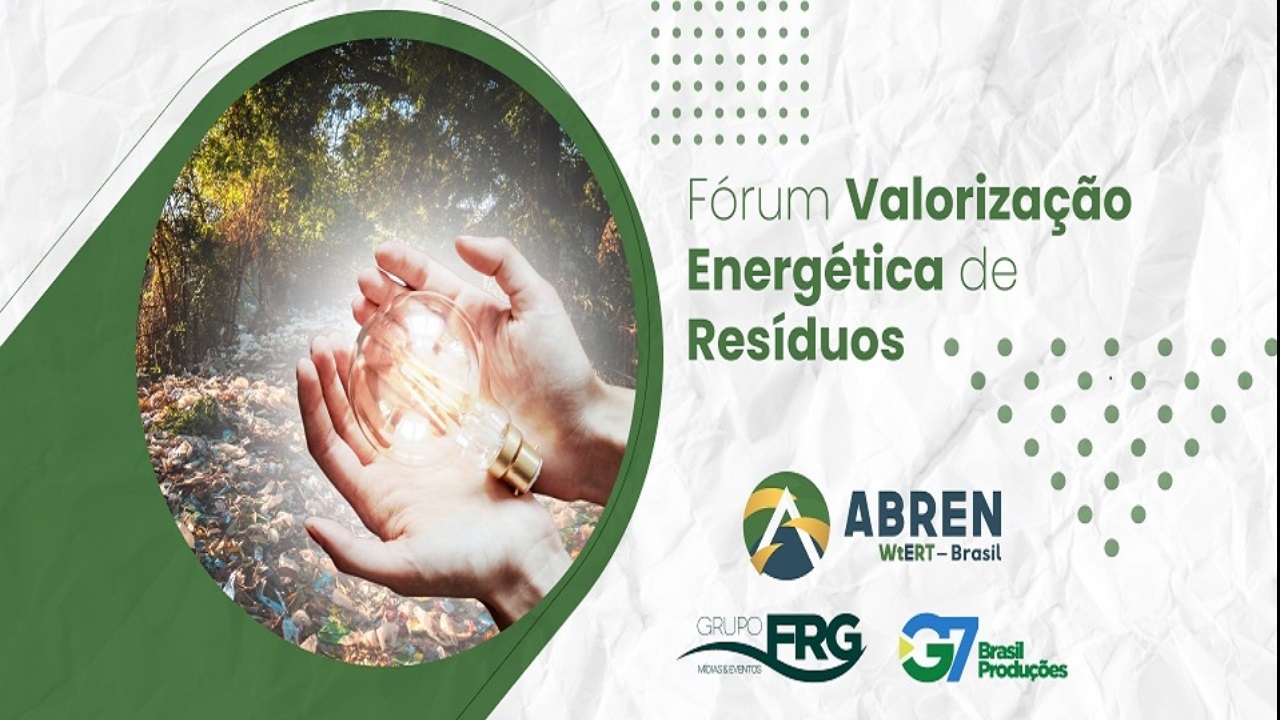
With the Objective of Debating the Main Challenges and Opportunities of the Sector, the Event Will Take Place on July 6th and 7th
The third edition of the Waste Energy Valorization Forum is already scheduled. The event, which will be held in a hybrid format this year, that is, online and also in person, is set for July 6th and 7th at the Novotel São Paulo Jaraguá Conventions in São Paulo.
Organized by the FRG Media & Events Group and promoted by the Brazilian Association for Energy Recovery of Waste (ABREN), the Forum aims to bring together the main authorities and players in the sector to debate and discuss the new directions and trends in waste energy recovery in Brazil.
The current generation of waste in the country is approximately 82.5 million tons per year, but the recycling rate is only 2%. The launch of the National Solid Waste Plan (PLANARES) in April of this year aimed to change the landscape of solid waste in the country. PLANARES reinforces, for example, that by 2040 the expectation is that half of the waste will be recycled or reused in some way.
-
Bill Gates is called to explain contacts with Jeffrey Epstein in a closed-door deposition that may reveal behind-the-scenes details of one of the most sensitive investigations in the US.

-
Coca-Cola prepares a mega-operation in Brazil with 11 factories and 53 distribution centers to turn the 2026 World Cup into a billion-dollar consumption race.
-
Electrolux emerged from a Swedish merger in 1919 and conquered homes worldwide with innovative refrigerators, stoves, and washing machines.
-
Electrolux reveals how Brazilian design crossed borders, reached Europe and the USA, and began to influence more efficient appliances worldwide.
Thus, utilizing energy recovery as a way to optimize solid waste management is a viable solution that should be promoted in the country. The Waste Energy Valorization Forum features lectures from the leading representatives of the sector, as well as academic members who are specialists in the subject.
According to ABREN, energy recovery plants (UREs) that use waste to generate energy could meet at least 5% of the energy consumption of Brazilian cities. In addition, there is potential to reach 994 MW of installed capacity through UREs, energy that would be sufficient to supply 27 million households with clean and renewable electricity.
Another important destination for urban waste is the activity of coprocessing fuels derived from waste (CDR) in cement kilns (coprocessing), replacing fossil fuels. This activity results in reducing greenhouse gas emissions by substituting fossil fuels with CDR. In various countries in Asia, Europe, and North America, there are several CDR preparation plants using municipal solid waste, including the use of the organic fraction through bio-drying processes, and Brazil currently uses 31% CDR for cement manufacturing.
According to Yuri Schmitke, CEO of ABREN, “the meeting is a great opportunity to bring together the key experts in the sector and discuss the next steps for Brazil towards expanding waste energy recovery. This technology will greatly contribute to Brazil’s energy transition.”
Source: 200 Press Advisory


Be the first to react!