






 Portuguese
  Spanish


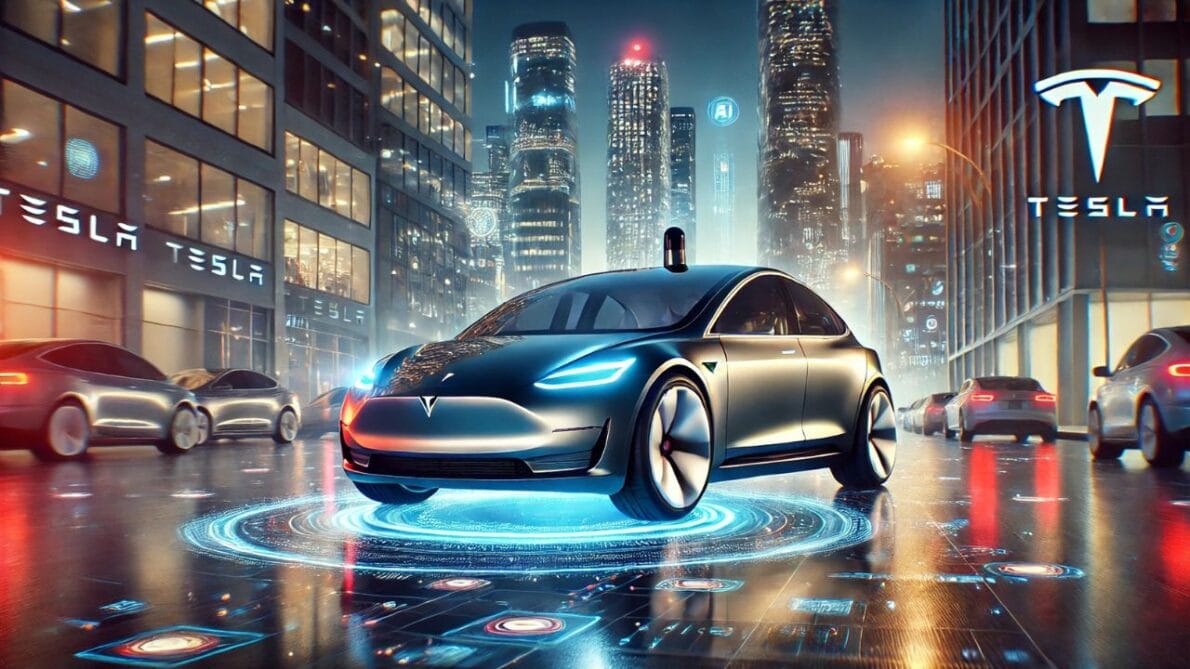

Tesla Aims for the Future of Autonomous Vehicles, Betting on Black Box AI Technology, but Facing Challenges with Safety and Regulators
If Tesla could bet on a more futuristic idea, it would probably have already driven us to Mars. But, while that day hasn’t come, the company is focused on its latest technological leap: the use of AI Technology in a “black box” for autonomous cars. And believe me, this promises to leave the entire market stunned — or at least Elon Musk hopes so.
This Thursday, Tesla plans to reveal to the world the long-awaited “Cybercab,” a prototype of a disposable taxi that could be the first step towards transforming the streets into high-tech tracks. However, if you think we’re going to grab one of these next weekend for a ride, you can forget about it. The presentation will only be of a prototype, and the actual operation may take longer than you wish.
-
Melting Glaciers Uncover Ancient Tools, Preserved Mummies, and Strategic Minerals in the Arctic and European Mountains
-
Melting Glaciers Uncover Ancient Tools, Preserved Mummies, and Strategic Minerals in the Arctic and European Mountains
-
Melting Glaciers Uncover Ancient Tools, Preserved Mummies, and Strategic Minerals in the Arctic and European Mountains
-
Turbocharged Engines with Direct Injection: Why High-Performance Engines Over 130 HP/Liter and Turbines at 200,000 RPM Challenge Durability


What Is This Black Box AI Technology?
While its competitors, like Waymo and Zoox, race with their own robot taxis through the streets of various cities, Tesla is taking a different path, betting exclusively on end-to-end AI Technology. It sounds complicated, right? But basically, it’s as if the car is learning to drive itself just by observing the world through cameras — without extra sensors, like radars or Lidar, that others use to ensure there are no fatal mistakes.
This black box AI technology is an innovative and extremely ambitious approach. The idea is for the system to learn everything on its own, without needing much input from human engineers. But there’s a catch: since the system makes decisions directly from raw data, it’s very difficult to understand what went wrong when it makes a mistake. Imagine trying to figure out what’s going on in someone’s head without being able to ask them. That’s the challenge.
Strong Competition and Challenges Ahead
Now, the big question is whether the path chosen by Tesla will be able to convince regulators and, of course, us, the future passengers. Unlike Waymo, a subsidiary of Alphabet, which already has a fleet of self-driving cars operating in some U.S. cities, Tesla has yet to put its robot taxi on the streets. Convincing authorities that this new AI technology is safe could be the company’s biggest challenge.
This doesn’t mean that Tesla is alone on this journey. Other tech giants, like Nvidia, are also betting on end-to-end AI systems. But even Nvidia, which is a global leader in AI computing chips, prefers to use a more conservative approach, combining sensors and traditional systems to ensure safety. “We can’t just jump directly into the future. It’s too unsafe,” said Jensen Huang, CEO of Nvidia.
The Future of Self-Driving Cars: Is It Now or Still Far Off?
With the reveal of the Cybercab, Tesla wants to make a mark in a market that is becoming increasingly competitive. The company has the chance to leave its mark on the future of self-driving vehicles, but it must face the reality that its black box AI technology still faces critical challenges, especially concerning safety and consumer trust.
As Musk continues to promise a driverless future, will he be able to overcome the obstacles and deliver the long-awaited autonomous car that works perfectly without human intervention? And more importantly: would you get into a Tesla robot taxi knowing it could be a “black box” full of mysteries? Leave your comment!


