Portuguese
  Spanish


At a speed of 8.9 km/s, the asteroid (152637) 1997 NC1 travels towards Earth’s orbit. European Space Agency rules out collision risks.
The monitoring of objects crossing space gained a new chapter with the confirmation of the trajectory of the asteroid (152637) 1997 NC1. Originally identified in the year 1997, this celestial body has an estimated size ranging between 750 and 1,650 meters, a calculation obtained by astronomers based on the amount of sunlight its structure can reflect.
The European Space Agency (ESA) reported that the peak of the rock’s approach to our planet will occur this Saturday (06/27/2026), activating global scientific radars. Despite the enormity of the cosmic object, planetary safety specialists have already checked the data and assure that there are no reasons for concern about impacts on the Earth’s surface.
Technical details and the trajectory of the space rock
The asteroid’s movement through space occurs rapidly but on a completely safe route. Data collected by surveillance systems indicate that the body travels at a constant speed of approximately 8.9 kilometers per second.
-
Scientists Discover 10,000-Year-Old Stone Wall in the Baltic Sea, Used to Trap Reindeer Before Sea Levels Rose

-
Farmer’s DIY Cooling System Saves Harvests from Spoiling in 51 Countries by Tricking Standard Air Conditioners to Chill Rooms to 2°C

-
As Global Warming Melts Glaciers, Ancient Tools, Preserved Mummies, and Strategic Minerals Emerge in the Arctic and European Mountains

-
Brazil Constructs First Japanese SABO Barrier in Nova Friburgo to Prevent Landslides, a $3 Million Concrete Trap for Rocks, Logs, and Mud




At the moment of closest proximity to Earth, the space rock will be positioned about 2,559,461 kilometers away from the Earth’s surface. For astronomical comparison purposes, this distance is equivalent to 6.66 times the space between the Earth and the Moon.
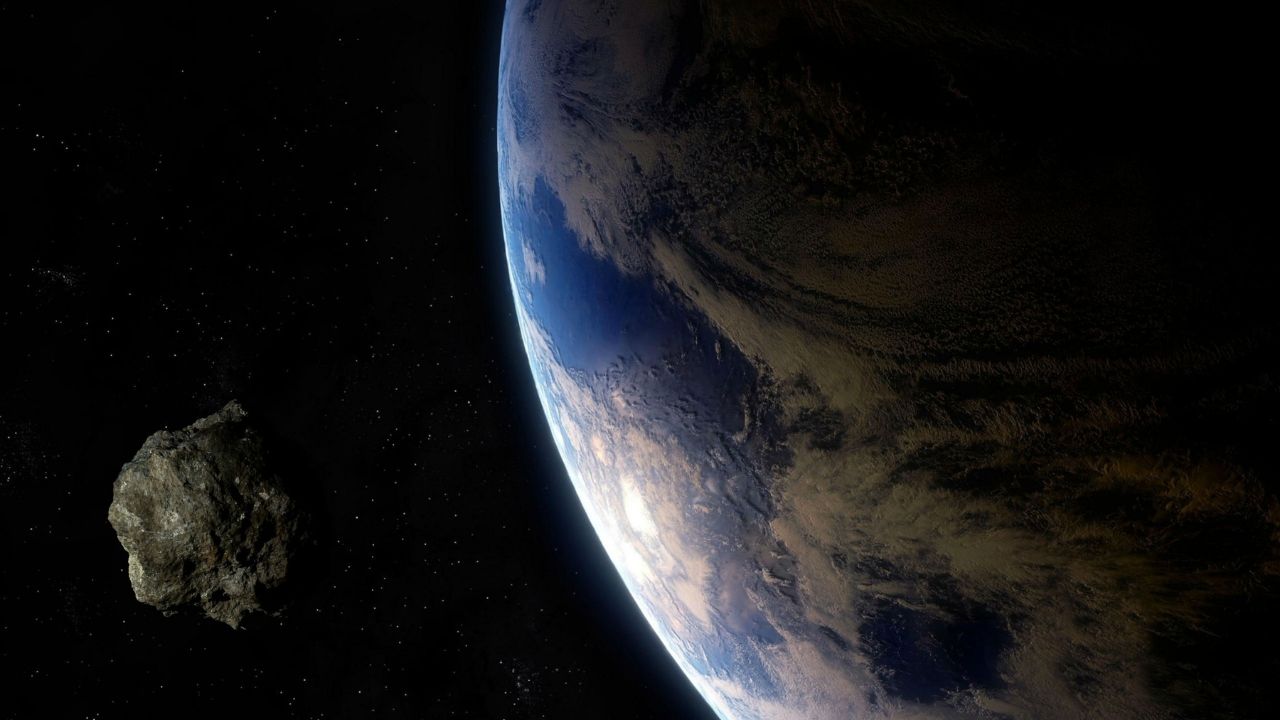
The main data cataloged about the space event include:
- Peak moment: The closest point to Earth occurs on Saturday, exactly at 11:14 GMT (which corresponds to 8:14 in Brasília time).
- Danger margin: The risk of impact with the planet’s surface is considered completely nonexistent.
- Object history: The rock was discovered by astronomy teams in the year 1997.
- Computed size: Projections indicate dimensions between 750 and 1,650 meters in diameter.
In an official statement issued by ESA’s Planetary Defense Office, specialist Juan Luis Cano analyzed the frequency of this type of phenomenon in the sky:
“The approach of an object of this size to Earth occurs only every few years, although this time the bright and nearby Moon may hinder observation at the moment when the asteroid is closest.”
How to track the visibility of the asteroid?
The opportunity to observe the passage of the asteroid varies according to the object’s geographical route and the time zone of each continent. Initially, the space visitor will begin to appear to observers located in the Northern Hemisphere.
Subsequently, during the peak time of the approach, it can be observed from practically any point in the world. Finally, the space rock can be seen only in the Southern Hemisphere as it moves away towards deep space.
If local weather conditions cooperate and present a clear sky during the night, amateur astronomers may attempt to capture the moment using common equipment, such as large binoculars or small telescopes.
However, scientists warn of a natural interference factor: the presence of the Moon, which will be quite bright and nearby during the period, may considerably hinder the visualization of the object at the moment of maximum approach.
With information from Olhar Digital