Portuguese
  Spanish


Switzerland reinforces how recycling depends on targets by material, reverse logistics, sorting, and energy, while Brazil still sees selective collection advance without preventing landfill waste, showing that separating waste is just the beginning of a mechanism that needs to return to the industry to circulate better again within the real economy
Recycling has returned to the center of the environmental debate after the comparison between Switzerland and Brazil showed two very different waste management systems. According to a report by Exame published on June 24, 2026, the European country recycles about 52% of municipal waste, while Brazil still faces difficulty in transforming collection into real reuse.
The contrast involves Switzerland, which has consolidated waste policies over decades, and Brazil, where selective collection already appears in 60.5% of municipalities, but effective recovery remains low. The difference reveals that the problem is not just in separating waste, but in organizing the entire chain until the material returns to the economy.
Switzerland transformed recycling into a system, not an isolated action

Switzerland appears as a structured case because recycling does not depend solely on individual goodwill. The country combined rules, infrastructure, specific targets by material, and private sector participation to create a system where each stage has a defined function.
-
Facing extreme heat, floods, and disappearing fertile soil, Pakistan launches a “10 Billion Tree Tsunami” in three years to combat desertification, protect rivers, create green jobs, and make reforestation a national survival priority.

-
Cape Verde’s World Cup Surprise: Betting on Electric Cars, a 5 MW Solar Plant, and an Ambitious Plan to Transform Energy for 600,000 Residents

-
Man Finds 1,469 Ancient Roman Silver Coins While Metal Detecting in Romania
-
Young Brazilian Siblings Go Viral for Catching Giant Fish, Launch Sport Fishing Project


According to Exame, the Swiss performance did not arise from a single policy nor from a recent awareness campaign. The result is the fruit of decades of institutional construction, with mechanisms that guide how waste should be separated, collected, returned, sorted, and reused.
Today, the country recycles about 52% of municipal waste. In 2024, 3.1 million tons of recyclable materials were recovered, while 2.9 million tons went to incineration. These numbers show a different logic: the goal is not just to remove trash from citizens’ homes but to minimize the final disposal to landfills as much as possible.
The Swiss case also draws attention because some streams achieve performance far superior to the overall average. Glass reaches 100% recycling, PET bottles exceed 80%, and beverage packaging has a minimum legal target of about 75%. When the material has clear rules and organized return, utilization increases.
Glass, PET, and packaging show the strength of reverse logistics
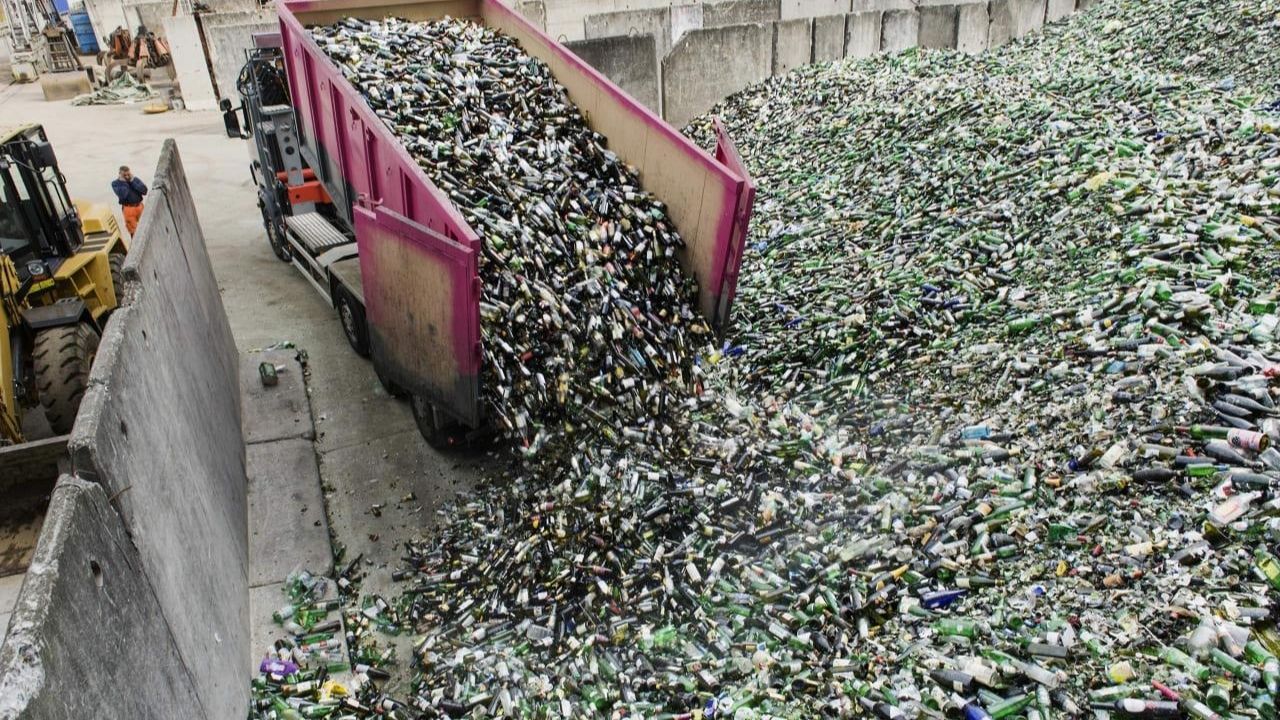
The example of glass helps to understand why recycling works better when there is a system design. Materials with specific collection, return channels, and defined responsibility tend to arrive cleaner, more separated, and more useful for the industry.
In the Swiss case, waste policy is guided by legal obligations and targets by material type. This reduces improvisation and creates predictability for consumers, municipalities, companies, and sorting operators. When each material has a clear destination, the chance of reuse increases.
Reverse logistics is also decisive. It organizes the return of packaging and products after consumption, preventing everything from relying solely on common public collection. PET, aluminum, and glass fit into this logic because they have more structured systems of circulation and recovery.
This is a central point for Brazil to observe. It is not enough to ask the population to separate waste if the separated material is then lost due to lack of sorting, contamination, transportation, buyer market, or integration with the recycling industry.
Energy enters the Swiss equation against landfills
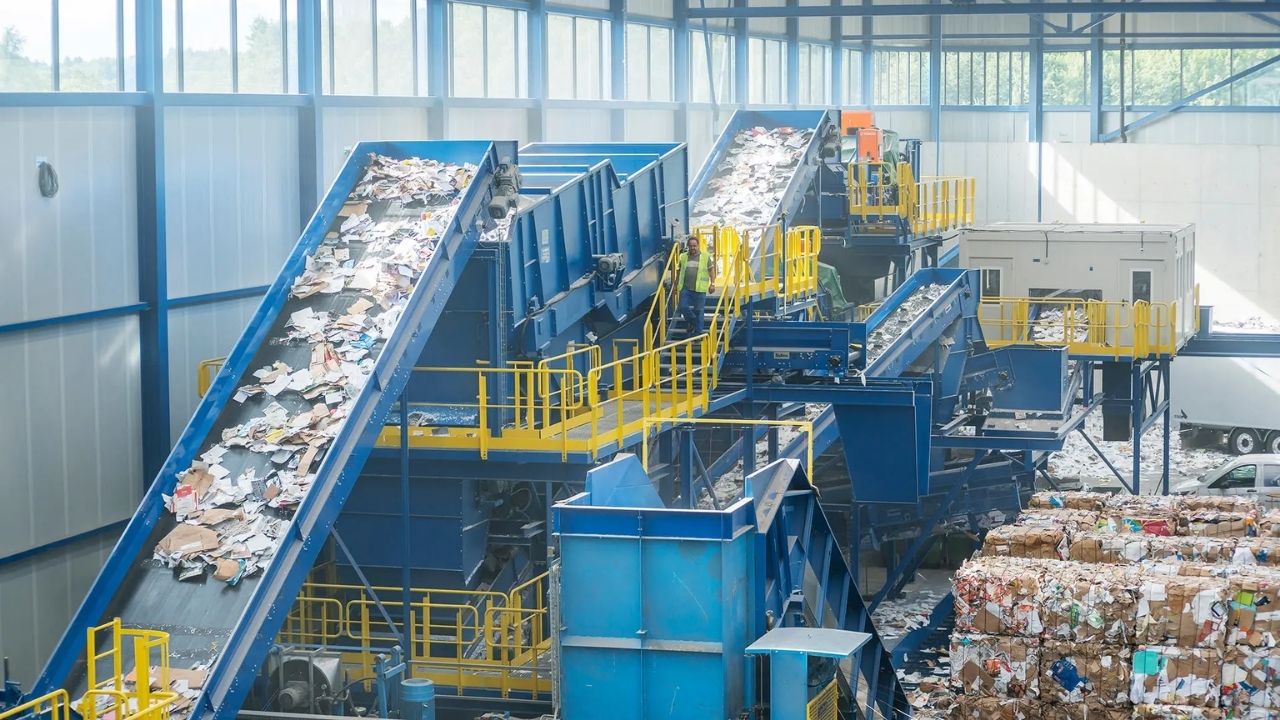
Another distinguishing feature of the Swiss model is the integration between recycling and energy recovery. What cannot be reused goes to controlled incineration with energy recovery, reducing dependence on landfills and incorporating part of the waste into the energy system.
This arrangement does not mean that all waste becomes an automatic solution. The priority remains to recover materials whenever possible. However, when reuse is not feasible, the country avoids simply burying waste and tries to extract energy value before final disposal.
The consolidation of this model began in the 1980s when Swiss environmental policy started to incorporate the logic of the circular economy. This concept seeks to keep materials in use for as long as possible, reducing waste and encouraging reuse.
Even with an efficient system, Switzerland also faced a significant increase in waste generation. Between 1970 and 2010, the volume per inhabitant more than doubled, rising from 309 kg to 706 kg. In 2024, the rate was 670 kg per capita, indicating a slight stabilization after decades of growth.
Brazil advances in collection but recycles little
In Brazil, the situation is more contradictory. Selective collection exists in a significant part of the territory, but this still does not translate into effective recycling in the same proportion. According to Exame, the country generated more than 81.6 million tons of urban waste in 2025.
Despite this volume, recent industry estimates point to an effective recycling rate of around 4.5%. In another reading, official data from the Ministry of Cities, based on 2023, indicates only 1.82% recovery of dry and organic recyclable waste.
These numbers expose the mismatch between generation, collection, and reuse. Brazil collects a lot of waste, starts to separate some of it, but still recovers little material for the production chain. The bottleneck is in the path between the trash can and the industry.
The coverage of selective collection, in turn, shows progress. According to IBGE, 60.5% of Brazilian municipalities had the service in 2023, equivalent to 3,364 cities. The data is important, but it does not solve the problem alone, because available service does not mean efficient sorting or a market absorbing the recovered material.
Regional inequality weighs on Brazilian performance
Brazilian recycling is also marked by regional inequality. The South concentrates 81.9% of municipalities with selective collection, while the North and Northeast register 37.0% and 33.5%, respectively, according to data cited by Exame.
This means that access to the service varies greatly within the country itself. One city may have regular selective collection, a defined schedule, and active cooperatives, while another still depends on common disposal, limited infrastructure, and low sorting capacity.
This territorial difference hinders the formation of a consistent national chain. To recycle more, Brazil needs collection, environmental education, strengthened cooperatives, logistics, purchasing industry, supervision, and aligned economic incentives.
Without this integration, the material separated by the resident may end up contaminated, mixed, or discarded in a landfill. This is where selective collection loses strength: when it starts at home but doesn’t find a system prepared to complete the cycle.
What the comparison reveals about waste management
The comparison between Switzerland and Brazil shows that recycling is less an isolated action and more a management architecture. Performance depends on how the country designs rules, responsibilities, infrastructure, goals, and destinations for each material.
In the Swiss model, there is integration between regulation, collection points, sorting, material-specific goals, and energy recovery. The citizen participates but does not bear the sole responsibility for making the system work.
In Brazil, the expansion of selective collection shows progress, but the low recovery indicates that there are failures after the initial separation. The waste needs to arrive in good condition at sorting centers, find a market, and return as raw material or energy.
This is the main lesson from the Swiss case: recycling is not just about removing trash from in front of houses. It is ensuring that the material has a path, value, and destination. When this doesn’t happen, the country can have selective collection and still continue burying a large part of what could be reused.
Waste in the landfill shows the cost of an incomplete system
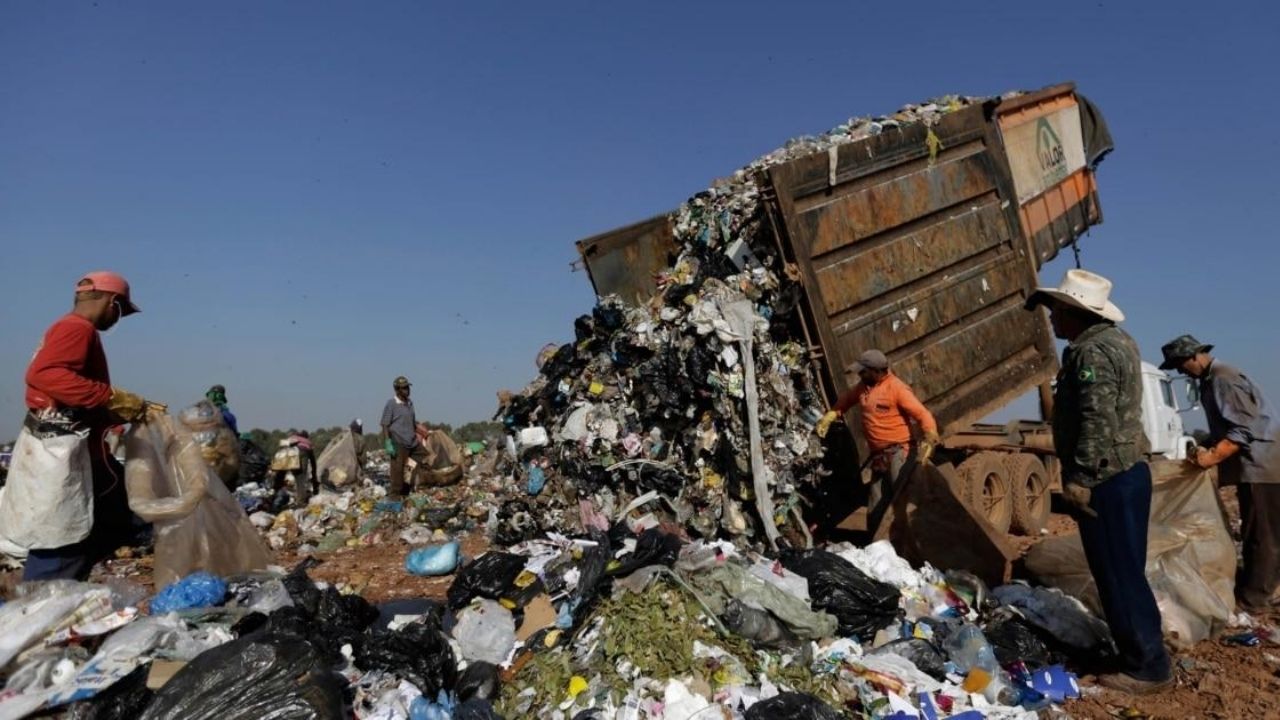
The landfill remains a symbol of a chain that does not close. When recyclable waste reaches final disposal, there is environmental, economic, and social loss. Materials that could return to the industry stop generating value and start occupying space, emitting impacts, and requiring new disposal areas.
Efficient recycling reduces this pressure but depends on quality. Dirty paper, mixed plastic, improperly broken glass, or organics contaminating dry materials can make reuse unfeasible. Therefore, the separation stage needs to be linked to the processing stage.
In Brazil, cooperatives and waste pickers play an essential role in this process, but they often operate with insufficient structure. Without support, scale, and a stable market, the chain loses efficiency, and part of the collection effort does not yield proportional environmental results.
The Swiss experience cannot be automatically copied, because each country has a different social, territorial, and economic reality. Even so, it shows that clear goals, reverse logistics, and consistent infrastructure make a difference when the objective is to reduce landfills.
Recycling depends on rules, scale, and market
The biggest lesson from the Swiss case is that recycling needs to be treated as public policy, urban service, and economic chain at the same time. If one of these parts fails, performance drops.
Rules by material help define responsibilities. Collection points facilitate population adherence. Efficient sorting improves material quality. A buying market ensures that the recovered waste returns to circulation. And enforcement prevents incorrect disposal from becoming the cheapest option.
In Brazil, the challenge is precisely to connect these pieces. The country already has selective collection in more than half of the municipalities, but still needs to transform the presence of the service into real reuse, with less loss along the way and more return to the industry.
The question that remains is direct: does Brazil only need to expand selective collection or does it need to redesign the entire waste route after it leaves the citizen’s home?
Switzerland shows the way, but Brazil needs to solve its own bottlenecks
Switzerland reached 52% recycling because it built a decades-long system, with goals by material, reverse logistics, sorting, energy recovery, and less dependence on landfills. The country did not solve the problem just with campaigns, but with institutional design and infrastructure.
Brazil, on the other hand, shows that having selective collection in 60.5% of the municipalities is still not enough to take the garbage out of the landfill. The next leap depends on transforming collection into reuse, strengthening the chain, and giving real destination to the separated material.
And you, do you think Brazil should prioritize more selective collection, invest heavily in sorting and cooperatives, or create stricter goals for companies and packaging? Leave your opinion in the comments.