





 Portuguese
  English
  Spanish
  2 min of reading
  0 comments


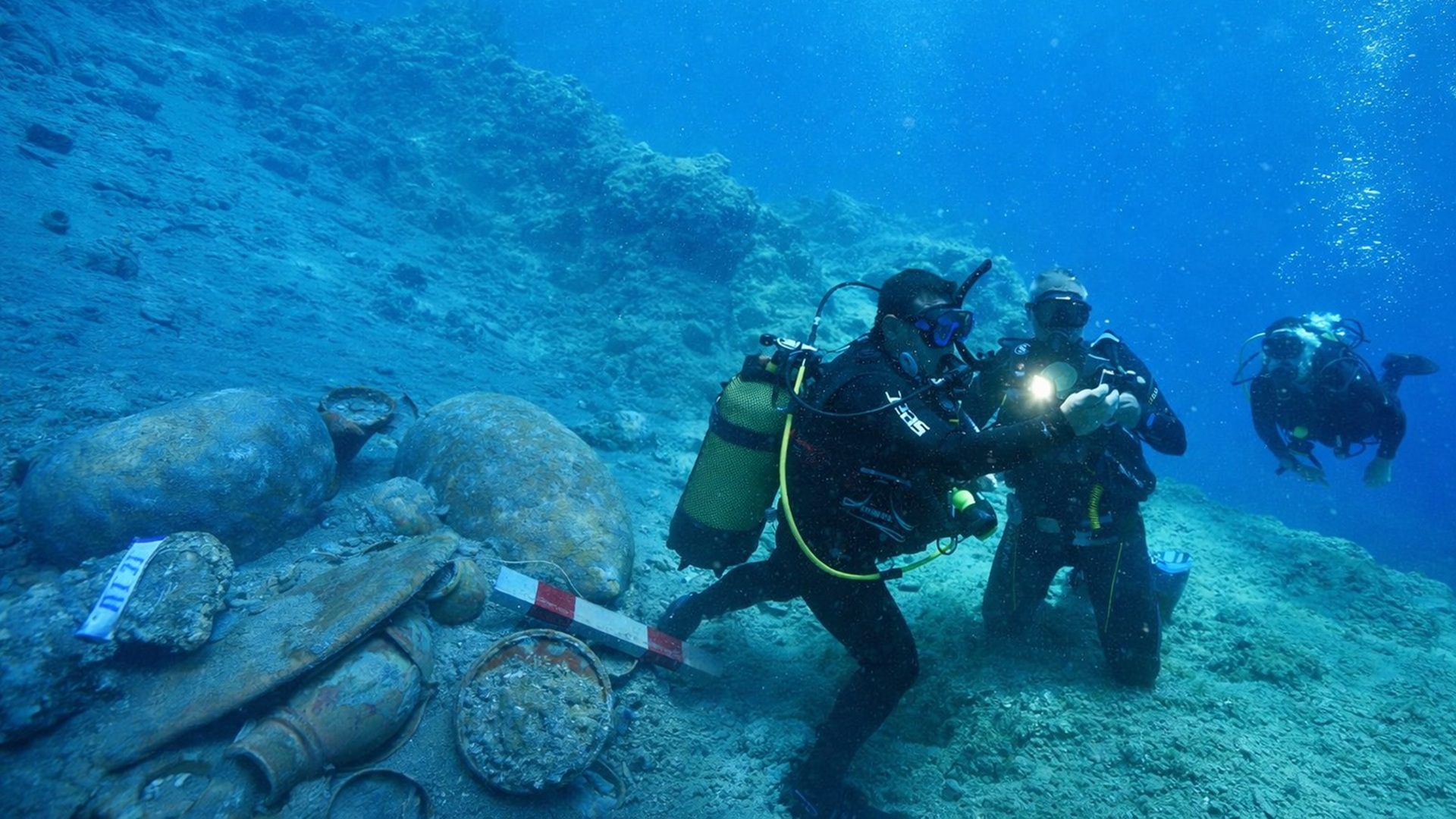
Discovered at 46 Meters Depth Off the Coast of Turkey, the Wreck Dated to Around 2,000 Years Preserves Ceramics Stacked in Original Position, Revealing Innovative Techniques of Protection, Logistical Organization, and Reach of Maritime Trade in the Eastern Mediterranean During the Late Hellenistic Roman Period
A wreck about 2,000 years old was discovered off Adrasan, on the coast of Turkey, at a depth of 120–150 feet, containing intact stacked ceramics. Dated to the early late Hellenistic to Roman period, the find offers new data on ancient production, transportation, and maritime trade.
Discovery and Location of the Wreck
The wreck rests between 120 and 150 feet, about 46 meters, deep off the coast of Adrasan. The vessel was dated from the late Hellenistic to the early Roman period, expanding archaeological knowledge about trade routes in the eastern Mediterranean.
The cargo includes bowls, plates, trays, and ceramic jars, all still organized in their original transport positions.
-
The government opens the budget to pay pensions and ends up targeting precisely the FAB’s Gripen fighter jet; the reason for the R$ 800 million block reveals a fragility that has haunted the country’s defense projects for decades.

-
A potato-shaped object over a mountain and orbs multiplying in the sky are among the 72 new files from the Department of Defense that do not prove extraterrestrial life.
-
Family struggling with the electricity bill at the end of the month finds an air conditioner that consumes little and costs only R$ 21 per month; LG device cools the room 40% faster and also comes with a detail that grabs attention.
-
A 2.4-meter drone created in Denmark could change sea rescues by locating castaways with more than 80% success, landing on ships in seconds, and delivering life vests before cold and exhaustion reduce survival chances.



The preserved stacking allows observation of how items were packed at the time of loading.
Condition of the Ceramics
The main distinguishing feature of the find is the condition of the pieces. The ceramics were coated with raw clay, applied as a protective measure before maritime transport, forming a natural seal against corrosion and marine erosion.
This technique, never before observed on such a large scale, maintained visibly intact patterns and colors for over two millennia. The method allowed the artifacts to reach the present day practically without visual degradation.
Historic and Scientific Importance
According to Turkey’s Minister of Culture and Tourism, Mehmet Nuri Ersoy, the find is relevant to the world’s cultural heritage.
The minister personally dove to the site and stated that the ceramics have arrived to the present day without any damage to their designs.
So far, over 400 shipwrecks have been identified between the ancient city of Patara and Mersin, evidencing the intensity of ancient maritime trade in the region.
This context reinforces the importance of the new wreck for comparative studies.
Archaeological Research and Next Steps
Archaeologists believe the ship was carrying consumer goods and that the organization of the cargo reveals unprecedented information about ancient production, packaging, and logistics. The original position of the objects allows for analysis of storage and distribution strategies.
Some of the pieces will be exhibited in the future Mediterranean Underwater Archaeology Museum in the Kemer Idyros region, with construction starting this summer. After the completion of the excavations, part of the site, known as “Ceramic Sink,” will be opened to diving tourism, enhancing public access to underwater heritage.






-

-

-

-

12 people reacted to this.