






 Portuguese
  Spanish


Vermeer Prototype in Partnership with Interlune Promises to Extract Helium-3 from the Moon and Could Change the Earth’s Energy Future.
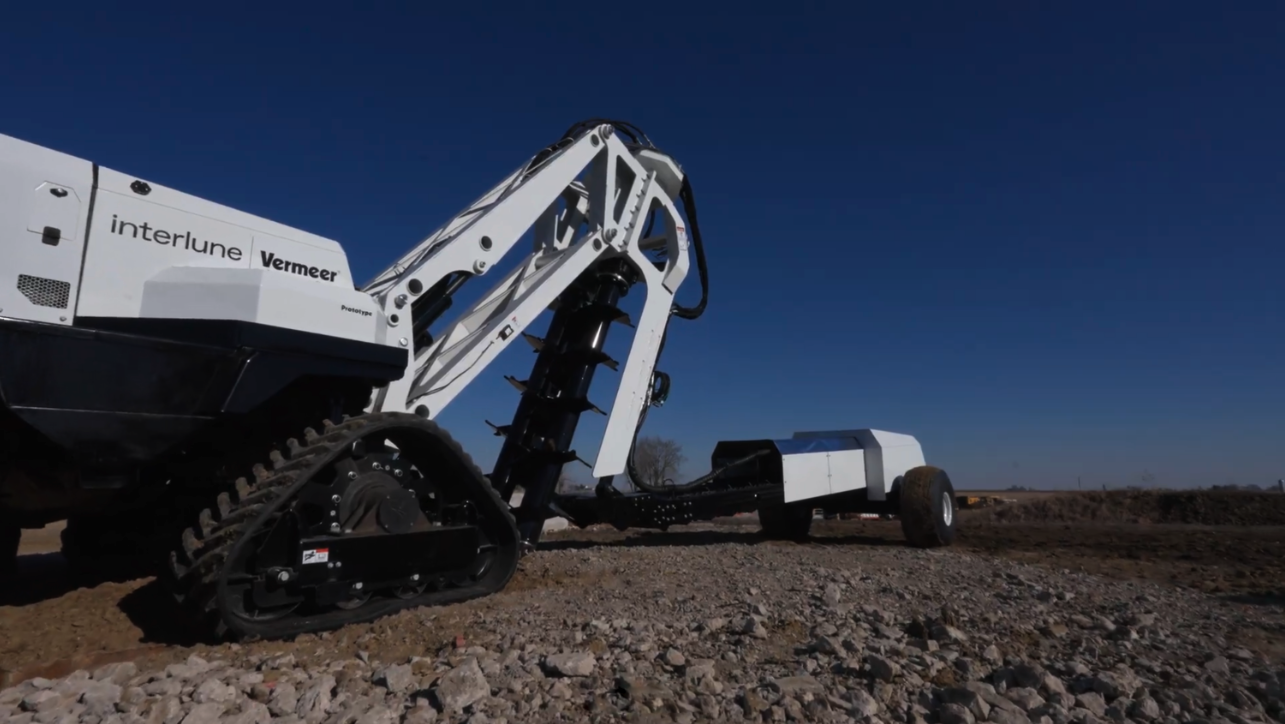
A new technological race is underway — and this time, the destination is the Moon. The American manufacturer Vermeer, based in Iowa, has unveiled a full-scale prototype of an excavator designed to operate on the lunar surface.
The project was developed in partnership with the startup Interlune, focused on off-Earth mining.
Robust Machine for Ambitious Mission
The equipment was developed to extract helium-3 from the lunar surface, a rare substance on Earth but abundant in lunar regolith.
-
Xiaomi Unveils Smart Glasses in Brazil with 12MP Camera, 4K Video, and AI Features, Challenging Ray-Ban Meta

-
Volkswagen Unveils Bold Strategy to Compete with Chinese Automakers in Brazil, Featuring 5,000 Parts, 76% Localization, and a Surprising Turnaround
-
Three Teens Win Global Prize for Low-Cost AI Microscope Diagnosing Malaria Species in Seconds for Remote Villages
-
Xiaomi Unveils Revolutionary Fridge: Eliminates Odors in 3 Minutes, Sterilizes in 2, Offers 508 Liters in Compact Design, Operates at 31 dB, and Is Smartphone-Controlled.


The machine’s objective is to excavate up to 100 metric tons of soil per hour, separating elements, extracting helium-3, and preparing everything for shipment back to Earth.
Vermeer is responsible for developing the excavator, which must meet severe operational conditions, including extreme heat, intense cold, and lack of atmosphere.
The CEO of Interlune, Rob Meyerson, highlighted the partner’s tradition as a decisive factor. “Vermeer has a legacy of innovation and excellence that began over 75 years ago, making it the ideal partner,” he said.
Helium-3: Strategic Resource of the Future
Helium-3 is a valued isotope in various fields. It can be used in the manufacturing of semiconductors, optical fibers, and superconductors.
Additionally, it is pointed out as a possible fuel for nuclear fusion, representing an energy advancement with enormous impact for the future of humanity.
On Earth, helium-3 is scarce. Its reserves are dwindling. Therefore, research aimed at lunar mining is gaining momentum. Interlune has the support of NASA and the U.S. Department of Energy.
Komatsu Also Joins the Race
But the Americans are not alone in this new chapter of space exploration. The Japanese giant Komatsu is also working on lunar excavators.
The company showcased its prototype at CES 2025. The proposal is to create 100% electric machines, suitable for an environment where combustion engines do not operate due to the lack of oxygen.
Komatsu excavators have been developed to withstand temperatures between +110 °C and -170 °C. The company is working on thermal control systems and electrification technologies to enable continuous operation in the lunar environment.
According to Komatsu, using electric motors powered by solar energy seems to be the most logical path. However, the company acknowledges that the operational challenges are significant and still require many solutions.
Lunar Mission Scheduled for 2030
Despite the competition from Komatsu, Interlune and Vermeer seem to have the upper hand at the moment. The prototype revealed by the two is larger, has already been tested at full scale, and has proven efficient. The excavator also enjoys more financial and governmental support.
According to Gary Lai, co-founder and CTO of Interlune, the large-scale excavation process to obtain helium-3 has never been done before. “The high-rate excavation necessary to collect helium-3 from the Moon in large quantities has never been attempted before,” he explained.
Interlune aims to launch its first lunar mission by 2030. The next phase of the project includes further testing and improvements to the operation of the excavator.
The advancements from Vermeer and Komatsu are just the beginning of a new era in technology.
Lunar industrialization is viewed by experts as a frontier comparable to ocean exploration or the initial drilling for oil.
The control of helium-3 reserves could become a strategic advantage, with a direct impact on the global economy and geopolitical relations in the coming decades.


