Portuguese
  Spanish


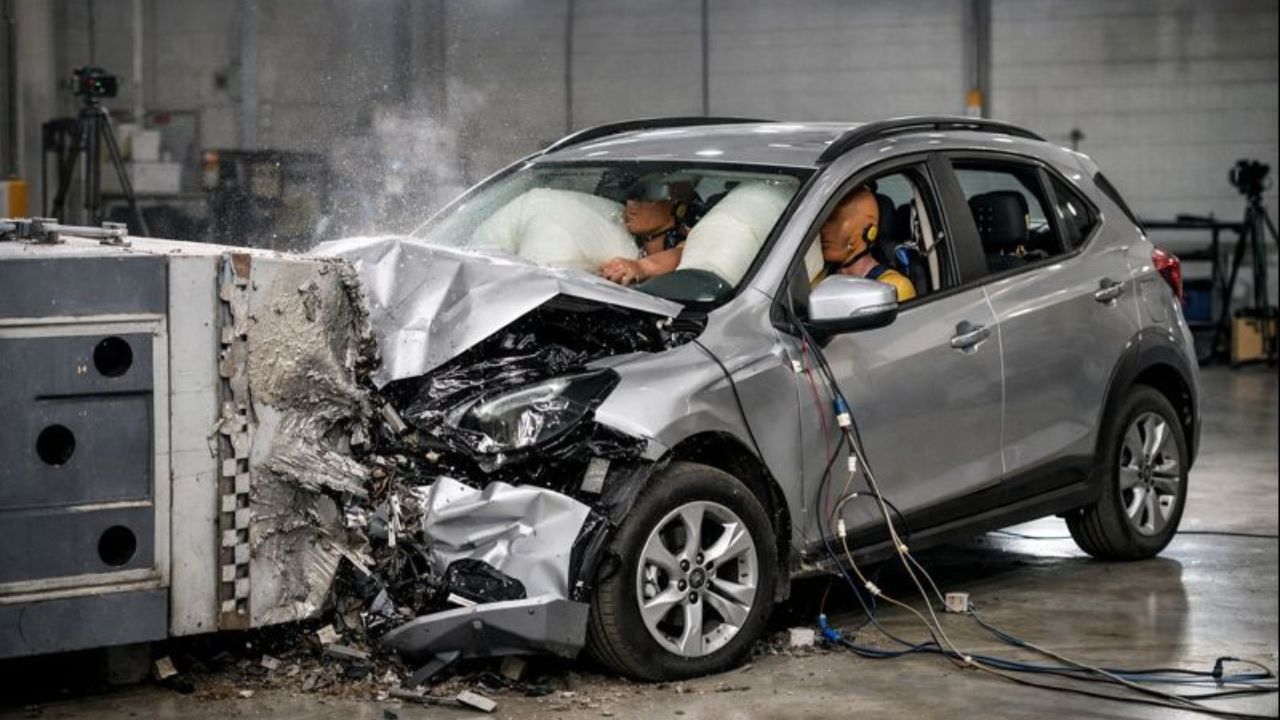

Cars from Citroën, Peugeot 2008 and Toyota Scored Low in Crash Test and Raised Alert About Vehicle Safety.
The crash test, the main reference for measuring the safety level of cars sold in Latin America, revealed in 2025 results below expectations for some popular models.
Evaluations conducted by Latin NCAP showed that vehicles from Citroën, the Peugeot 2008, and Toyota provided limited protection for occupants, especially in versions with few airbags and absence of driving assistance technologies.
The tests analyze frontal and side impacts, pedestrian protection, and electronic safety systems, precisely to guide consumers and pressure automakers to raise standards.
-
Brazilian Factory Restores Truck Engines and Parts, Reducing Raw Material Use by Up to 85% After 80 Years in Business

-
British Marines Set Record by Changing Ford Escort Engine in 42 Seconds, Unbroken for 40 Years

-
BYD Owners in Brazil Raise Concerns Over Warranty After 87,000 km, Two Repairs in Three Days, and Over $500 in Costs

-
Classic Volkswagen Beetles of Brazilian Presidents to Swap Museums in Historic Partnership



Right at the beginning of the year, the results drew attention because they involved SUVs, a segment typically associated with greater structural robustness.
However, as the data indicates, the size of the vehicle does not guarantee, by itself, greater safety.
See more: China Bans “Modern” Item from Electric Cars and Alert Reaches Brazil
How The Crash Test Works and Why It Is Decisive
The crash test simulates real accidents in a controlled environment, assessing how the body, airbags, and electronic systems protect drivers, passengers, and vulnerable road users.
Furthermore, Latin NCAP protocols assign percentage scores and stars, allowing direct comparisons between cars.
Therefore, when a model receives zero or only one star, the result indicates real risks in impact situations, especially in countries with heavy traffic and high accident rates.
See more: Digital Driver’s License Eliminates Fees and Helps Drivers Save R$ 226 Million
Citroën Basalt Has The Worst Performance and Receives Zero Star
Among the cars evaluated, the Citroën Basalt showed the most critical result. The coupe SUV received zero stars in the crash test, with adult occupant protection below 40%.
Even equipped with four airbags, the model failed to meet the minimum criteria required by Latin NCAP.
According to the entity, the absence of advanced driver assistance systems, known as ADAS, and the lack of head side airbags weighed negatively on the result.
Thus, the Basalt’s performance raises questions about the level of safety offered in entry-level versions.
Results of the Citroën Basalt:
39.37% – Adult Occupant;
58.35% – Child Occupant;
53.38% – Protection for Pedestrians and Vulnerable Users;
34.88% – Safety Assistance.
Peugeot 2008 Also Performs Poorly in Crash Test
Another negative highlight was the Peugeot 2008, which received only one star in the crash test.
The compact SUV, produced in Argentina and some European units, has four airbags and electronic stability control, yet still showed significant limitations.
Although the numbers are slightly higher than those of the Citroën, the result indicates that the safety package is still below expectations for the segment.
Moreover, the evaluation reinforces that merely meeting basic requirements does not guarantee a good score.
Results of the Peugeot 2008:
42.16% – Adult Occupant;
59.21% – Child Occupant;
54.48% – Protection for Pedestrians;
55.81% – Safety Assistance.
Toyota Yaris Cross Surprises, But Also Receives Low Score
With a launch expected in the Brazilian market, the Toyota Yaris Cross generated expectations for coming with six airbags as standard.
Nevertheless, the compact SUV from Toyota received only two stars in the crash test, a performance considered below the brand’s historical standard.
The model underwent a complete battery of evaluations, including frontal impact, side impact, pole collision, and whiplash tests.
Even with a higher score for adult occupant, the final result raised an alert.
“Unfortunately, the results obtained by Toyota in this round confirm a concerning trend,” said Stephan Brodziak, Chairman of the Board of Latin NCAP.
Results of the Toyota Yaris Cross:
77.01% – Adult Occupant;
69.29% – Child Occupant;
55.60% – Protection for Pedestrians;
58.14% – Safety Assistance.
What The Results Say About Safety in Current Cars
The data from 2025 shows that relevant differences still exist between versions sold in emerging markets and those offered in regions with stricter regulations.
Furthermore, they reinforce that while having more airbags is important, it does not replace advanced accident prevention technologies.
Thus, the crash test remains an essential tool for consumers seeking safer cars and for pressuring manufacturers like Citroën, Peugeot 2008, and Toyota to raise their standards.
In an increasingly complex traffic scenario, safety has ceased to be a differential and has become a basic requirement.