Portuguese
  Spanish


The replacement of the timing belt, a part that can ruin the engine, is usually recommended between 60 and 100 thousand kilometers or about five years. The actual deadline, however, is in the manual and varies greatly: it ranges from 60 thousand km in the Fiat Grand Siena to 240 thousand km in the Chevrolet Onix Plus.
The part that can destroy your engine does not warn when it will break, ages even with the car stationary, and has a different replacement schedule for each model. As reported by NSC Total, published in June, the timing belt is remembered by many people only when the mechanic mentions it, and the problem is that when it fails, there is usually no warning on the dashboard or time to think. The car may stop suddenly and, in some engines, the damage involves valves, pistons, cylinder head, and an expensive bill.
The detail that catches many drivers is that mileage alone does not tell the whole story. Mechanics and workshops in Brazil usually recommend replacement around 60 to 100 thousand kilometers or about five years, depending on the car, but the belt does not age only when the vehicle is running. Made of reinforced rubber, it suffers from time, heat, dust, oil, and humidity, so the safest guidance for engine health is not a generic rule, but rather to check the manual and respect whichever comes first, time or mileage.
Why there is no single deadline for each engine

Each engine has its own maintenance plan. There are cars that require the timing belt to be replaced every 60 thousand kilometers or 48 months, and others with a much longer interval. The manual of the 2019 Fiat Grand Siena, for example, indicates the replacement of the timing belt every 48 months or 60 thousand km, whichever comes first, and also warns that the intervals should be halved in severe use, such as dusty, sandy, or muddy roads, taxi, door-to-door deliveries, or long periods of inactivity.
-
Toyota to Open New Factory in Brazil by November 2026 with $2.2 Billion Investment, Creating 2,000 Jobs, and Ending Corolla Production in Indaiatuba

-
Brazilian Factory Restores Truck Engines and Parts, Reducing Raw Material Use by Up to 85% After 80 Years in Business

-
British Marines Set Record by Changing Ford Escort Engine in 42 Seconds, Unbroken for 40 Years

-
BYD Owners in Brazil Raise Concerns Over Warranty After 87,000 km, Two Repairs in Three Days, and Over $500 in Costs




In another model, the scenario changes completely. In the Chevrolet Onix Plus 2026, the timing belt and tensioner have a lifespan of 240,000 km or 15 years, while the accessory belt has a lifespan of 120,000 km or 5 years. The comparison makes it clear why the answer cannot simply be “change at 100,000 km,” as in some cars, this would be too late for the engine, and in others, well before the factory’s recommendation.
Cars that are driven little also need to change the belt
Looking only at the odometer is misleading. This is one of the points that most confuses car owners because many people see the low mileage and conclude that everything is fine. However, the timing belt also ages while stationary, and over time, the rubber can dry out, lose resistance, or develop small cracks, not always visible, especially since in many models the part is protected by covers and inspection requires technical knowledge.
Low mileage but many years is a warning sign. A vehicle with low mileage and several years of use may be overdue for maintenance, a typical situation for garage cars, used only on weekends or bought second-hand without a reliable maintenance history. In these cases, the age of the part weighs as much as the distance traveled, and ignoring this puts the engine at risk.
What happens to the engine if the belt breaks
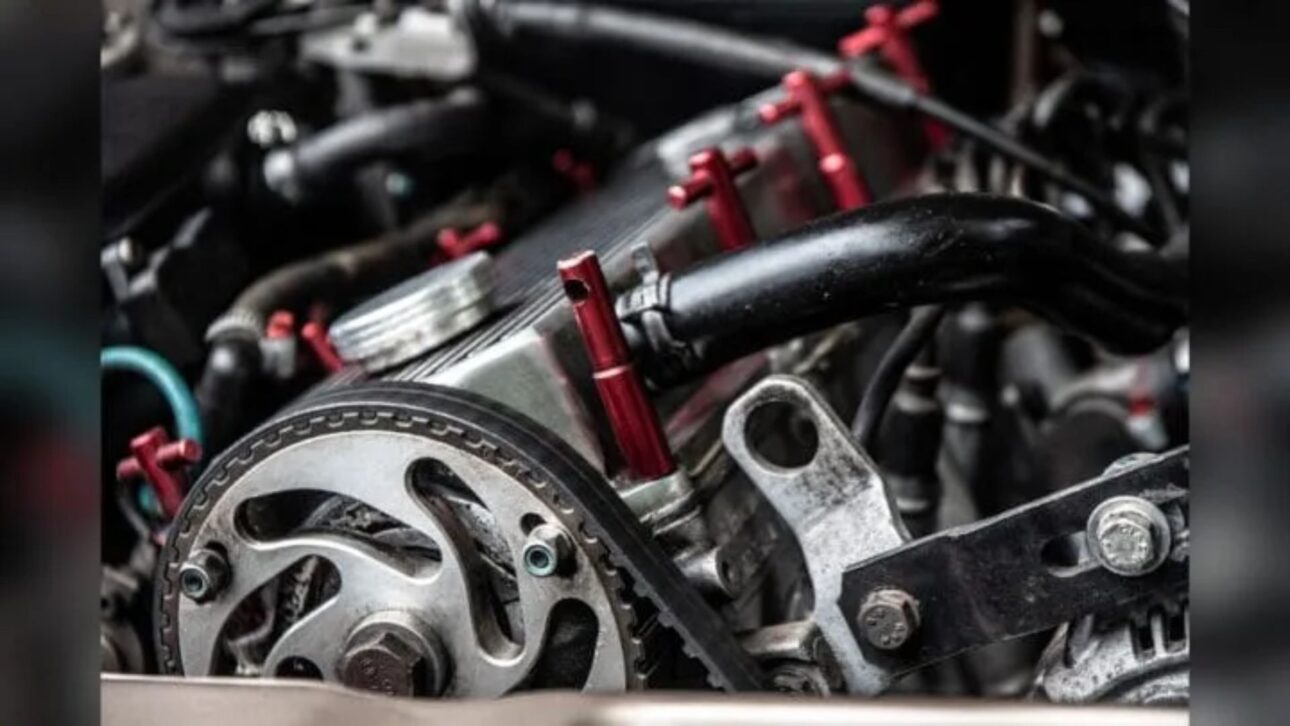
The belt maintains the synchronization of essential parts. It synchronizes fundamental parts of the engine, such as the crankshaft and the camshaft, and when this synchronization is lost, the engine goes out of timing. In some cases, pistons and valves may collide, and the result ranges from the car stalling to severe internal damage, which may require valve replacement, cylinder head reconditioning, and replacement of other parts, depending on the engine.
That’s why preventive maintenance is cheaper. The cost of replacing the belt may be bothersome, but it is usually much less than repairing a damaged engine. In many cases, the replacement also involves the tensioner, pulleys, and, depending on the design, the water pump, so replacing only the belt and leaving old components in the system can lead to rework and new expenses shortly after.
Can you notice before the belt breaks?
Some signs may appear, but they are not guaranteed. Strange noises, difficulty starting, irregular idling, unusual vibration, or engine malfunctions are among the possible warnings. Even so, the belt can fail without giving any clear signal, which is precisely why the main recommendation is not to wait for noise to act.
The safest path is documented prevention. Ideally, check the manual, verify the date of the last replacement, and keep maintenance receipts. In a used car, attention should be even greater, and if the previous owner cannot inform when the belt was replaced or does not have the service receipt, many mechanics recommend treating the replacement as a priority to avoid discovering too late that the part was already expired and risking the engine.
The timing belt can destroy the engine without warning, ages even when the car is stationary, and does not have a single replacement interval, which varies greatly from one model to another. While the Fiat Grand Siena requires replacement every 60,000 km or 48 months, the Chevrolet Onix Plus reaches 240,000 km or 15 years, which shows why the real reference is the manual and whichever comes first, time or mileage, with intervals halved under severe use. In cars with low mileage, many years, or purchased without history, it is worth treating the replacement as a priority because prevention costs much less than recovering a damaged engine.
And you, do you know when your car’s timing belt was last replaced, or do you usually wait to resolve it only when some noise appears? Share your experience and exchange ideas with other readers about preventive maintenance, with respect for different views.