






 5 min of reading
  0 comments


The decision of Brian Chesky, co-founder and CEO of Airbnb, shows how flexible housing has moved beyond a holiday topic and entered the conversation about remote work, seasonal rentals, tourist cities, and new ways of living without always relying on the same address.
The Airbnb billionaire embarked on an experiment announced in 2022: living in homes listed on the platform itself, moving from city to city, and testing the idea of living anywhere. Brian Chesky, co-founder and CEO of Airbnb, stopped being just the head of the company in this test and became a guest of his own service.
Airbnb Newsroom, the company’s institutional news channel, announced the decision on January 18, 2022. The plan started in Atlanta, USA, with stays in hosts’ homes and moves to new cities or villages every few weeks.
The story draws attention because it is not about a lack of home or financial difficulty. The point is different: the owner of one of the most well-known hosting platforms decided to use his own routine to understand flexible housing from the inside.
-
Archaeologists are excavating in Woodstown what may be the largest Viking trading settlement in Ireland, with trenches of 460 meters, workshops, thousands of artifacts, and direct connections to Norway.

-
How much does a gym owner earn? The business may require from R$ 430,000 to R$ 1.87 million to open in Brazil, but real profit depends on loyal students, timely payments, high energy costs, rent, payroll, and strict cost control.

-
Goodbye to granite sinks? Stainless steel model conquers modern kitchens, reduces maintenance costs, facilitates daily cleaning, and becomes the preferred choice in new residential projects.

-
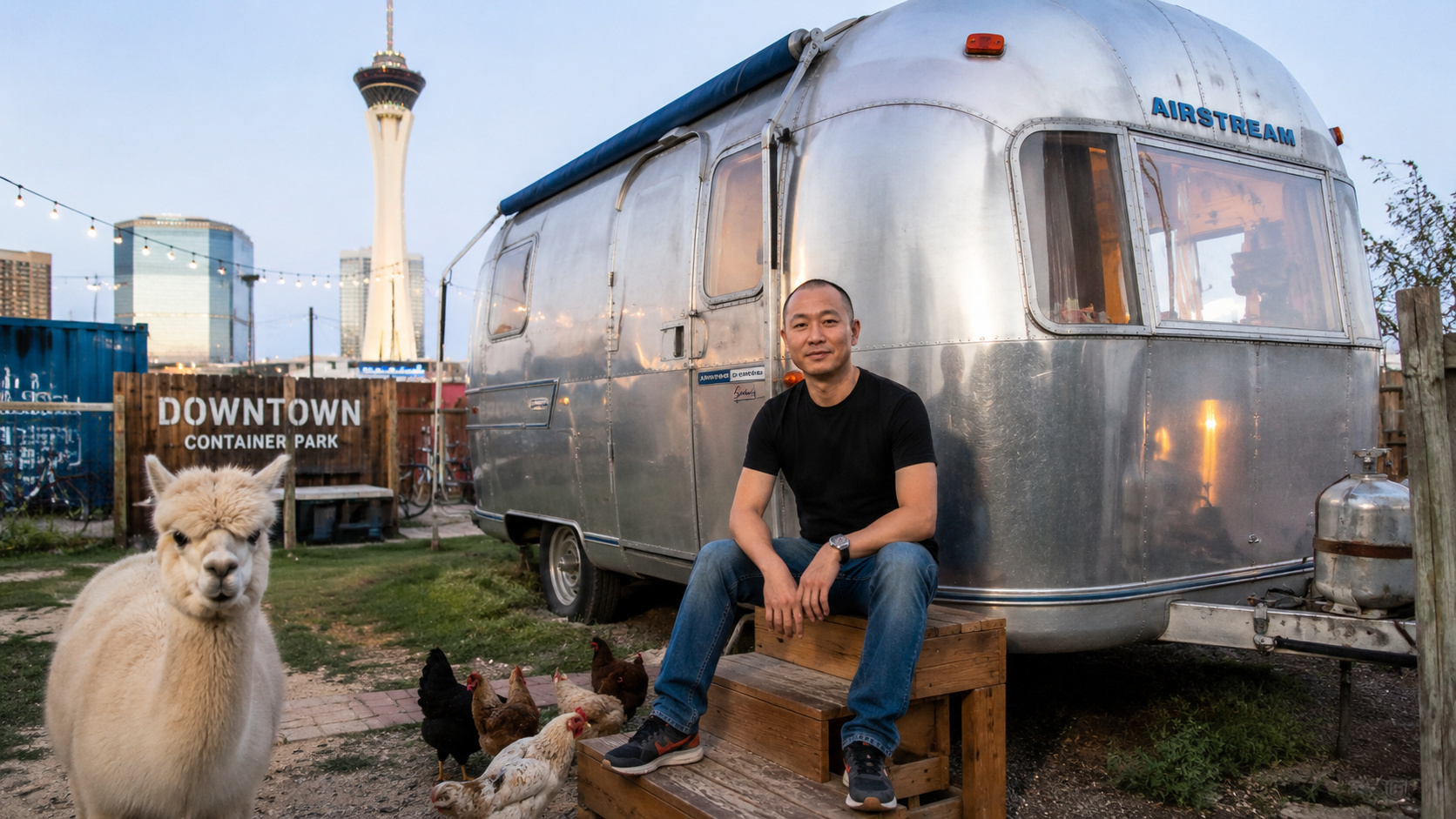
The man who led a famous footwear and clothing retailer, sold the company to Amazon, abandoned the mansion lifestyle, lived in a 22 m² trailer in Las Vegas, surrounded by alpacas, chickens, and an alternative community.


The CEO who became a guest of his own platform
Brian Chesky could test Airbnb by looking at numbers, meetings, and reports. Instead, he announced that he would start living as a guest, using homes from the platform itself to sleep, work, and move between cities.
This choice creates an easily understandable contrast. A billionaire, co-founder of a global hosting company, decided to test the routine that many users know only as a trip.
The difference lies in the usage. It wasn’t just about spending a few days on vacation. The proposal involved several weeks’ stays, remote work, and ordinary life within homes listed by hosts.
Atlanta was the starting point of the test announced in 2022
The beginning of the experience was marked for Atlanta, a city in the United States. From there, Brian Chesky would move to new cities or villages every few weeks.

The announcement also mentioned returns to San Francisco, where Airbnb has a strong connection with the executive’s professional routine. This shows that mobility did not eliminate in-person meetings with colleagues.
This detail is important because it relates to millions of remote workers. A person can work remotely for some periods but still maintain ties with a headquarters, team, or reference city.
Remote work helped transform travel into temporary housing
Remote work changed the relationship between job and address. When a person can work online, the city where they sleep doesn’t always need to be the same where the company is located.
Therefore, the idea of living anywhere gained strength. It doesn’t mean living without rules or commitment, but rather having more freedom to choose where to spend weeks or months.
In Brazil, this resonates with the reality of professionals who work online and spend seasons in beach cities, capitals, tourist regions, or smaller places. Seasonal rental has ceased to be just a vacation choice and has become part of the routine for those who can work remotely.
Airbnb also started to appear as a living option for a few weeks
Airbnb Newsroom, the company’s institutional news channel, reported that one in five nights booked in the third quarter were stays of 28 days or more. The same statement recorded that almost half of the nights booked during the period were stays of at least seven days, up from 44% in 2019.
These data help to understand why Brian Chesky’s decision gained traction. The platform was not just being used for short trips. Some users were already seeking longer stays, resembling a temporary routine.
There was also a record of more than 100,000 guests with stays of 90 days or more in the 12 months up to September. This shows a simple change: many people started treating a rented house via the platform as a base to live for a while, not just as a travel bed.
Flexible housing can impact neighborhoods, rental, and tourism
Brian Chesky’s experience also touches on a sensitive point: the effect of platforms on cities. When many people spend weeks in vacation rentals, the movement can alter the routine of neighborhoods and tourist destinations.
For those who own property, vacation rentals can become a source of income. For local residents, the change can raise questions about price, neighborhood, and availability of houses for regular rent.

Therefore, the story is not just about a famous executive living differently. It highlights a larger discussion about remote work, tourism, housing, and the use of cities after the popularization of the online service.
Digital nomads help explain why the case draws so much attention
The term digital nomad is used for people who work online and change cities more frequently. It doesn’t mean traveling non-stop, but having the possibility to work in different places.
The decision of the Airbnb CEO aligns with this behavior. Those who can work remotely can test a city before living there, spend a season near the beach, or stay close to family for a few weeks.
Even so, mobile life is not all charm. It requires stable internet, planning, controlled costs, adaptation to new homes, and compliance with each place’s rules.
Brian Chesky’s decision in 2022 placed Airbnb at the center of a bigger question: to what extent can a hosting platform also become a temporary way of living.
For you, does constantly changing cities bring real freedom or can it make housing more unstable? Comment and share with those who have thought about it.





Be the first to react!