Portuguese
  Spanish


Understand the details of the donation of the aircraft carrier Giuseppe Garibaldi to Indonesia. Italy approved the transfer to save millions in maintenance costs.
A strategic decision by the Italian Parliament, made on April 28, sealed the future of the aircraft carrier Giuseppe Garibaldi (C 551) away from the Mediterranean waters. The vessel, which for almost forty years was the ultimate symbol of the Italian Navy, will be transferred free of charge to Indonesia by the end of 2026, as reported by Poder Naval.
The measure is not just a diplomatic gesture, but a financial maneuver to save millions of euros in expenses with a unit that has been in reserve since the end of 2024.
The transfer logistics allow the Italian government to strengthen its influence in the Indo-Pacific while divesting an asset whose command systems no longer met modern European digital standards.
-
China Unveils Laser Weapon Capable of Instantly Neutralizing Military Drones, Marking a Significant Advancement in Air Defense Technology

-
U.S. Navy’s Ticonderoga-class Cruiser Becomes a 9,800-Ton Missile Fortress with Advanced Aegis System Capable of Tracking Hundreds of Targets

-
France’s Charles de Gaulle: The Sole Nuclear-Powered Aircraft Carrier Outside the US, Weighing 42,500 Tons and Equipped with Two Atomic Reactors

-
The military spaceplane that almost took the Cold War into orbit: Boeing X-20 Dyna-Soar was designed to re-enter above Mach 20, fly for up to 40 hours, land like a plane, and transform Titan rockets into a gateway to a new era of orbital warfare.

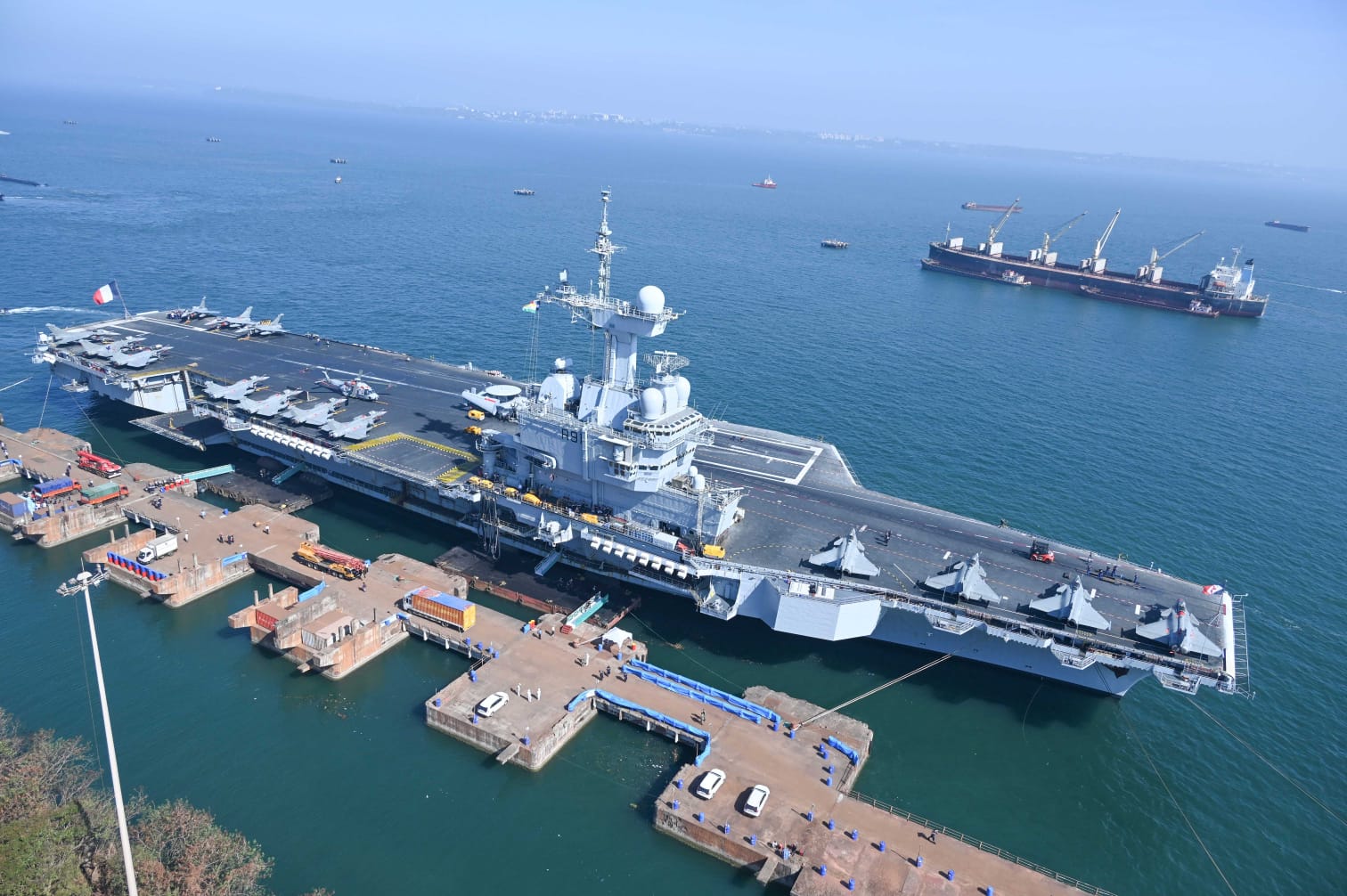

On the other hand, Jakarta receives a 14,150-ton platform ready to be adapted to new air and naval warfare technologies.
The cost of inactivity and the savings for Italy
For the Italian government, the donation of the aircraft carrier Giuseppe Garibaldi solves a recurring budget problem. Keeping the giant docked, even without operational use, generated considerable fixed expenses.

The main financial factors that weighed on the decision were:
- Maintenance in reserve: It cost about €5 million annually to ensure security, energy, and minimal hull surveillance.
- Disassembly alternative: Destroying the ship would cost the public coffers €18.7 million and take about two years.
- Commercial risk: Previous attempts to sell similar hulls did not attract valid buyers.
- Residual value: Although the ship is still worth €54 million in accounting terms, keeping it idle would only bring continuous losses without gain for national defense.
From flagship to Indonesian drone carrier
In the Indonesian Navy, the aircraft carrier Giuseppe Garibaldi will have an innovative and technological function. Although the ship will be delivered without the offensive weapon systems it used in Italy, its flight deck and command infrastructure remain intact.
Jakarta plans to use the vessel as a central platform for:
- Unmanned systems: The focus will be to operate as a base for naval drones, such as the Turkish TB3 and Akıncı models.
- Helicopter operations: To act as a command and control unit in naval missions.
Defense agreements and the legacy of the aircraft carrier Giuseppe Garibaldi
The free transfer of the aircraft carrier Giuseppe Garibaldi serves as the “opener” for a commercial defense package estimated at €1.5 billion between the two countries.

The operation is part of a broader context of industrial defense cooperation between the two countries, which includes the delivery, by Fincantieri, of two Thaon di Revel-class corvettes in a contract valued at US$1.25 billion.
“It’s a reasonable operation. Military and industrial cooperation brings returns, including on the political front and in other economic dossiers,” an Italian analyst told National Interest
In addition to the ship, Italy is negotiating the sale of aircraft, submarines, and Thaon di Revel-class corvettes to Indonesia.
Historically, the Garibaldi was Italy’s first modern aircraft carrier, entering service in 1985 and participating in missions in Libya, Somalia, and Lebanon.
It operated with AV-8B Harrier II fighters, but its structure became obsolete compared to new units, such as the LHD Trieste.
Therefore, by donating the platform, Italy transforms a maintenance cost into a powerful tool for industrial and political cooperation.


Source: Poder Naval