Portuguese
  Spanish


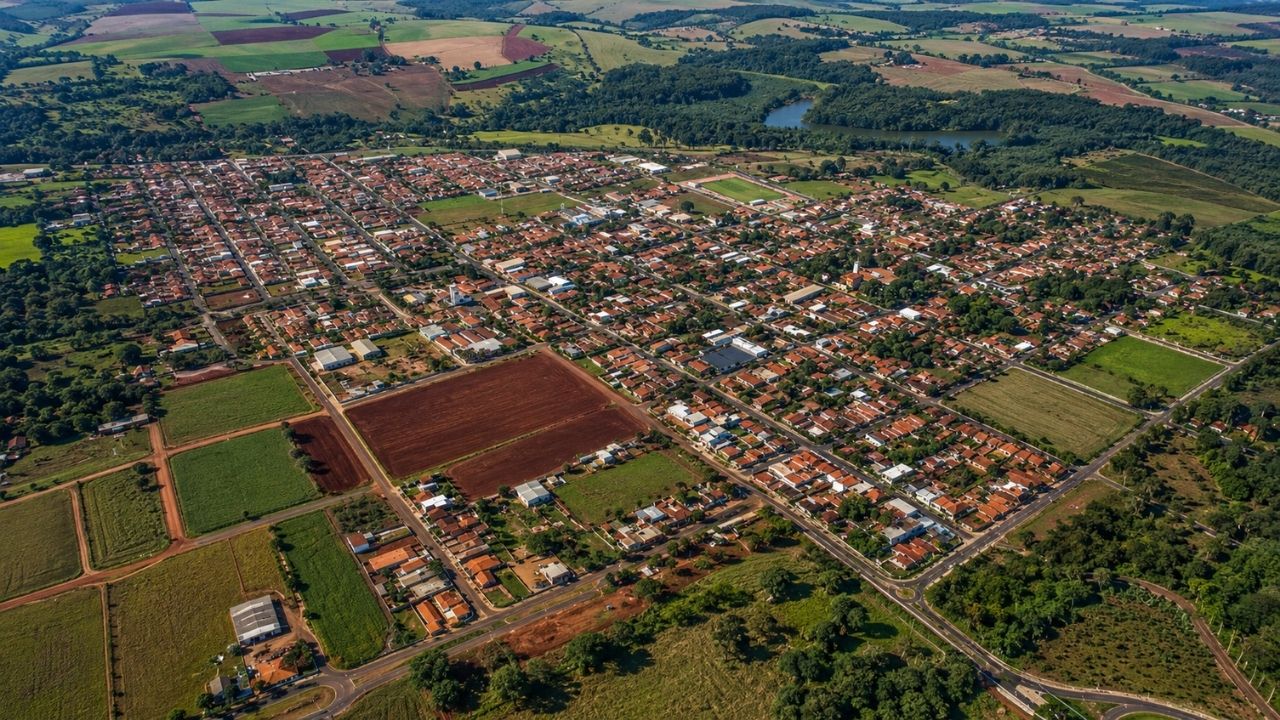


The best city to live in Brazil is Gavião Peixoto, a São Paulo municipality of 4.7 thousand inhabitants that leads the IPS Brazil 2026 for the third consecutive year, driven by quality of life, sanitation, security, education, and revenue associated with Embraer in the interior of São Paulo, according to a national survey released this Wednesday.
The best city to live in Brazil has only 4,702 inhabitants, is located in the interior of São Paulo, and has led the national ranking of quality of life for the third consecutive year. The municipality is Gavião Peixoto, which scored 73.10 points in the IPS Brazil 2026, influenced by Embraer.
The survey evaluated the 5,570 Brazilian municipalities based on 57 indicators from official agencies. According to information from nd+, the result shows a rare combination: a small city, low crime rate, sanitation, public services, and revenue strengthened by the presence of Embraer, established in the municipality since 2001.
Gavião Peixoto leads national ranking for the third consecutive year
Gavião Peixoto returned to the top of the IPS Brazil in 2026, repeating the leadership for the third consecutive year. The municipality, which was once a district of Araraquara, appears as an example of how a small city can achieve good indicators when it manages to transform revenue into basic services.
-
Brazilian Company Known for Brooms Grew for 95 Years to Become One of Latin America’s Largest Brush Manufacturers, with Over 300,000 Sales Points and Revenue of $150 Million

-
World’s Largest Piano Manufacturer Produces Over 100,000 Units Annually in China, Each with 12,000 Parts

-
Meet the HMS Eagle: A Colossal 34,000-Ton Aircraft Carrier of the British Royal Navy with a 247m Length, Capacity for 55 Aircraft, and 2,750 Personnel
-
“Ghost Bird” Thought Extinct for 86 Years Reappears, Disappears Again, but New Recording Sparks Global Effort to Save One of the World’s Most Sought-After Species


The best city to live in Brazil does not stand out for its population size, but for the combination of municipal structure and quality of life. With less than 5 thousand residents, Gavião Peixoto achieved a higher score than larger and more well-known cities.
The data is striking because it breaks a common logic: larger urban centers do not always offer the best social indicators. In the case of the São Paulo municipality, the ranking points to strong performance in areas such as health, sanitation, security, and living conditions.
The score of 73.10 on a scale of 0 to 100 placed the city ahead of other well-evaluated municipalities, including larger urban centers. The leadership reinforces the weight of the São Paulo interior at the top of the survey.
Embraer changed the revenue and economic profile of the municipality

One of the factors that help explain the performance of Gavião Peixoto is the presence of Embraer. The company installed a large unit in the municipality in 2001, creating an industrial base that changed the local revenue and the economic profile of the city.
According to the presented data, the GDP per capita of Gavião Peixoto exceeds R$ 244 thousand per inhabitant per year. This number reflects the economic strength generated by the aviation-related industrial activity, especially by Embraer’s unit in the municipality.
The difference lies in the use of this revenue. The ranking indicates that the city managed to convert part of the economic capacity into improvements perceived by the population, instead of just maintaining a high financial indicator without social reflection.
The industrial presence alone is not enough to explain the leadership. What makes Gavião Peixoto the best city to live in Brazil is the combination of revenue, local management, and performance in indicators that directly affect the daily lives of residents.
IPS Brazil measures quality of life beyond money
IPS Brazil does not only assess wealth. The index seeks to measure whether the population has access to basic conditions, security, opportunities, and public services. Therefore, it differs from rankings based solely on GDP, income, or economic production.
To arrive at the scores, researchers analyze public data from sources such as DataSUS, IBGE, Inep, and MapBiomas. The proposal is to observe whether the city can meet the real needs of the population in essential areas.
This helps explain why the ranking is relevant beyond curiosity. A city can have a strong economy and still present serious problems in health, education, sanitation, or security. IPS tries to cross these dimensions to measure social progress.
In the case of Gavião Peixoto, the performance shows balance. The best city to live in Brazil combines high revenue with solid social indicators, something that does not always happen in municipalities benefited by large enterprises.
Sanitation, security, and health weigh in daily life

Among the factors that place Gavião Peixoto at the top are health, basic sanitation, schools, and security. These elements have a direct impact on the routine of residents, especially in small towns, where the quality of public services is usually felt more immediately.
The source highlights an almost zero crime rate, in addition to attention to essential services. For those living in a small municipality, this set can represent simpler commutes, a greater sense of security, and closer access to public administration.
Quality of life appears less as a luxury and more as the basic functioning of the city. Streets, schools, health care, sanitation, and security form the core of what makes a municipality well-rated in social rankings.
That’s why Gavião Peixoto draws attention. The city leads not only for having an important factory but for showing performance in areas that define whether public money reaches the real life of the population.
Ranking shows the strength of the South and Southeast at the top
The IPS Brazil 2026 also highlights regional inequality. Of the 20 best-rated cities, 18 are in the South and Southeast. The concentration reinforces a known pattern in the country: better social indicators still appear more frequently in these regions.
In addition to Gavião Peixoto, the top includes cities like Jundiaí, Osvaldo Cruz, Pompéia, Curitiba, Nova Lima, Luzerna, Maringá, Ribeirão Preto, Brasília, Araraquara, and Águas de São Pedro.
This map shows that municipal performance does not depend solely on size, but also on regional structure, revenue, management, and access to services. The interior of São Paulo appears strong, but there is also the presence of municipalities from Paraná, Santa Catarina, Rio Grande do Sul, Minas Gerais, and the Federal District.
The leadership of the best city to live in Brazil reinforces this reading. Gavião Peixoto is small but is located in an economically dynamic region and benefits from relevant industrial infrastructure.
North and Northeast concentrate the worst indicators of the survey
The other side of the ranking shows a strong contrast. Of the 20 cities with the lowest scores in well-being and social infrastructure, 19 are in the North and Northeast. The data points to a structural inequality that continues to mark Brazil.
The municipality of Uiramutã, in Roraima, appears in the last national position of IPS Brazil 2026, with 42.44 points. The difference with Gavião Peixoto highlights the gap between municipalities in access to services, living conditions, and opportunities.
The ranking should not be read only as a celebration of the cities at the top. It also serves as a warning about where public policies, investments, and social infrastructure need to advance more urgently.
While the best city to live in Brazil shows the result of a favorable combination between revenue and services, the worst positions indicate regions where basic needs still face deep obstacles.
The 20 best cities show the dominance of São Paulo’s interior


The list of the best places Gavião Peixoto in the lead, followed by Jundiaí, with 71.80, and Osvaldo Cruz, with 71.76. Other São Paulo municipalities such as Pompéia, Gabriel Monteiro, Itupeva, Rafard, Adamantina, Ribeirão Preto, Barra Bonita, Araraquara, and Águas de São Pedro also appear.
Outside São Paulo, the ranking includes names like Curitiba, in Paraná, Nova Lima, in Minas Gerais, Luzerna, in Santa Catarina, Presidente Lucena and Alto Alegre, in Rio Grande do Sul, as well as Brasília, in the Federal District.
The presence of small, medium, and capital cities at the top shows that there is no single model of quality of life. Some municipalities stand out for industrial revenue, others for urban structure, consolidated services, or balance in social indicators.
Even so, the most striking case remains Gavião Peixoto. A city of 4,700 inhabitants surpassing all municipalities in the country for the third consecutive year makes the result especially strong for public debate.
Small city reignites debate about quality of life in Brazil
The result of Gavião Peixoto raises an important question: is quality of life more linked to the size of the city or to how resources are applied? The case suggests that small municipalities can achieve high results when they have revenue, planning, and efficient services.
At the same time, the ranking does not mean that every resident has the same experience or that the city does not face challenges. It shows a snapshot based on indicators, useful for comparing municipalities, but it does not replace the perception of those who live there daily.
The best city to live in Brazil stands out precisely because it brings together contrasts: small population, high-tech industry, strong revenue, and high social indicators. It is an unusual combination in a country marked by deep regional inequalities.
And you, would you trade a big city for a small municipality like Gavião Peixoto, with more safety, sanitation, and quality of life, or do you still prefer the opportunities of large urban centers? Share your opinion.