Portuguese
  Spanish




The comet 3I/ATLAS became the first interstellar object to have its chemical signature analyzed by the James Webb Space Telescope. The measurements, conducted in December 2025, revealed methane, carbon dioxide, and water vapor in unusual proportions for the standards of the Solar System, reinforcing its extrasolar origin.
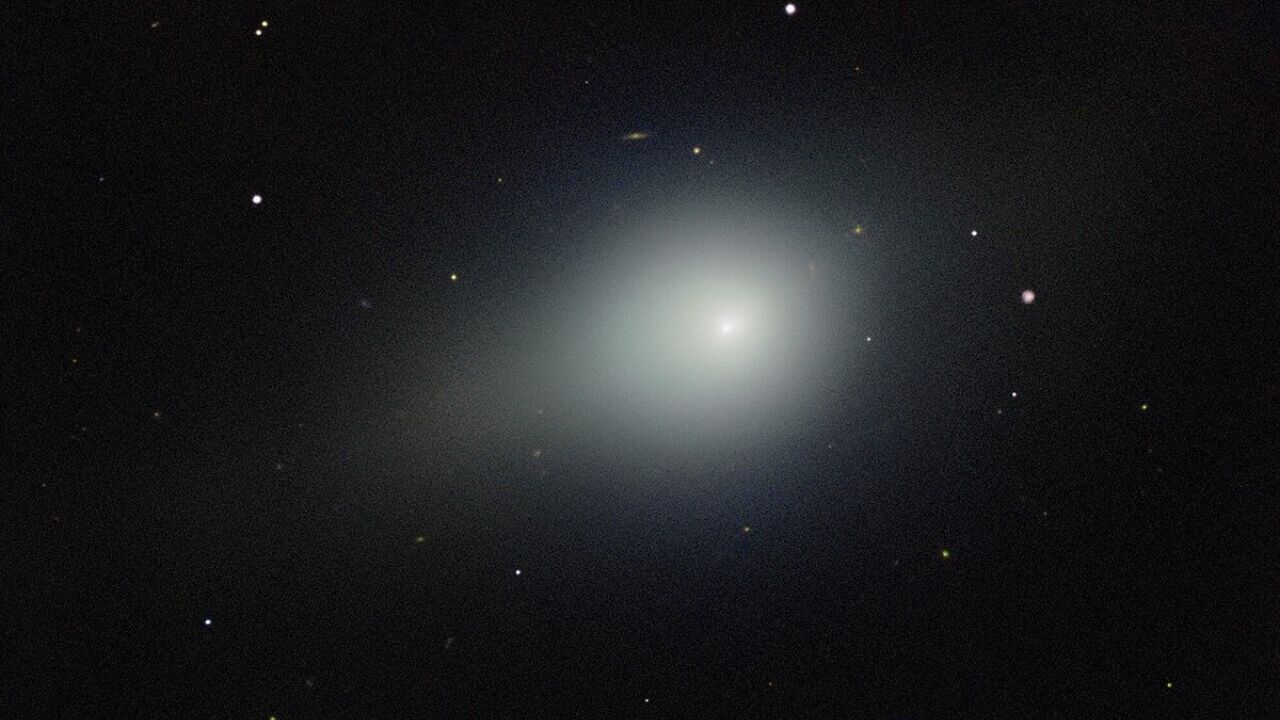
Since the first confirmed interstellar visitor, ‘Oumuamua, traversed the Solar System in 2017, each new object of extrasolar origin approaching Earth is met with a mix of scientific enthusiasm and a growing list of unanswered questions. The comet 3I/ATLAS, the third such object identified, after ‘Oumuamua in 2017 and 2I/Borisov in 2019, was no different. But this time, according to a NASA release based on a study published in the The Astrophysical Journal Letters and reported by Xataka, something unprecedented happened: for the first time, scientists obtained a mid-infrared spectroscopic characterization of an interstellar object, using the MIRI instrument of the James Webb Space Telescope.
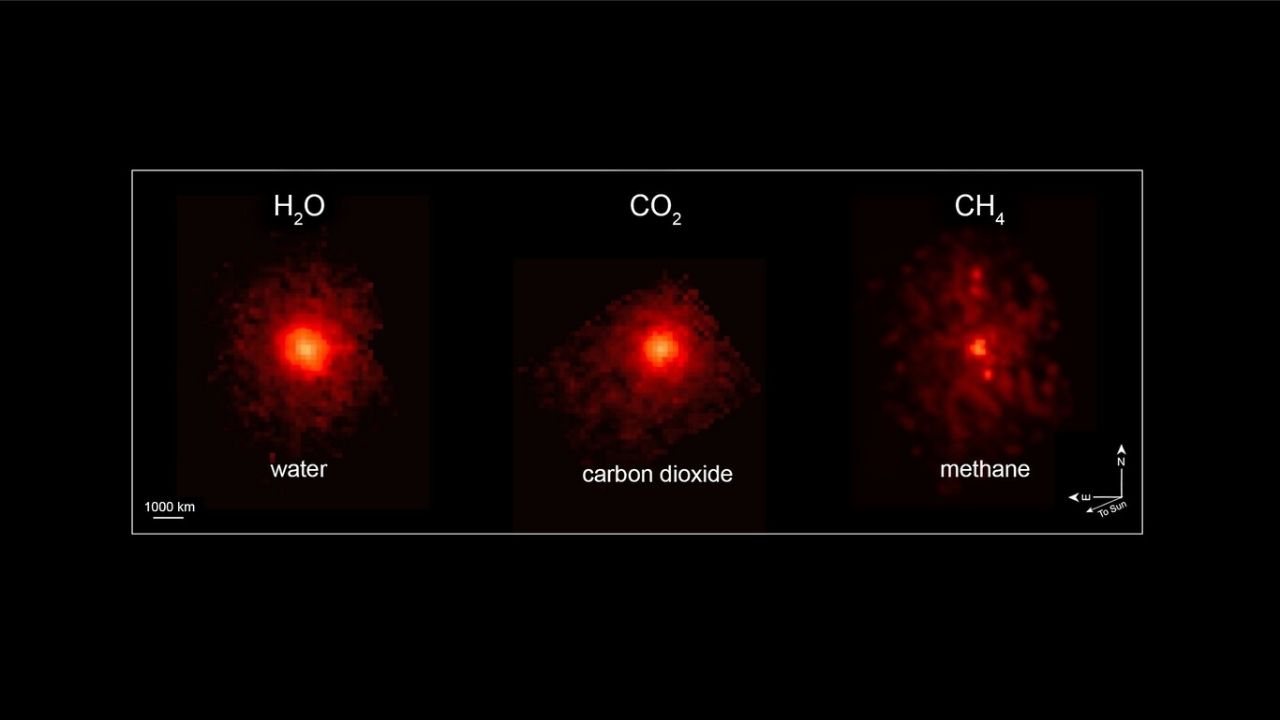
The results, obtained from measurements conducted between December 15 and 16, 2025, and on December 27 of the same year, during the period when the comet began its return journey after rounding the Sun, revealed the presence of water vapor beyond the nucleus, as well as methane and carbon dioxide near the nucleus. The most significant detail is that the ratio between methane and CO2 relative to water is considerably higher than observed in comets that originated within the Solar System itself, reinforcing the hypothesis that 3I/ATLAS came from a planetary system far from ours.
How the James Webb managed to read the chemistry of an interstellar object
A chemical analysis of a moving celestial object is an achievement that depends on specific instrumentation and precise observation conditions. The instrument responsible for the discovery was the MIRI, an acronym for Mid-Infrared Instrument, the mid-infrared spectrograph integrated into the James Webb Space Telescope. The principle behind the technique is that different chemical substances absorb and reflect light at distinct wavelengths, creating a kind of spectral fingerprint that allows the identification of each element or compound present.
-
Chinese Robot Dog Equipped with Wheels Can Cross Rivers, Ice, and -30°C Cold, Aiding in Power Grid Inspections and Disaster Areas

-
Researchers Develop “Electronic Nose” to Detect Spoiled Food and Allergen Traces

-
Massive Leak Puts iPhone 18 Pro in Spotlight Months Before Launch as Hackers Release Over 200,000 Confidential Apple Documents

-
Ghost Particle Travels Billions of Years Through Deep Space, Detected in Antarctic Ice, Leads Scientists to Hidden Galaxy 11 Billion Light-Years Away


In the case of 3I/ATLAS, the observations were conducted at two distinct moments in December 2025, when the comet had already completed its closest approach to the Sun and began to move away from the Solar System. The images produced by MIRI show the comet in three different wavelengths of light, indicating where each gas was located at the time of observations. According to Xataka, water vapor was detected beyond the comet’s nucleus, which the study authors attribute to the melting of ice grains present in the structure of the space rock by the action of solar heat during the close passage to the Sun.
The hidden methane and the fundamental role of the Sun in revealing it
Among all the discoveries made by the James Webb analysis, the identification of methane in 3I/ATLAS carries the greatest scientific weight. This is the first time methane has been identified in an interstellar visitor, and the study authors have an explanation for why it had not been detected before: the gas remained confined deep within the comet’s structure, trapped under layers of ice.
It was the Sun’s heat, melting part of this ice during 3I/ATLAS’s passage through the inner regions of the Solar System, that released the methane to the surface and made it detectable. This discovery has relevant implications for the interpretation of future observations of interstellar objects: the absence of certain gases in previous detections may not mean they were not present, but rather that the lighting or heating conditions were not sufficient to make them emerge. The Sun, in this case, inadvertently functioned as a chemical analysis instrument.
Why chemical proportions are so revealing
Detecting methane, carbon dioxide, and water vapor in a comet is not, in itself, unusual. Comets in the Solar System also carry these compounds. What makes 3I/ATLAS different, according to information published by Xataka, is the ratio of these gases in relation to water, which is much higher than that observed in comets of solar origin. This chemical discrepancy is one of the most concrete indicators that the visitor formed under environmental conditions distinct from those prevailing around the Sun.
The composition of a comet largely reflects the environmental conditions in which it formed billions of years ago. Different temperatures, different densities, and different abundances of chemical elements result in distinct proportions of volatile compounds. By finding anomalous proportions of methane and CO2 in 3I/ATLAS, scientists are indirectly obtaining information about the distant stellar system from which this object came, something that would be impossible to do by any other method currently available.
The JUICE probe and the data that are still being analyzed
The James Webb was not the only scientific instrument that took advantage of 3I/ATLAS’s passage to collect data. The JUICE probe, a mission by the European Space Agency originally designed to study Jupiter’s icy moons, was in a favorable position and was used to observe the comet in November 2025, even before its closest approach to the Sun. According to ESA itself, five scientific instruments of the mission were activated to record images, spectra, and measurements of the object’s behavior. The agency emphasizes, however, that part of these results is still preliminary and continues to be analyzed by the responsible teams.
The data recorded by JUICE were transmitted to Earth in February 2026, and since then have been processed. This means that the study published in The Astrophysical Journal Letters, with the results from James Webb, may be just the first in a series of scientific works on 3I/ATLAS. Although the comet has already left the Solar System and is no longer observable by current instruments, the collection of data gathered during its passage remains available for analysis, and it is likely that new discoveries about this interstellar visitor will continue to emerge in the coming months, as different teams process the information obtained by different instruments.
A comet that came from another stellar system, passed by the Sun, released methane hidden for billions of years, and still left us a chemical enigma to decipher, all in a matter of months.