






 Portuguese
  Spanish
  5 min of reading
  0 comments


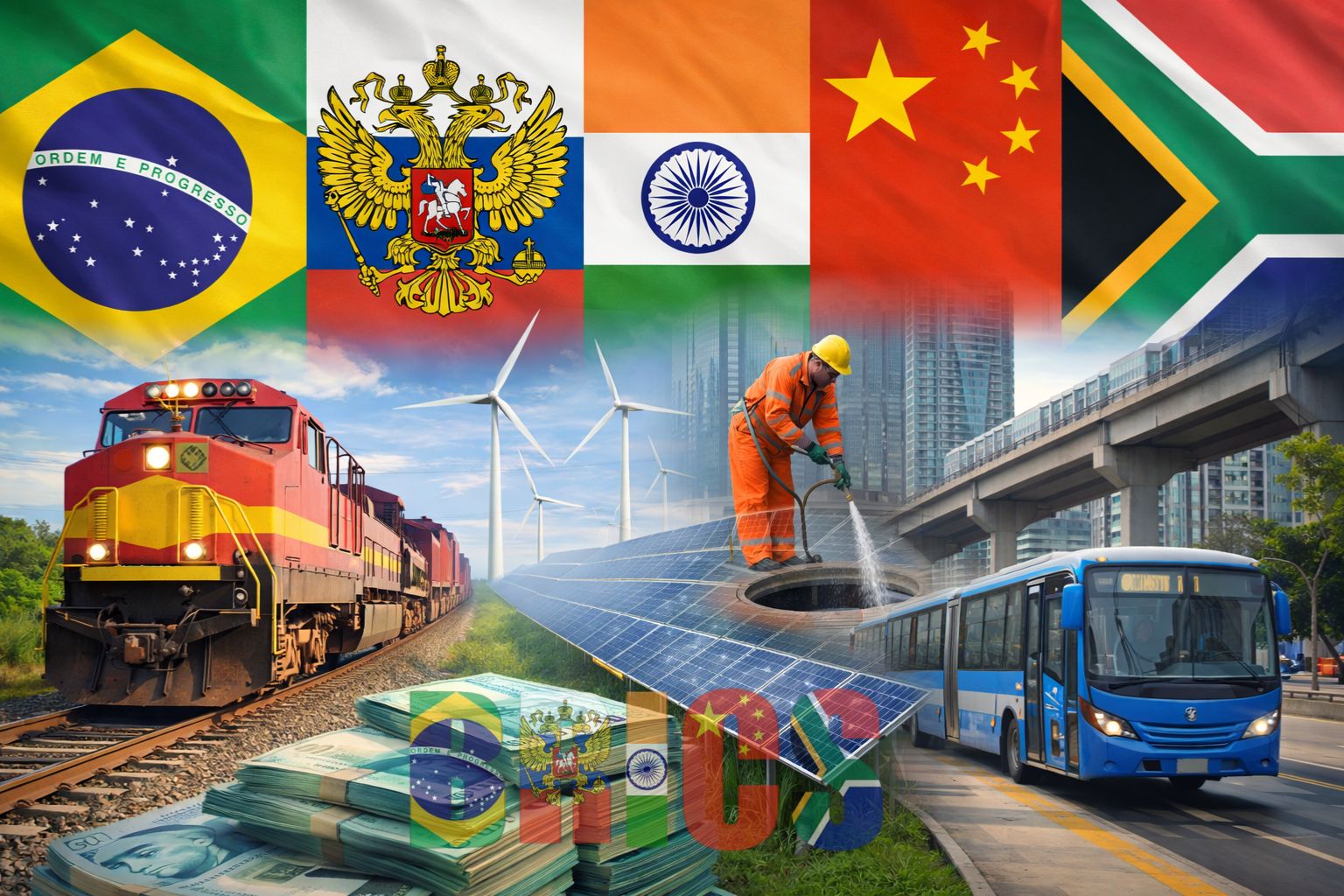
The New Development Bank (NDB), the BRICS bank chaired by Dilma Rousseff, raised US$ 500 million (R$ 2.5 billion) for PAC projects in the North, Northeast, and Central-West regions of Brazil. With this new line, the total invested by the bank in Brazil since 2015 reaches US$ 7 billion in railways, renewable energy, sanitation, and urban mobility.
The BRICS bank has just significantly increased its financial commitment to Brazil. The New Development Bank (NDB) secured a new round of US$ 500 million, equivalent to about R$ 2.5 billion, to finance projects from the Ministry of Integration and Regional Development (MIDR) in the North, Northeast, and Central-West regions of Brazil. With this investment, the total financed by the BRICS bank for Brazil since its creation in 2015 reaches US$ 7 billion, distributed across renewable energy, urban mobility, sanitation, and logistics. The funds are to be applied over four years and are part of the new Growth Acceleration Program (PAC).
The importance of these figures becomes clearer when considering the chronic investment deficit in infrastructure that Brazil faces. Studies from the Institute of Applied Economic Research (Ipea) indicate that Brazil invests less than 2% of GDP in infrastructure per year, a level below what is necessary to sustain long-term economic growth. The new PAC forecasts total investments exceeding R$ 1.7 trillion by 2026, combining public and private resources, and the BRICS bank positions itself as one of the most relevant external sources to enable this goal within Brazil.
How the BRICS bank’s money reaches projects in Brazil
According to information from Revista Fórum, the new credit line of R$ 2.5 billion follows a specific logic of financial intermediation. The BRICS bank’s resources are transferred to the National Treasury of Brazil and then distributed to development funds that operate through public banks, including Banco do Brasil, Banco do Nordeste, Banco da Amazônia, Caixa Econômica Federal, and BNDES. These banks are responsible for selecting and financing individual projects that meet the program’s criteria.
-
Brazilian Joins Homeownership Consortium, Faces Decade of Dual Payments Totaling $141,000, Surpassing Traditional Mortgage

-
Land Rover to Halt Production in July, Putting 371 Jobs at Risk, as Chinese Automaker Negotiates to Convert Factory to 100,000 Vehicles Annually by 2027

-
Mexican Pest Threatens U.S. Cattle Herds at Historic Lows, Potentially Boosting Brazilian Beef Exports as Burger Prices Soar

-
Brazilian Freight Bill Progresses in Congress with $5,000 Minimum Wage, 70% Advance Payment, and Fines Up to $1 Million, as Agriculture and Industry Warn of Rising Costs and Legal Uncertainty


This intermediation structure allows the BRICS bank’s money to reach projects spread throughout Brazil without the NDB needing to manage each contract individually. The government’s expectation is that the US$ 500 million will be released this year, after approval in the National Congress, with an estimated disbursement period of 60 to 90 days after the contract is signed. For regions like the North and Northeast, which historically receive less private investment, this source of financing is particularly relevant.
The megaprojects in Brazil that the BRICS bank helps to finance

Among the investments financed with resources that go through the BRICS bank is the Transnordestina Railway, considered one of the largest logistics projects underway in Brazil. The railway is expected to connect the Port of Pecém in Ceará to the Port of Suape in Pernambuco, with about 1,753 km planned, creating a transport corridor that can transform the competitiveness of the agribusiness and industry in the Northeast by reducing export logistics costs.
Another monumental project is the Salvador-Itaparica bridge, a R$ 11 billion venture for a 12.4 km stretch over the Bay of All Saints. The project, a result of a public-private partnership with a Chinese consortium, is expected to create over 100,000 jobs during the 35-year concession and should benefit 24 municipalities in Bahia with a 40% reduction in crossing time. For Brazil, projects of this magnitude are only viable when multiple sources of financing converge, and the BRICS bank is one of them.
What the BRICS bank has already financed in Brazil for seven billion dollars

The US$ 7 billion that the BRICS bank has already invested in Brazil since 2015 is distributed across four major areas. Renewable energy was one of the first sectors to receive funding, financing solar and wind projects that helped Brazil expand its clean energy matrix at a time when the country was seeking to diversify its generation sources to reduce dependence on hydropower vulnerable to droughts.
Urban mobility and sanitation complete the portfolio. The BRICS bank financed public transport projects, bus corridors, and water and sewage treatment systems in Brazilian cities that faced chronic deficits in basic infrastructure. Logistics, with railway and port projects, is the sector that consumes the most significant volumes and has the potential for broader impact on Brazil’s economic competitiveness in the international market. Every dollar invested in logistics reduces export costs that weigh on agricultural and industrial production.
What is the BRICS bank and why does it invest so much in Brazil
The New Development Bank was created in 2015 by the five original BRICS members with the aim of financing infrastructure and sustainable development in emerging economies. The NDB has an authorized capital of US$ 100 billion and operates with a philosophy of lesser dependence on traditional institutions dominated by developed countries, such as the World Bank and the IMF, offering loan conditions that its members consider more favorable and less conditioned to external agendas.
Under the presidency of Dilma Rousseff, the BRICS bank intensified its operations in Brazil and expanded partnerships beyond the five founding members. Bangladesh and Egypt are among the new members that have broadened the NDB’s base, and the expectation is that the bank will continue to grow as more emerging countries seek financing alternatives outside the Washington-Brussels axis. For Brazil, being a founding member and eventual host of NDB projects represents privileged access to a source of capital that is growing in global relevance.
What the new R$ 2.5 billion means for Brazil’s development
The R$ 2.5 billion recently raised by the BRICS bank is specifically directed to the North, Northeast, and Midwest regions, which concentrate the largest infrastructure deficits in Brazil. The focus on these regions is strategic: they are areas with enormous economic potential in agribusiness, mining, and renewable energy, but fall short of what is possible due to a lack of roads, railways, ports, and basic services such as sanitation and digital connectivity.
The new PAC, which is the vehicle through which these resources reach their final destination, foresees investments in transportation, energy, digital systems, and health and education, a broad scope that allows the BRICS bank’s money to be applied where the social and economic impact is most urgent. For Brazil, each round of NDB financing is an opportunity to reduce regional inequalities that have persisted for decades and that no previous economic growth cycle has managed to eliminate.
The BRICS bank has released an additional R$ 2.5 billion for Brazil and has already invested US$ 7 billion in the country since 2015. Do you think these resources are reaching where they are most needed? Is the BRICS bank good for Brazil? Leave your opinion in the comments.





Be the first to react!