






 Portuguese
  Spanish



On June 17, 2026, China published a document on global governance in defense of the UN and the Global South. The text criticizes unilateralism and protectionism, but does not name the United States, proposing to reform the international system without destroying it.
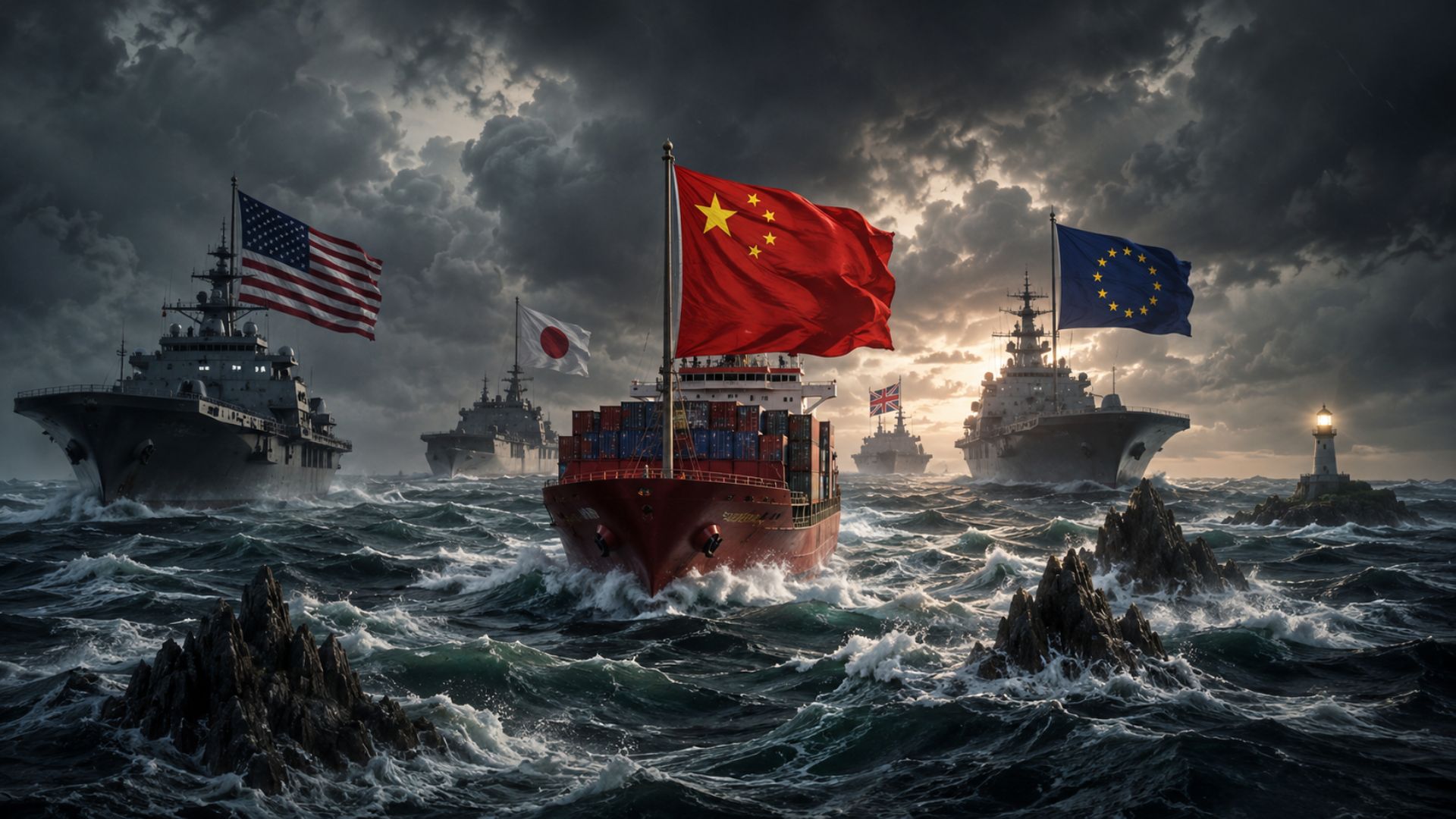
China released on Wednesday, June 17, 2026, a document that sounds like a manifesto on the world’s direction. Titled “Building a Fairer and More Reasonable Global Governance System,” the text was published by the State Council Information Office and presents Beijing’s diagnosis of the international situation, with direct jabs at protectionism and the so-called “double standards” of Western powers. Right at the beginning, the tone is dramatic: according to the manifesto, the vessel of human civilization has entered dangerous waters, full of reefs and storms.
The document advocates for the revitalization of multilateralism and the reform of the United Nations, but avoids an obvious target. Despite the criticisms of economic barriers and the conduct of major powers, the text does not mention the United States by name at any point. The central proposal is to reform the international system, not destroy it, giving more voice to the so-called Global South. The information was released by g1, based on the content officially published by the Chinese government.
A gloomy diagnosis of the world
For China, the current scenario is critical and requires immediate changes, with the world needing to revitalize multilateralism, safeguard international rules, and enhance governance effectiveness. The language is filled with strong imagery, like civilization navigating amid reefs and storms.
-
At 14 years old, she worked in a factory in Hong Kong, studied economics abroad, and then entered the Chinese real estate market, which helped change the landscape of Beijing.

-
While NATO secured more than $10 billion in missiles and space surveillance at a single forum, Brazil still spends 1.1% of its GDP on defense and is stalling its own anti-aircraft system.

-
Corn ethanol attracts R$ 23 billion in 21 new plants and prepares for a nearly 50% jump in Brazilian production by 2027, even with high interest rates.
-
A newly opened terminal in the middle of the Amazon has begun transporting soy and corn through Amapá, eyeing the queue of ships that is congesting the ports in the South.


The numbers used to support this diagnosis are impressive. The text states that, in 2025, the number of armed conflicts reached the highest record since the end of World War II, with more than 50 countries directly involved. In light of the expansion of military spending and what it calls the “resurgence of the scum of militarism,” the manifesto warns of the risks of nuclear proliferation and the so-called “nuclear sharing” at a time of international security fragility.
The defense of the UN as a central piece
At the heart of the proposals is China’s support for the central role of the United Nations. The document reinforces that the international system plays an irreplaceable role, even if the current model presents points of mismatch and incompatibility. Institutional paralysis is attributed to the conduct of certain major powers, accused of abandoning treaties, cutting funds, and obstructing decisions in bodies such as the Security Council and the World Trade Organization.
Despite the criticisms, Beijing rejects a total rupture with the current system. The text advocates preserving the UN-centered model instead of starting from scratch with another system. The Chinese argument is that current injustices do not stem from the obsolescence of the UN Charter, but from the lack of effective implementation, and that international law needs to be applied equally, not adopted when convenient and discarded when not.
The strengthening of the Global South
Another pillar of the manifesto is China’s declared commitment to developing countries. Beijing argues that the monopolization of international affairs by a minority of countries has become unsustainable and that long-standing historical injustices need to be definitively corrected. The Global South appears, in this context, as a force capable of renewing global governance.
This protagonism is illustrated with concrete examples. The document highlights the historical expansion of BRICS, the role of the Shanghai Cooperation Organization, and the actions of the G20 as signs that the power axis is shifting. To guide this restructuring, the text proposes five central concepts: sovereign equality, respect for international rule of law, practice of multilateralism, people-centeredness, and focus on action, always with an emphasis on equal treatment among nations.
Criticisms of protectionism and unilateralism
It is in the denunciation of protectionism that the document gains its sharpest tones. China directs criticism at isolationist stances and trade barriers, condemning the arbitrary imposition of tariffs and accusing certain countries of generalizing the concept of national security to suppress the technological development of other nations. Unilateralism and hegemonism are classified as sources of chaos that trample basic international norms.
The language, once again, does not spare adjectives. The text accuses isolated countries of using size to intimidate smaller ones and strength to oppress the weak, practicing the principle of “my country first” and adopting double standards. The manifesto also points out that private interests have blocked reforms of quotas and voting rights in the International Monetary Fund and the World Bank, causing harmful delays to the collective of nations.
The new frontiers of cooperation
Besides focusing on the present, China’s document looks at areas that still lack clear rules. The text introduces the urgency of regulating new frontiers of human cooperation, citing the deep sea, polar regions, outer space, and the cyber environment. The defense is that these sectors should be guided by principles of peace and sovereignty.
The logic behind this proposal is to transform potential fields of dispute into spaces of understanding. For Beijing, these domains should become fields of cooperation and not of battle, avoiding that rivalry between powers contaminates territories still little explored. It is an attempt to anticipate future conflicts before they settle in these new areas.
A final message of shared destiny
The conclusion of the manifesto returns to the nautical metaphor that opens the text. According to the document, countries are not sailing separately in more than 190 small boats, but share a large ship with a shared destiny. The image reinforces the central thesis that no nation can isolate itself from global problems.
The conclusion is categorical about the path to follow. For China, multilateralism is not a choice, but the only viable path for nations to face the challenges of the century. It is with this statement that Beijing closes a document that mixes a somber diagnosis, defense of existing institutions, and sharp criticism of powers that, according to the text, place their own interests above international cooperation.
And you, do you agree with China that multilateralism is the only possible path, or do you think each country should prioritize its own interests? Leave your view on this manifesto and the future of global governance in the comments.








