






 Portuguese
  Spanish
  4 min of reading
  0 comments


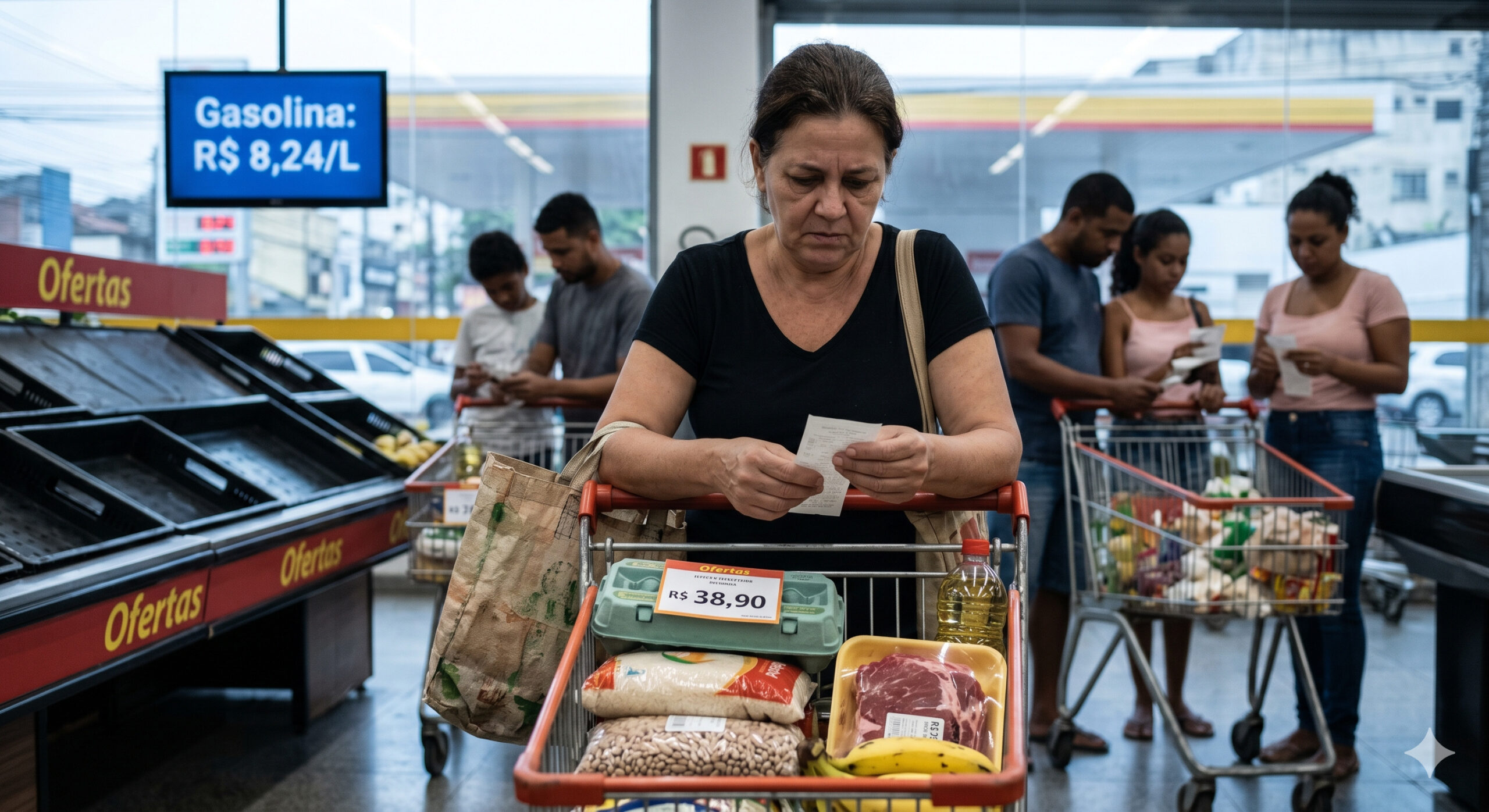
Inflation rises again in Brazil in 2026, fuels and food pressure the cost of living for families.
In the month of April 2026, data released by the Brazilian Institute of Geography and Statistics (IBGE) showed that the official inflation measured by the IPCA accelerated again in the country, directly reflecting on the cost of living for the population. According to the agency, the index rose 0.88% in March, above the 0.70% in February, bringing the accumulated total over 12 months to 4.14%, compared to 3.81% in the immediately preceding period. The information was also reported by Reuters, which highlighted the pressure from transportation, especially from gasoline, on the overall price index. The IBGE itself showed that transportation and food and beverages together accounted for 76% of the IPCA in March, reinforcing the weight of fuels and food in family budgets.
The result highlights the pressure of prices on the daily consumption of Brazilians, especially on essential items with immediate impact. In a scenario where fuels and food remain among the most sensitive components of inflation, the rise in March reignites attention on the purchasing power of families.
Gasoline drives inflation up and affects the entire consumption chain
One of the main contributors to the acceleration of inflation was the increase in fuel prices, especially gasoline, which recorded a rise of 4.59% just in March.
-
Giant of supermarkets in Brazil, with 282 stores in 9 states, opens a new pharmaceutical unit after closing 28 operations and laying off 6,600 employees; strategy approved by Cade reveals a billion-dollar bet on a market that continues to grow.

-
Free driver’s license for Brazilians: Detran starts a new phase for 3,000 selected individuals, but a mandatory requirement and a deadline that ends in a few days may cause candidates to lose the benefit.
-
Illegal betting money may change destination: government announces freezing of funds, contacts banks, and explains how the amounts could finance the fight against organized crime after a billion-dollar operation in three states.

-
Two sisters, aged 12 and 13, collected cans for a year, set up a lemonade stand without any help, and turned $236 into a business that has already grossed $65,000.




This type of increase has a cascading effect on the economy. The rising cost of fuel not only impacts those who fill up their cars but also raises transportation costs for goods, logistics, and services.
In practice, this means that the increase in gasoline ends up being passed on to various sectors, contributing to the rising costs of products and services in daily life.
Food continues to pressure family budgets
Another relevant factor for the increase in the cost of living is the behavior of food prices. Even with expectations of relief throughout the year due to a record harvest, prices still show pressure in the short term.

Food has a significant weight in the budgets of Brazilian families, especially in the lower income brackets. Any variation in this group directly impacts consumption and the ability to save.
This scenario reinforces the perception that, even with inflation within levels considered controlled from a macroeconomic perspective, the impact on the daily lives of the population remains high.
Service inflation shows resilience and maintains persistent pressure
In addition to fuels and food, the service sector also contributes to the maintenance of inflation at high levels.
Services tend to respond more slowly to monetary policies and are linked to the labor market and income. This makes inflation in this segment more persistent.
Even with signs of economic slowdown, service prices remain pressured, indicating that inflation control still faces structural challenges.
High interest rates continue to be used to contain inflation
To contain inflation, Brazil maintains a restrictive monetary policy, with high interest rates. This strategy aims to reduce consumption and control price increases, but it also brings side effects, such as increased credit costs and economic slowdown.
For the consumer, this means:
- more expensive credit
- greater difficulty in financing
- impact on the consumption of durable goods
This balance between inflation control and economic growth is one of the main challenges of economic policy in 2026.
Labor market and income directly influence the cost of living
The behavior of the labor market also has a direct influence on the cost of living. Although Brazil continues to generate formal jobs, the pace of job creation has slowed compared to the previous year. This can affect the disposable income of families and limit consumption.
With slower income growth, the impact of inflation becomes even more noticeable, as purchasing power decreases.
Despite the current pressure, there are factors that may contribute to a reduction in the cost of living throughout 2026. The forecast of a record grain harvest in the country may help alleviate food prices in the coming months, reducing some of the inflationary pressure.
However, this effect tends to be gradual and depends on factors such as weather, logistics, and international market dynamics.
Cost of living remains the main concern for Brazilians in 2026
Even with relatively controlled macroeconomic indicators, the cost of living continues to be one of the main concerns of the population.
The increase in prices for essential items, such as fuels and food, has a direct impact on daily life and influences consumption decisions, indebtedness, and financial planning.
The perception that “everything is more expensive” often reflects the concentration of inflation in frequently consumed items.
What to expect from the cost of living in the coming months
The trend for the coming months will depend on various factors, including:
- fuel behavior
- evolution of the agricultural harvest
- monetary policy
- international scenario
The balance between these elements will be crucial in determining whether the cost of living will remain pressured or start to show more consistent signs of relief.





Be the first to react!