Portuguese
  Spanish


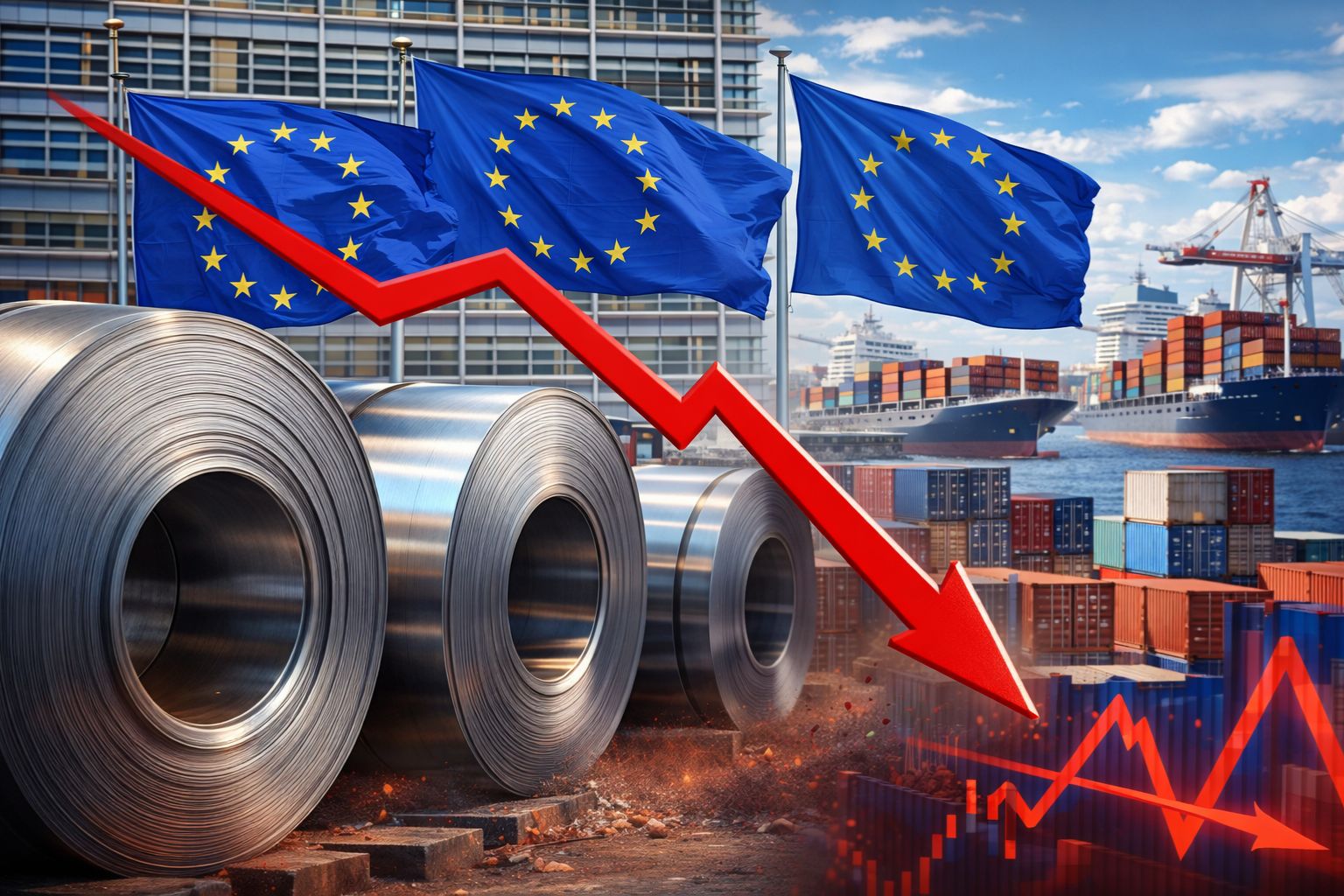

The European Union reached an agreement to increase tariffs on imported steel from 25% to 50% and reduce duty-free imports by 47%, limiting them to 18.3 million tons per year. The measure aims to protect an industry that has lost 100 thousand jobs since 2008 and operates at only 65% of capacity.
The tariffs on imported steel by the European Union will double. The bloc reached a preliminary agreement this Monday (13) to raise the tariffs applied to steel shipments that exceed the allowed quotas from 25% to 50%, while also nearly halving the volume of duty-free imports. Duty-free imports will be limited to 18.3 million metric tons per year, a 47% reduction compared to 2024, according to the agreement reached between representatives of the European Parliament and the Council of the European Union.
The decision to increase tariffs is a direct response to the crisis facing the European steel industry. The European Commission reported that the sector has lost about 100 thousand jobs since 2008, and steel producers in the bloc are currently operating at only 65% of total capacity, pressured by the influx of cheap imports and the 50% tariffs imposed by the United States on European steel shipments. Without the extension and tightening of restrictions, European production would continue to decline, according to the Commission.
Why the European Union decided to double tariffs on steel
According to the G1 portal, the current 25% tariffs on imported steel were created during the first term of President Donald Trump, when the United States imposed trade restrictions that forced other countries to seek alternative markets for their excess steel. Europe became the preferred destination for this diverted steel, and the 25% safeguards that the bloc implemented in response were set to expire on June 30. The new agreement not only extends the protections but doubles them, raising tariffs to 50%.
-
Has the charge for sitting together ended? Anac confirms that minors under 16 have the right to a seat next to their guardians without an extra fee, and airlines may be penalized for failing to comply with the new rule.

-
After nearly two decades in operation, the Grupo Dass shoe factory ends production, confirms 150 layoffs, and shows how the drop in orders changed everything.

-
Pizza Day highlights a curious contrast in Brazil: while 13 new pizzerias open every day, the price of mozzarella skyrockets, and the country’s most beloved dish weighs increasingly on family budgets.
-
It’s official: Petrobras takes 75% of block 3 in São Tomé and Príncipe and debuts as an offshore operator outside South America.


The European Commission’s argument is that the previous tariffs were not sufficient to contain the flow of cheap steel that depresses European prices and pushes the bloc’s steel mills into a downward spiral of low utilization. With the industry operating at only 65% of capacity, the goal of the new tariffs is to raise this rate to 80%, a level considered sustainable to maintain jobs and investments in the sector. The main sources of steel imports to the European Union in 2025 were Turkey, South Korea, Indonesia, China, India, Ukraine, and Taiwan.
What changes in practice with the new 50% tariffs
The most significant change is the combination of higher tariffs and lower quotas. Tariff-free imports drop from about 34.5 million tons in 2024 to 18.3 million tons per year, a reduction of 47% that drastically narrows the space for foreign steel in the European market. Any ton that exceeds this quota will be taxed at 50%, double what was charged before.
The new rules also include mechanisms to combat evasion. The measures will now consider the location where the steel was originally melted and shaped, not just the country from which it is exported, to prevent producers from countries with higher tariffs from rerouting their steel through third parties. Additionally, tariffs will be regularly reviewed to ensure they remain effective in light of changes in the global market. These anti-circumvention measures are a response to practices that have been undermining the effectiveness of previous safeguards.
The commitment to gradually eliminate Russian steel and the impact of tariffs
Another relevant point of the agreement is the commitment to progressively eliminate imports of steel from Russia, possibly by September 2028. About 3.7 million tons of steel plates came from Russia to the European Union last year, a volume that the new rules aim to reduce to zero as part of economic sanctions against Moscow. The elimination of Russian steel will create additional space in the European market that, in theory, will be filled by local producers.
For steel exporters relying on the European market, the new tariffs represent a significant barrier. Countries like Turkey and South Korea, which led steel exports to the European Union in 2025, will have to pay 50% on any volume that exceeds the reduced quotas, which could make their products commercially unviable in many segments. China and India, which already face restrictions in other markets, will also be affected by the reduction in quotas and the increase in tariffs.
How tariffs fit into the global trade war over steel
The new European tariffs do not exist in a vacuum. They are part of a global protectionist escalation that began with the 25% tariffs imposed by Trump during his first term and intensified with the 50% that the United States currently charges on some European steel shipments. The result is a fragmented global market where each economic bloc erects barriers to protect its industry while excess steel seeks any market that is still open.
For the European steel industry, the tariffs are a lifeline. The 100,000 jobs lost since 2008 represent entire communities that depended on steel mills for their economic survival, and operating at 65% capacity means that existing factories are producing much less than they could. If the new tariffs can raise utilization to 80%, the effects will ripple through supply chains, carriers, and services that revolve around steel production.
What still needs to happen for the tariffs to take effect
The agreement on Monday is preliminary. The European Parliament and the Council of the European Union still need to vote on the formal approval of the measures for the new tariffs to take effect before the current safeguards expire on June 30. Considering that both parties have already agreed on the terms, approval is expected, but the European legislative process may include last-minute adjustments that alter details of the quotas or review mechanisms.
For the global steel market, the message is clear: Europe does not intend to be the dumping ground for the surplus that other markets do not absorb. The 50% tariffs and the 47% reduction in quotas represent the most aggressive trade protection that the European Union has ever implemented in the steel sector, and the signal sent to exporters around the world is that access to the European market has become significantly more expensive and restricted.
The European Union will double the tariffs on imported steel to 50% and cut nearly in half the allowed imports. Do you think protectionism is the right way to save the European industry? How could this affect Brazil? Leave your opinion in the comments.