








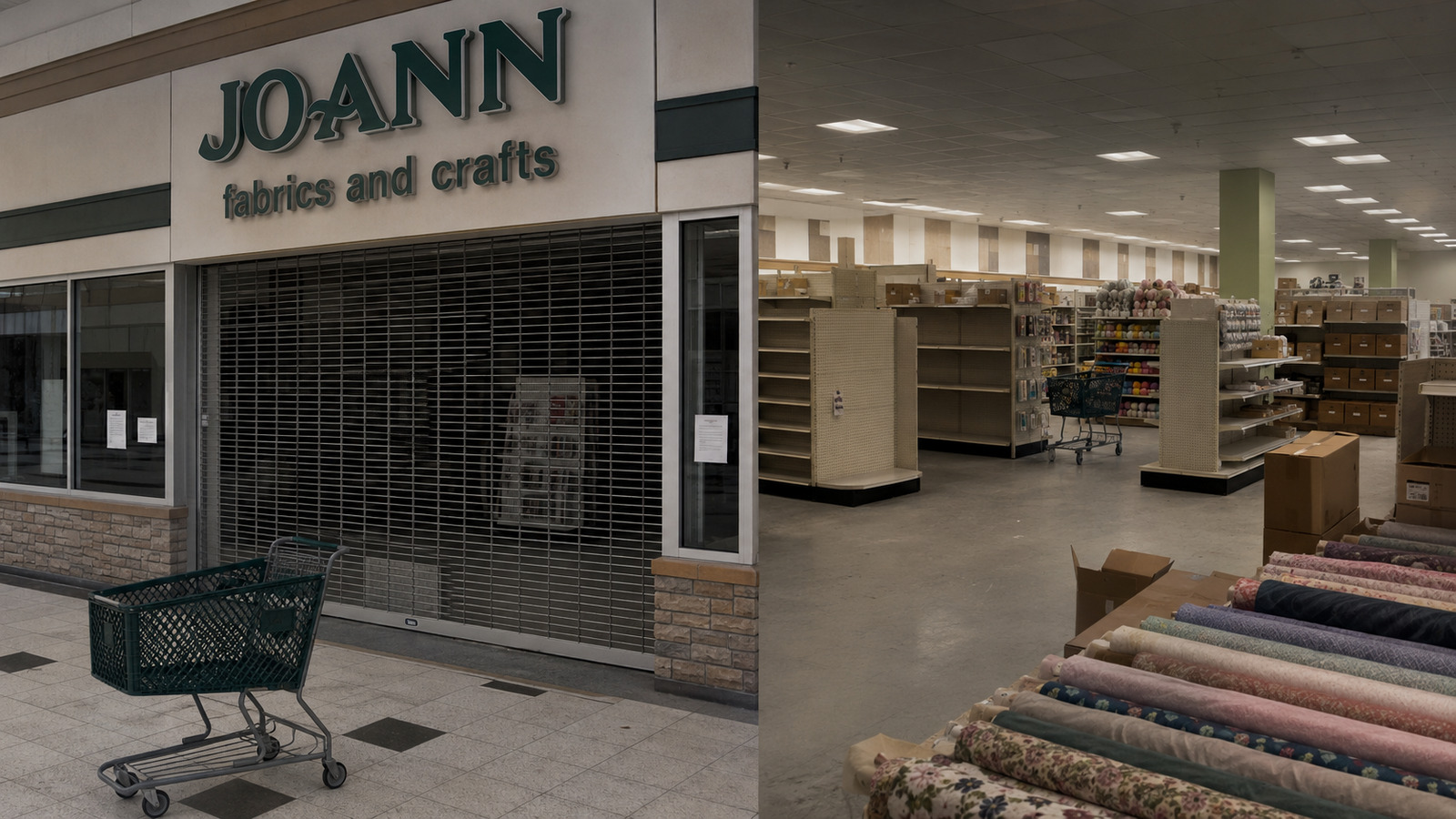
American chain Joann shuts down operations after bankruptcy, closes about 800 stores in 49 states, halts online sales, and leaves thousands of employees affected by the fabric and craft retail crisis.
Joann, an 82-year-old retail chain linked to the sewing sector, will permanently cease its activities following a new bankruptcy filing, operational losses, and a decline in consumption. The decision involves closing 790 stores, ending online operations, total liquidation of stock, and auctioning contracts. The company is based in the United States.


Joann closes stores after failed restructuring attempt
The financial services company GA Group took full control of Joann after the chain filed for bankruptcy in January. The brand, formerly known as Jo-Ann Fabrics, had changed its name to Joann in 2018.
The change was part of an attempt to expand beyond fabrics and sell a wider variety of products. However, the strategy did not prevent the advance of the financial crisis that hit the retailer.
-
Major Brazilian Supermarkets, Including Carrefour and Assaí, May Close Earlier to Prevent Price Increases

-
Coca-Cola Shuts Down 100-Year-Old Factory in the U.S., Impacting 85 Workers and Shaking Local Community with Historic Consequences
-
Bianca Andrade Invests $30 Million of Her Own Money in Boca Rosa, Launches Over 100 Products in a Year, Aiming for $400 Million by 2026
-
Belo Horizonte Becomes First Brazilian City to Fund Housing, Utilities for 100 Homeless Families with $900,000 Initiative


In March, the GA Group announced the start of closing liquidations in all 790 Joann stores.
Discounts started at up to 40%, but customers reported on social media markdowns of up to 90% in some establishments.
Total liquidation was decided after highest bid in judicial process
The decision to close all units came after the highest bid in the judicial process indicated that the best course of action would be the complete liquidation of the operation.
The measure replaced the initial expectation of keeping part of the chain operational.
Before the final closure, Joann shut down 255 stores. The remaining approximately 500 branches were closed later, completing the end of the retailer’s physical presence.
The impact went beyond the stores. The company also completely halted sales through the official website, ending the digital operation that could still serve former customers during the liquidation process.

Inflation, drop in sales, and stock problems worsened crisis
The interim CEO of Joann, Michael Prendergast, attributed the second bankruptcy filing to a highly challenging retail environment. He cited the sharp reduction in consumer spending amid persistent inflation.
The company also faced stock problems classified as unexpected. At the beginning of the process, executives chose to close only the underperforming branches, hoping to find an investor capable of preserving the rest of the operation.
In January, Prendergast stated that he hoped the process would allow finding a way for Joann to continue operating as a going concern. However, the evolution of the case led to total liquidation.
Store and distribution center contracts enter closure
As part of the final stages, the company announced in March that it planned to auction the 790 store lease contracts and five distribution centers in April.
Joann also issued a warning for former customers to avoid scams from fake websites using the brand’s name. The retailer deactivated all customer service channels and press office contacts.
More details about the company
Joann was a retailer in the United States, headquartered in Ohio, known for selling fabrics, sewing items, craft materials, yarns, decoration products, and items used in DIY projects.
The company was founded in 1943, initially as Cleveland Fabric Shop, and over the decades established itself as one of the leading American chains catering to the sewing, crafting, and creative activities audience.
Before closing, the company operated about 800 stores across 49 states in the US and had approximately 19,000 employees, including thousands of part-time workers.
The brand, formerly called Jo-Ann Fabrics, started using the name Joann in 2018 as part of an attempt to broaden its image beyond fabrics and strengthen the sale of other products.
In the most recent bankruptcy process, the company reported debts of $615.7 million, in addition to more than $133 million owed to suppliers, figures that help gauge the size of the crisis that led to the total closure of the operation.
This article was prepared based on the information from the provided source material, with data, numbers, and statements preserved as per the consulted material.








Be the first to react!